
Local guide
Exterior cleaning in Bay Harbor Islands: the complete guide
A cleaning plan built for a town that sits in the water
Bay Harbor Islands is unusual even by South Florida standards. It is a whole municipality wrapped around two small man-made islands in Biscayne Bay, ringed by Indian Creek on one side and open bay on the other, with Bal Harbour and Surfside a bridge away. Almost every property here is within a block or two of salt water, and a large share of them sit directly on a canal or on the bay with a seawall at the back of the lot. That geography is what makes exterior cleaning here a specialty rather than a chore. The salt load, the water table, and the tight island lots all change how surfaces weather and how often they need attention.
What follows is the deeper, property-by-property guide, meant to go past the basics and help you plan the actual maintenance your home or building needs.
West Island (Broadview): MiMo and Mediterranean single-family homes
Broadview is the residential heart of Bay Harbor Islands, and it holds one of the densest concentrations of Miami Modern, MiMo, single-family architecture anywhere in the county. These are the low-slung mid-century homes from the 1940s and 50s: flat or low-pitch roofs, wide eaves, terrazzo, and the details that define the style, decorative breeze-block screens, curved corners, cantilevered sun shades, and long walls of flat stucco built for indoor-outdoor living.
Those exact features are also cleaning problems if you use the wrong method.
- Breeze block and decorative concrete screens. The perforated block that shades a MiMo carport or entry traps organic dust and grows mildew in the shade of its own openings. High pressure chips the edges and drives water through to whatever is behind the screen. These want a low-pressure soft wash and a soft brush, not a wand.
- Flat stucco walls. Mid-century stucco is thinner and often more brittle than modern coats. Mold and algae bloom on the shaded and north-facing runs, and pressure above roughly 500 PSI blows out the surface and leaves permanent tracking. A hypochlorite soft wash kills the growth at the root without touching the finish.
- Low-pitch and flat roofs. Because these roofs shed water slowly, they hold moisture and streak fast. The black staining is Gloeocapsa magma, a cyanobacteria eating the limestone filler in shingle and tile. Blasting it voids the warranty and strips granules. Soft washing clears it and keeps it clear far longer.
Many of the Mediterranean-influenced homes on Broadview add barrel-tile roofs and painted-block or coquina accents, which get the same surface-matched approach: pressure calibrated to the material, never one setting for the whole house.
The teardown factor: cleaning to sell, cleaning to keep
Broadview is in the middle of a slow-motion redevelopment. Older MiMo homes and low-rise buildings are being bought, cleaned up, and either restored or replaced with new construction. That creates two very different cleaning jobs:
- Pre-sale and pre-listing cleaning. A single soft wash of the house, roof, driveway, and seawall-side patio can transform curb appeal and photograph dramatically better. On a canal lot the bay-facing side is what buyers remember, and it is usually the dirtiest.
- Restoration cleaning on a preserved MiMo. If you are keeping an original mid-century home, gentle is everything. Original terrazzo, breeze block, and vintage stucco cannot be treated like a new-build. The goal is to lift decades of salt film and biological growth without erasing the character.
East Island (Bay Harbour) and Kane Concourse: low-rise condos and the business district
East Island is where the multi-family housing and the small commercial core live. Because of strict height limits, most buildings here are low-rise and mid-rise rather than the towers you see in Sunny Isles, which actually simplifies access: much of the work can be reached without the heaviest lift equipment, though balconies, entry glass, and covered walkways still need proper reach and coverage.
For condo boards and property managers, the maintenance items that matter most on these buildings:
- Balcony undersides and railing lines, where salt film and drip staining collect and where corrosion starts on metal.
- Entry glass and lobby storefronts along Kane Concourse, which sit right on the causeway and take road grime plus salt.
- Covered walkways, breezeways, and stairwells, classic MiMo features that stay damp and grow algae in the shade.
- Awnings, canopies, and signage on the shops and offices, which soft wash safely but streak if pressure-washed.
Association and commercial work here should always be done with liability and workers-comp coverage a board can verify, and a COI is available on request. Scheduling matters too, most managers prefer early-morning washes before shops open and residents are out, which is easy to arrange on a walkable island this size.
The waterfront details competitors skip
Living on the water adds a set of surfaces that inland cleaners rarely think about, and they are exactly where Bay Harbor properties show wear first.
- Seawalls and the waterline. Canal and bay seawalls collect algae, tide-line staining, and a chalky mineral film at the water's edge. The lower courses stay wet and slick. These clean up with the right chemistry and pressure, and doing it keeps the whole waterfront side of the property looking maintained.
- Docks and dock decking. Composite and wood dock boards grow a green film that gets genuinely dangerous underfoot. This is calibrated-pressure work, not a blast.
- Screen and pool-cage enclosures. Bay Harbor's humidity and salt coat screen mesh and frames, and hard-water spotting bakes onto the panels from sprinkler overspray. Screens get a gentle wash, and the mineral spots need an acid treatment, scrubbing alone will not lift them.
- Metal railings, gates, and garage doors. In this ISO C5-M coastal zone, salt that sits on metal starts corroding. Regular rinsing and washing on the waterfront side is genuinely protective, not just cosmetic.
How often, realistically, on the islands
Cadence here is driven by how close a surface is to salt and how much shade and moisture it holds. A workable Bay Harbor calendar:
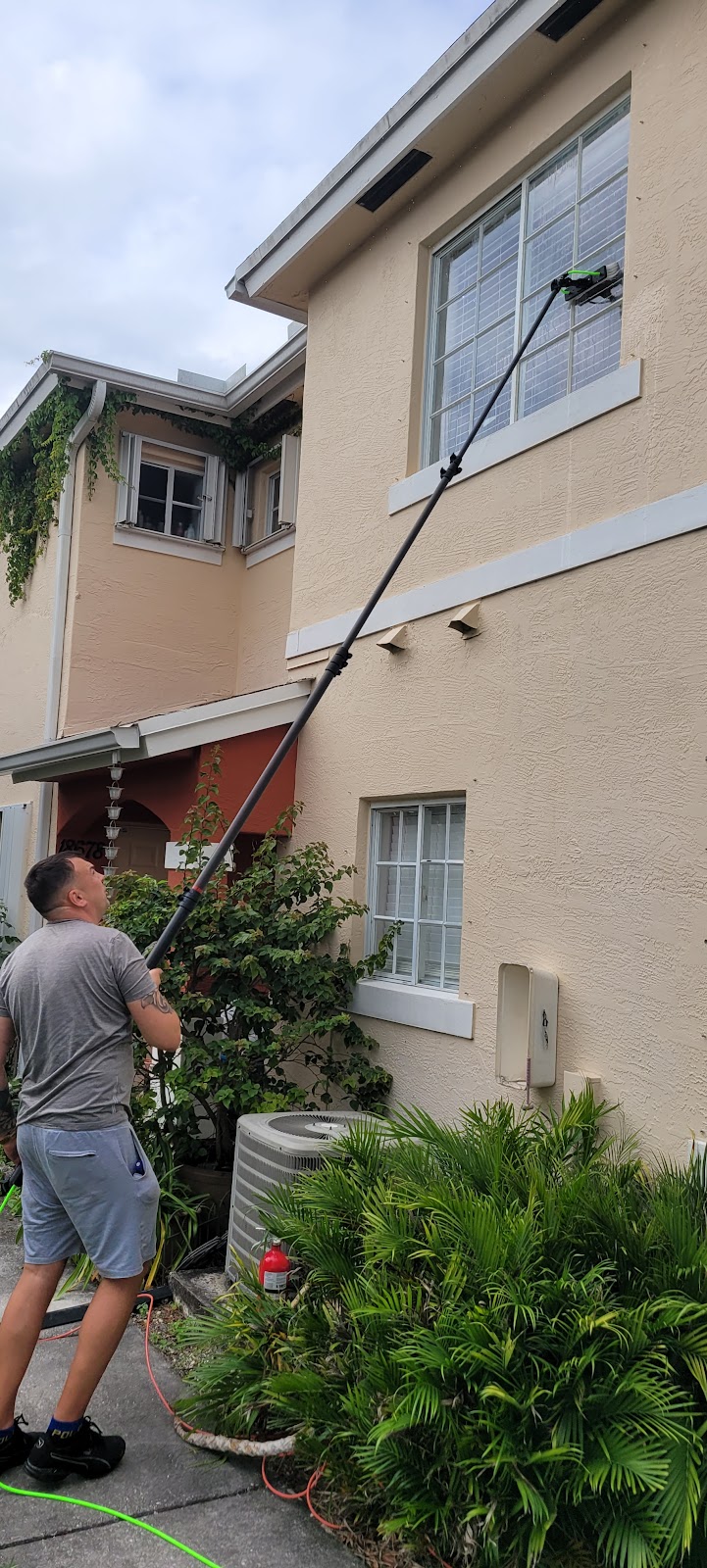
- Waterfront and bay-facing glass: every 6 to 8 weeks. Salt film builds fast with no buffer between the seawall and the wall of the house, and salt left on glass etches it.
- House soft wash (stucco, breeze block, eaves): roughly twice a year, more on heavily shaded north sides.
- Roof soft wash: on a recurring cycle before streaking gets established, typically every 1 to 2 years depending on tree cover and roof pitch.
- Driveways, pavers, seawall patios, pool decks: annually, with travertine decks resealed every 1 to 2 years in this climate, and any white efflorescence haze treated before, never after, sealing.
- Screen enclosures and hard-water spots: as needed, usually caught during a window cleaning.
Recurring maintenance plans exist for exactly this reason, they keep the waterfront side from ever getting to the point where it needs a rescue wash, and every visit comes with the same standard: no damage, no streaks, no shortcuts, backed by before-and-after photos and a 48-hour re-wash guarantee.
The hurricane-season window that matters here
Bay Harbor sits low and open to the bay, so the pre-storm prep is not optional. Hurricane season runs June 1 through November 30, and the smart cleaning window is April and May. A clean roof sheds water the way it should in a downpour, and gutters cleared of palm fronds drain away from the foundation instead of overflowing toward it, which matters more on a low island lot. Getting the roof, gutters, and drainage cleared in the spring means you are ready before the first system spins up and before the daily summer rain sets in.
Whether you own an original MiMo on Broadview, a new boutique condo, or you manage a building along Kane Concourse, Moppey cleans the whole exterior with the method each surface can actually take. For a free quote, most answered the same day, call Moppey at +1 877-754-5614. Hablamos Espanol.