In-depth guide
Commercial Pressure Washing in Miami: the complete guide
Commercial pressure washing in Miami: the complete guide for property managers, HOAs and business owners
Commercial exterior cleaning in Miami is a maintenance discipline, not a one-off chore. A retail plaza, a mid-rise office, a warehouse dock and a 200-unit condo association each accumulate a different kind of grime at a different rate, and each answers to a different decision-maker — a franchise standards inspector, a facilities director, a board president, a corporate real-estate group. The job that keeps all of them happy is the one that reads the property surface by surface, works around the operation instead of shutting it down, and produces the paperwork before anyone touches the building.
This guide goes past the basics on the page above. It covers the surfaces the average vendor skips, the Miami-Dade stormwater rules that separate a professional from a rental-machine operator, how commercial bids are actually built, and the maintenance cadence that keeps a South Florida property from sliding into a full restoration.
What "commercial" actually changes about the work
The equipment overlaps with residential, but the constraints do not. On a commercial site the variables that drive the whole plan are access, timing, liability and volume:
- Access. A three-level parking structure, a rooftop amenity deck, a fourth-floor breezeway and a ground-floor storefront each need different reach and different fall-protection thinking. Improvising with a ladder on a multi-story common area is exactly what a board's insurer prohibits.
- Timing. A restaurant needs dry, clean walkways before the breakfast rush; a medical plaza can't have wet floors during patient hours; a warehouse wants the dock done between shifts. The wash gets scheduled around revenue, not the other way around.
- Liability. Slip risk on a freshly cleaned entrance, overspray onto parked cars, wash-water reaching a storm drain — all of these are the property's exposure, which is why insured crews, cones, signage and runoff control aren't optional extras.
- Volume. Cleaning 40,000 square feet of sidewalk is a logistics problem — water supply, staging, crew size, pass sequencing — not just a bigger version of a driveway.
The Miami problems commercial pressure washing solves
South Florida's climate is relentless on the exterior envelope, and it hits commercial buildings harder because they have more surface area and more foot traffic than a house:
- Organic growth on stucco and concrete. High humidity and daily summer rain grow mold, mildew and algae on shaded north-facing walls and covered walkways. On a shared building wall it spreads across tenant units within a season. This is a soft-wash problem — low pressure under 500 PSI with a hypochlorite solution that kills the growth at the root — not a blast-it-off problem.
- Salt-air degradation. Anything inside the coastal ISO C5-M corrosivity zone near Biscayne Bay fights salt that etches glass entrances and rusts metal railings, awnings and dock hardware. Waterfront storefronts and condos need a tighter cadence than inland ones just to hold the line.
- Ground-in traffic film. Gum, spilled drinks, grease tracked from kitchens, and general foot-traffic grime get pressed into entrance concrete and sidewalks. A flat-surface cleaner lifts it in even passes; a wand alone leaves stripes and misses the film.
- Oil and hydraulic staining. Drive-thrus, gas-station aprons, loading docks and delivery zones collect petroleum staining that needs a degreaser and dwell time, not just pressure.
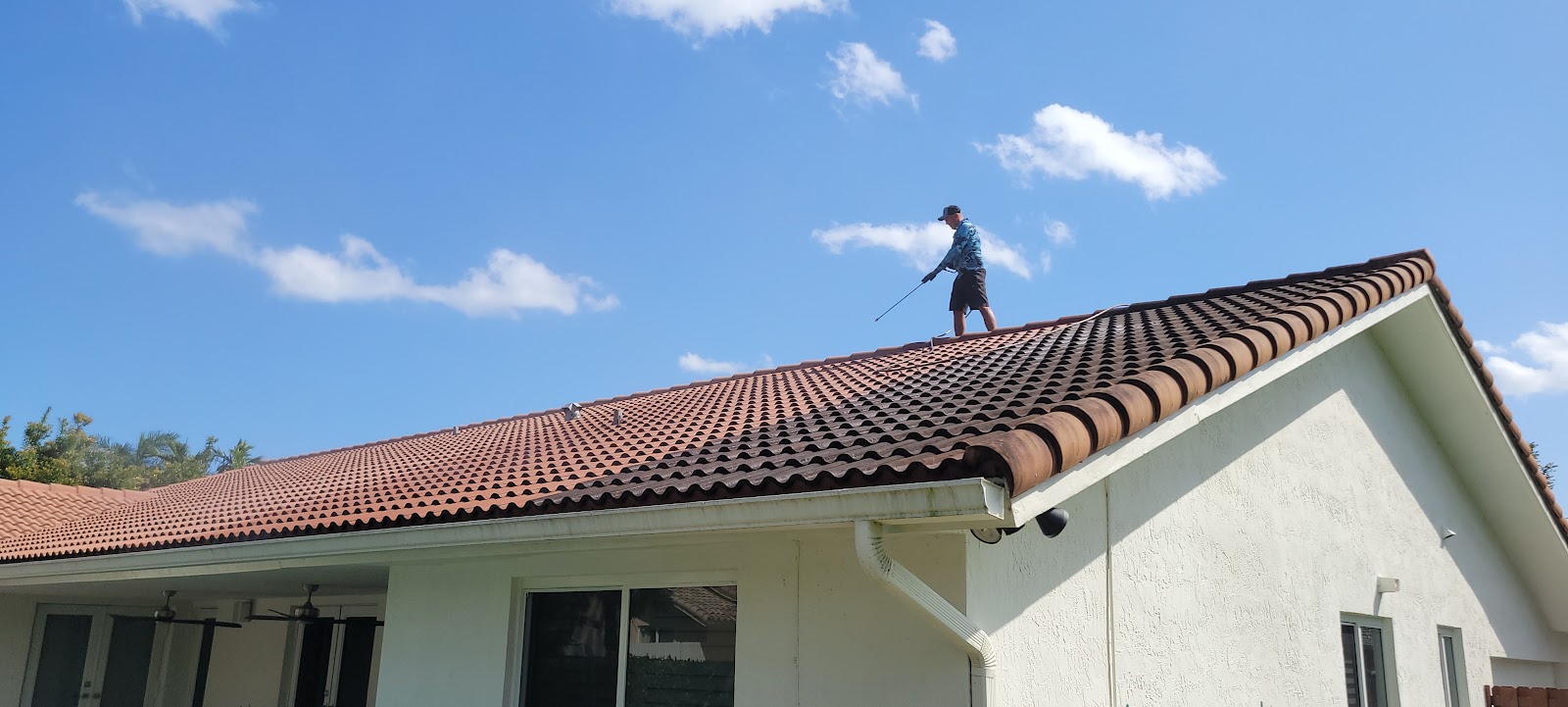
- Hurricane-season prep. Between June 1 and November 30, storms leave debris, salt film and organic staining. The pre-season window in April and May is the smart time to reset a property, and clean gutters and roofs shed water instead of overflowing toward the foundation when the rain comes sideways.
The surfaces on a commercial property and how each is treated
A real commercial scope is a map of surfaces, each with its own method:
- Storefront facades and glass-front entrances — washed and finished so they read clean from the sidewalk. Coastal glass also carries hard-water and salt spotting; Miami has the hardest water among major Florida cities (~11 grains per gallon off the limestone Biscayne Aquifer), so mineral spots sometimes need an acid treatment rather than more scrubbing.
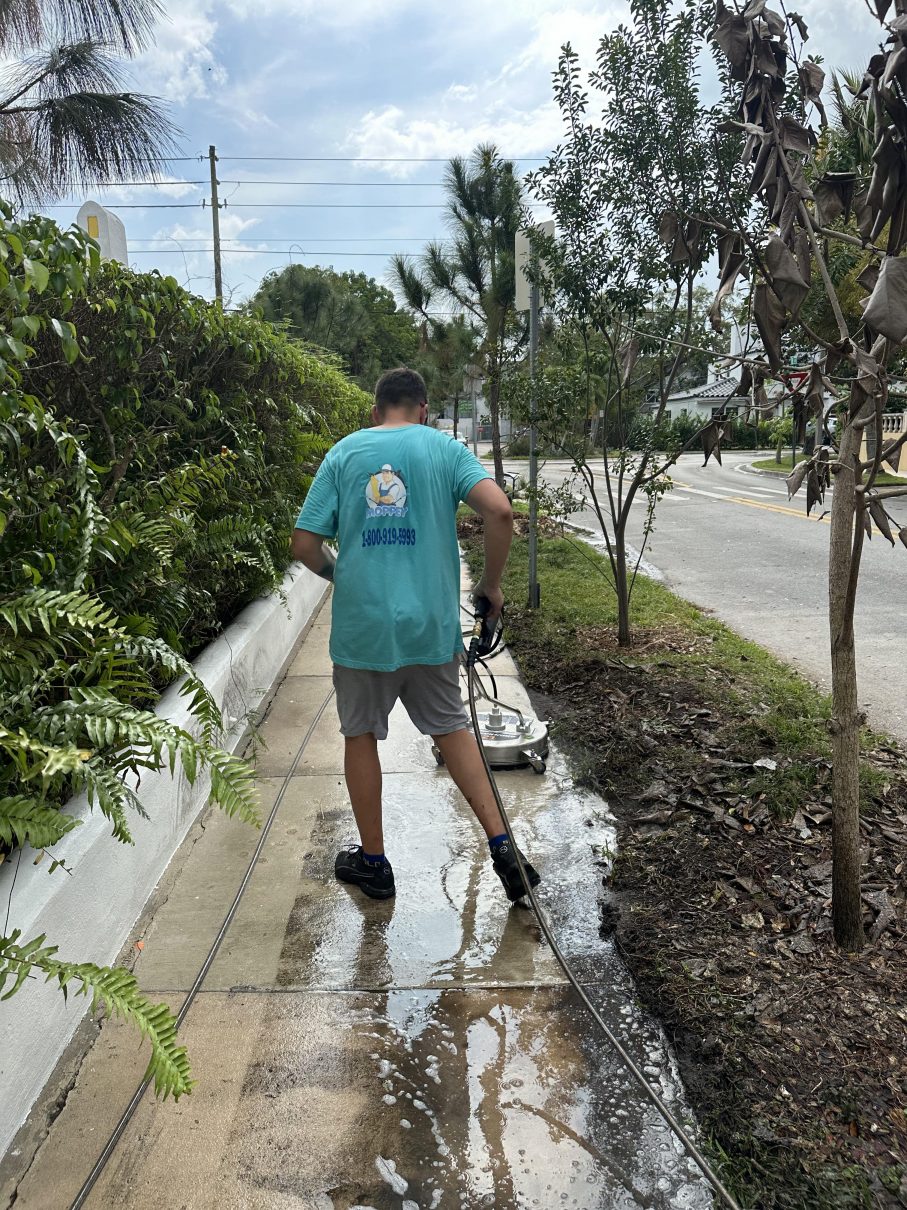
- Sidewalks, entrances and building perimeters — high-pressure surface cleaner for even, edge-to-edge results without wand streaks, with gum and stain removal on high-traffic zones.
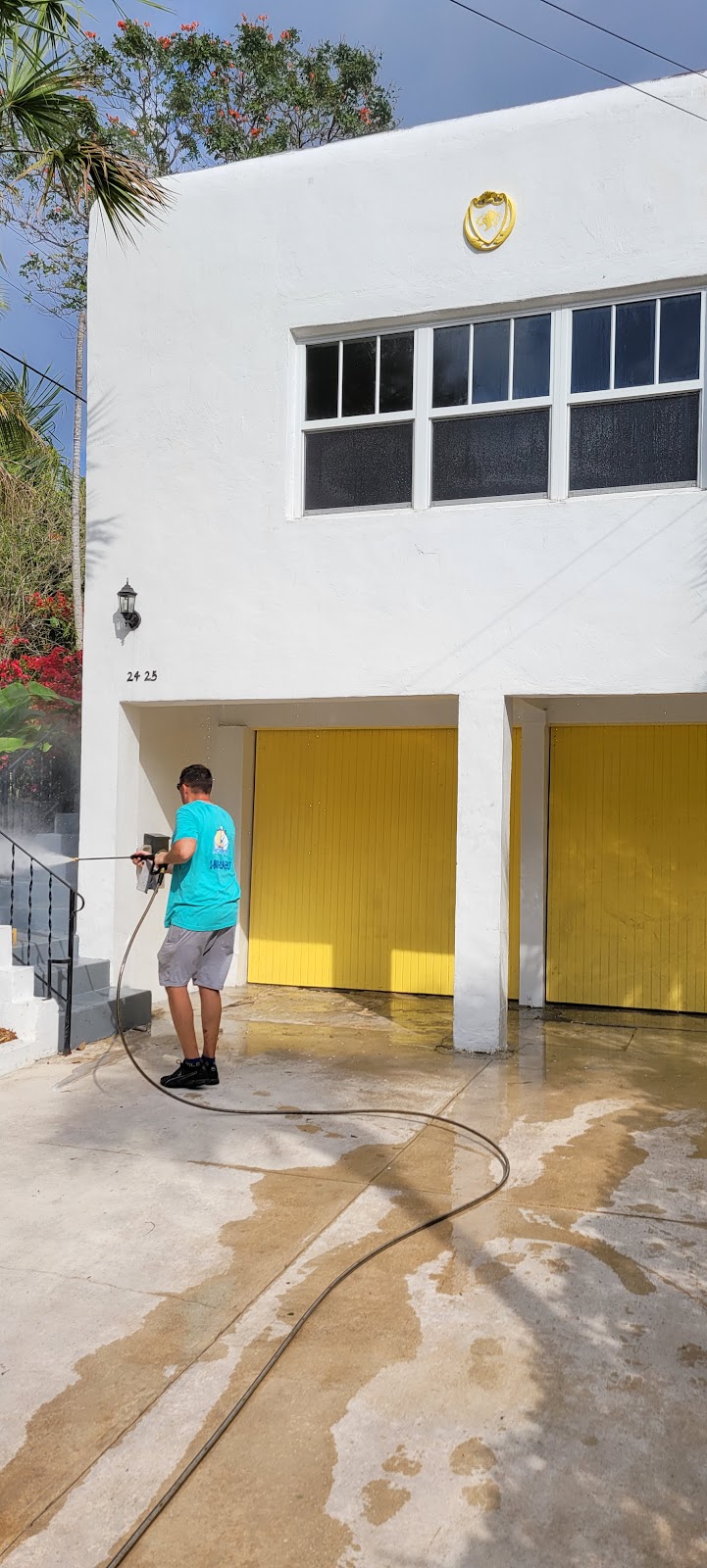
- Stucco, EIFS and painted building walls — soft washed only. High pressure etches stucco, strips paint and voids finish warranties.
- Parking garages and structures — multi-level decks collect tire marks, oil drips and dust; they're cleaned deck by deck with runoff and drain management, often overnight to keep spaces available by morning.
- Dumpster pads, loading zones and back-of-house concrete — degreased with a dwell step, because that's where the worst grease and odor live.
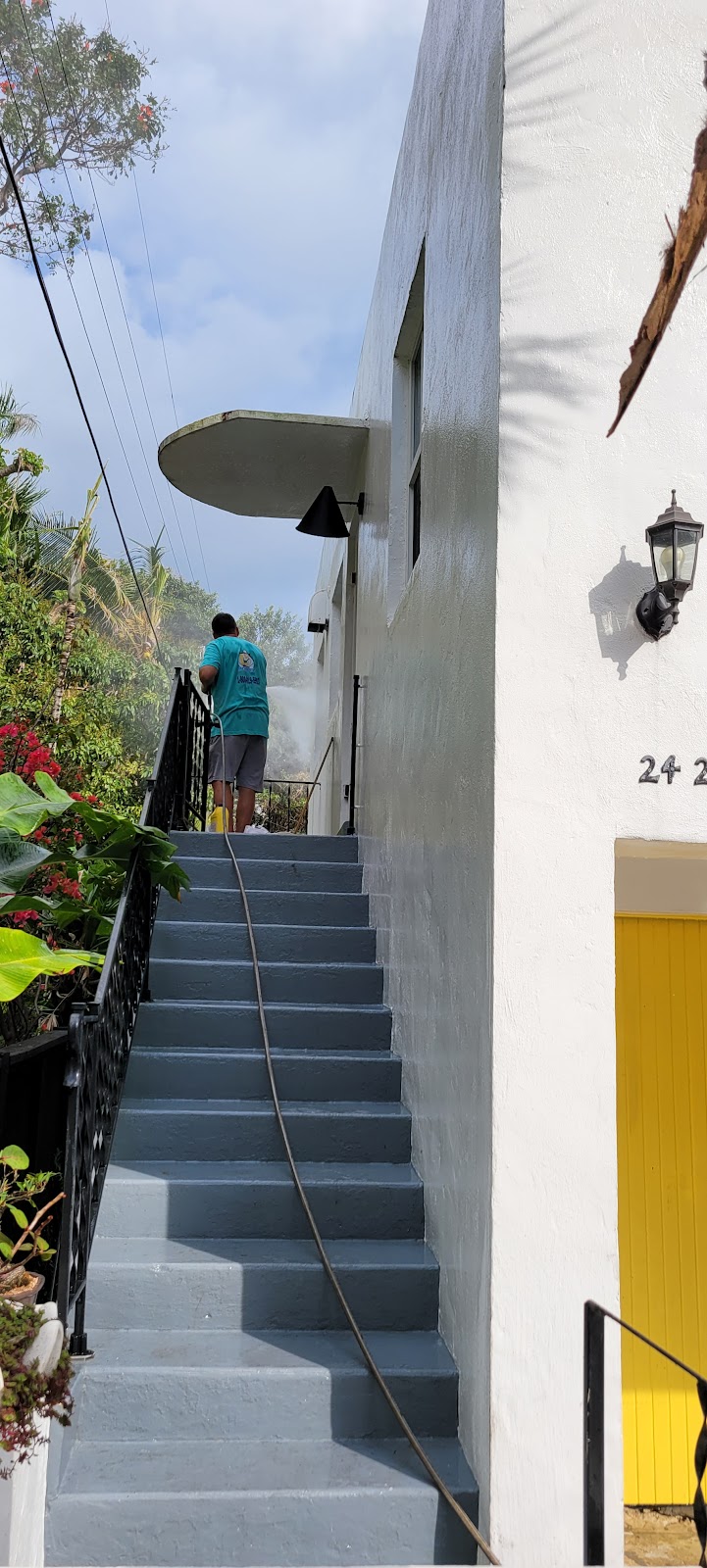
- Breezeways, stairwells and common walkways — the HOA and multi-unit staples, done on a rotation so the whole community stays consistent.
- Awnings and metal railings — soft-washed and rinsed to protect coatings, especially in the corrosive coastal zone.
Stormwater compliance: the detail that separates a pro from a rental machine
This is the piece most DIY and low-bid operators ignore, and it matters more on commercial sites than anywhere else. Wash-water carrying detergents, oil, gum residue and organic matter is not supposed to run untreated into a storm drain — those drains flow to canals and Biscayne Bay, not to a treatment plant. Miami-Dade and municipal stormwater ordinances treat that discharge as a pollutant. A careful contractor manages it: blocking or berming drains, capturing and vacuuming wash-water on oily or chemical-heavy areas like dumpster pads and fuel islands, and directing runoff to landscaping or sanitary sewer where appropriate. For a property manager, this is real liability protection — a citation for discharge lands on the property, not just the vendor. Ask any commercial washer how they handle runoff; the answer tells you whether they've done real commercial work.
How a commercial job actually works, start to finish
The process is built to move fast through vendor approval and then stay out of your operation's way:
- Walkthrough and surface map. We walk the property and inventory it by surface, access height, and staining type, then scope the water supply and staging.
- Bid and insurance. You get a clear quote broken out by area, plus a certificate of general liability and workers' comp addressed to your manager, board or corporate office so vendor approval goes through without back-and-forth.
- Scheduling around your hours. Early morning, evening or overnight for storefronts and restaurants; between-shift windows for industrial; resident-traffic-aware timing for HOAs.
- Protect and stage. Cones and wet-floor signage, landscaping pre-wet and shielded, drains managed, cars and signage worked around.
- Clean by method. Surface cleaner on flatwork, soft wash on walls and awnings, degreaser with dwell on grease zones, detail on glass and entrances.
- Walk-through and documentation. Before/after photos for your records and, on recurring accounts, a consistent report each visit.
What drives the cost of a commercial job
We never publish flat rates, because commercial pricing is genuinely site-specific. The honest cost factors are:
- Total square footage and how it splits across flatwork, walls, glass and specialty surfaces.
- Surface condition — a property washed on a schedule costs far less per visit than one that's been neglected for years and needs a heavy first reset.
- Building height and access — anything above ground level needs proper reach equipment and the coverage that boards require, which factors in.
- Specialty work — graffiti removal, deep oil-stain degreasing, gum removal at scale, and rust treatment are added scope.
- Access and staging constraints — water availability, parking, gated hours and overnight requirements.
- One-time versus recurring — a recurring plan lowers the per-visit cost because the property never gets bad enough to need a full restoration.
How often to schedule in Miami, and how to keep the results
Cadence is the whole game in this climate. A property left too long doesn't just look worse — it becomes a bigger, more expensive job. General Miami guidance:
- High-traffic retail and restaurant entrances — monthly or bi-monthly on the entrance and walkways, since gum, grease and foot traffic rebuild fast.
- HOA and condo common areas — quarterly on walkways and breezeways, with building-wall soft washing on a seasonal or annual rotation.
- Coastal glass and facades — every 6 to 8 weeks near the water, because salt film and hard-water spotting return quickly in the C5-M zone.
- Whole-building soft wash — typically once or twice a year depending on shade and exposure; heavily shaded north walls that stay green may need more.
- Pre-hurricane-season reset — one thorough clean in April or May to clear salt film, organic staining and debris before storm season.
How it compares to DIY and to a general janitorial contract
A rented pressure washer in the hands of a maintenance staffer causes the two most common commercial-exterior mistakes: etched stucco and stripped paint from too much PSI on the walls, and zebra-striped concrete from a wand instead of a surface cleaner. Neither is cheap to undo. A general janitorial or landscaping contract, meanwhile, usually treats exterior washing as an afterthought without the right equipment, insurance for high-access work, or any plan for wash-water runoff. Dedicated commercial exterior cleaning brings matched methods, the coverage boards and corporate require, stormwater-aware runoff handling, and a documented, repeatable result — which is exactly what protects the asset and the people responsible for it.
Signs your commercial property needs it now
- Green or black streaking spreading across shared building walls.
- Slick, discolored walkways or breezeways — a slip-and-fall liability, not just a look.
- Gum, drink stains and grease built up around entrances and outdoor seating.
- Rust bleed on railings, awnings or dock hardware near the coast.
- Oil staining on the dumpster pad, loading dock or drive-thru apron.
- A lease turnover, grand opening, franchise inspection or board walk-through coming up.
If any of these describe your property, it's cheaper to clean it now than to restore it later. Moppey handles the full exterior envelope for Miami businesses, HOAs, offices, retail centers and multi-unit properties — with insured crews, low-disruption scheduling, recurring plans and the right method for every surface. Call +1 877-754-5614 for a free quote; most requests are answered the same day.