In-depth guide
Patio Cleaning in Miami: the complete guide
What professional patio cleaning in Miami actually involves
Patio cleaning is not one job — it is a family of jobs that share a slab. A screened travertine lanai in Pinecrest, a stamped-concrete deck off a Coral Gables kitchen, a paver patio in Doral, and a tile terrace on a Brickell condo all fall under "patio cleaning," yet each demands a different pressure, a different chemistry, and a different order of operations. A careful contractor reads the surface first and picks the method second. That single decision — matching the tool to the material — is what separates a patio that comes back looking new from one that comes back etched, striped, or missing the sand in its joints.
In practice, most Miami patios are cleaned with one of two approaches, and often a blend of both:
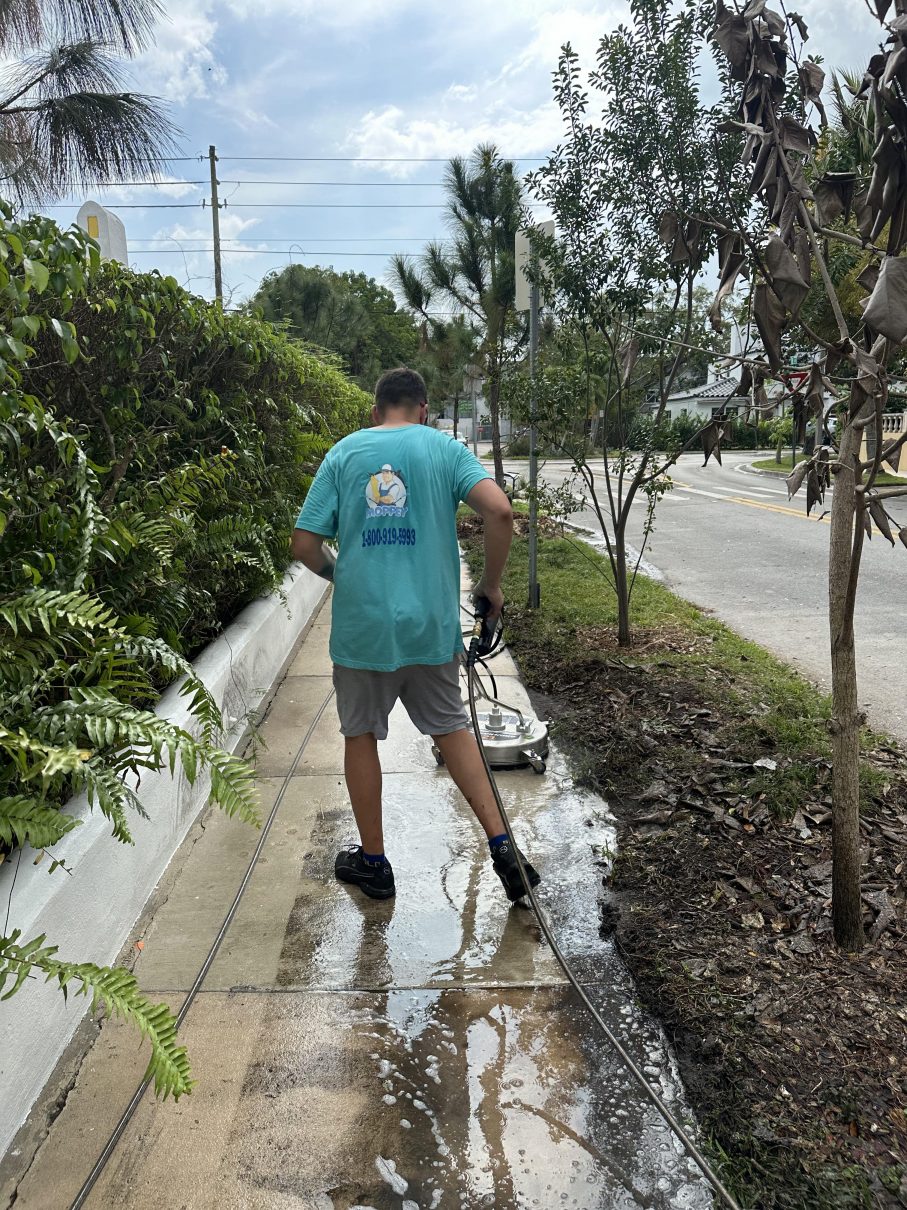
- Surface cleaning (a flat, spinning-bar attachment) for glazed tile, cured concrete, and stamped concrete, which delivers an even, sweep-free pass with no wand streaks.
- Soft washing (low pressure under roughly 500 PSI plus a hypochlorite-based cleaning solution) for travertine, marble, aged pavers, and any porous or fragile stone, where the chemistry does the work instead of raw force.
The reason the method matters so much in South Florida is biological. Our heat, shade, and near-constant humidity grow mold, mildew, and algae into the pores of a patio, not just on top of it. A garden-hose rinse or a rented machine knocks off the visible green, but the colony lives on below the surface and greens back within weeks. A proper wash pre-treats to kill growth at the root so the result holds.
The specific Miami problems patio cleaning solves
South Florida throws a unique combination at outdoor floors, and each problem has a correct fix:
- Slick green algae film in shaded, screened corners. The area nobody walks on stays damp longest and grows the slipperiest film. Wet algae on smooth travertine or sealed pavers is a genuine fall hazard, especially around steps and pool coping.
- Efflorescence — the white chalky haze. On pavers and travertine, that powdery white bloom in the joints and along edges is mineral salt pulled up through the stone by moisture. It is not dirt, so it will not rinse away, and it must be treated before any sealer goes down. Seal over efflorescence and the haze gets locked under a permanent cloudy film.
- Blown-out joint sand and creeping weeds. Miami rain washes polymeric sand out of paver joints over time, and the open gaps invite moss and weeds. High-pressure blasting accelerates that loss, which is exactly why soft stone and pavers get low pressure.
- Hard-water spotting and rust. Miami draws the hardest water among major Florida cities from the limestone Biscayne Aquifer (around 11 grains per gallon). Mineral-heavy runoff leaves spots, and iron in irrigation water plus salt air (this is a coastal ISO C5-M corrosion zone) rusts metal furniture legs and rebar dots, staining the slab beneath.
- Grease, sunscreen, and organic stains. Grill splatter, dropped food, sunscreen, and berries from overhanging trees settle into porous stone and need targeted pre-treatment, not just a general rinse.
What the process looks like, step by step
A professional patio cleaning follows a deliberate sequence. Skipping steps is how DIY jobs go wrong.
- Surface assessment. Identify the material — tile, paver, travertine, marble, concrete, or stamped — and set pressure and chemistry accordingly. This is also when efflorescence, loose joint sand, and stubborn stains get flagged.
- Plant and surroundings protection. Landscaping gets pre-wet, screen frames and pool cages are shielded, and glass doors and painted stucco are accounted for, because on a Miami patio all of these sit inches from the slab.
- Pre-treatment. A controlled mold-and-algae solution is applied and given dwell time to kill growth down in the pores so it stays gone longer.
- Cleaning pass. Surface cleaner on hard, sealed surfaces for an even finish; low-pressure soft wash on soft or porous stone.
- Joint and detail work. Grout lines and paver joints are cleaned by hand where needed, and shaded corners, steps, planters, and columns get individual attention.
- Rinse and post-wash. A thorough rinse flushes the joints, carries chemistry off the plants, and lets the slab dry evenly with no residue or zebra-striping.
- Walkthrough. A final look with you, plus honest recommendations on joint-sand refill, sealing readiness, and a maintenance cadence.
Surfaces and materials — and how each is treated
Different patio materials fail in different ways, so they are cleaned differently:
- Travertine and natural stone: soft, porous, and easily etched. Cleaned at low pressure with solution-led chemistry. Efflorescence is common and treated before any reseal.
- Concrete pavers: durable on the face but dependent on joint sand for stability. Cleaned at controlled pressure, with a heads-up when joints need re-sanding afterward.
- Stamped and colored concrete: the decorative surface and its sealer are vulnerable to gouging. A surface cleaner at moderate pressure keeps it even; aggressive wand work can strip color and sealer.
- Glazed tile: tolerates a firmer touch on the face, but darkened grout lines are the real problem and get dedicated attention.
- Broom-finish and stamped concrete slabs: prone to overall mildew dulling; a surface cleaner restores a uniform, stripe-free tone.
- Wood and composite deck patios: cleaned at gentle pressure with wood-safe chemistry to avoid furring the grain or scarring composite boards.
- Screen enclosures and pool cages: these frame most Miami patios. The floor gets cleaned thoroughly while high pressure is kept off aluminum frames and mesh so nothing cracks or tears.
What drives the cost of a patio cleaning
There are no flat prices, because no two patios are the same job. The honest factors that move a quote are:
- Size and layout of the slab, including how many steps, columns, and tight corners need hand detailing.
- Material and fragility — a small soft-travertine lanai and a large cured-concrete patio are cleaned with entirely different equipment and care.
- Condition and buildup — a lightly dulled patio rinses out fast; a years-neglected surface with deep-rooted algae, efflorescence, or set-in stains takes more pre-treatment.
- Access and surroundings — screen enclosures, second-floor terraces, tight side-yard entry, and delicate landscaping all add careful containment work.
- Add-ons like joint re-sanding, sealing, or a recurring maintenance plan.
Because these variables swing so widely, the right way to price a patio is a quick look and a free quote, not a number pulled from the air.
How often to clean a Miami patio — and how to keep it looking new
For most South Florida homes, a full patio cleaning once a year keeps the surface sharp. Shaded, screened, or heavily used patios green up faster and often do better on a six-to-nine-month cadence. Many homeowners deliberately book a wash in the April–May pre-storm window before hurricane season (June 1–November 30), and again ahead of the holidays and gatherings.
Between professional cleanings, a few habits stretch the result:
- Rinse the slab and move furniture occasionally so damp shaded patches do not become permanent algae zones.
- Keep overhanging palm fronds and tree litter cleared, since decaying organics feed growth and stain stone.
- Address grill grease and rust from furniture legs quickly, before they set into porous surfaces.
- Consider a reseal on pavers and travertine every one to two years — but only after the surface is clean, dry, and efflorescence-free.
How professional patio cleaning compares to DIY and a rental machine
A rented pressure washer is the single most common cause of patio damage we see. In untrained hands, its concentrated stream etches travertine, strips the color and sealer off stamped concrete, and machine-guns the sand out of paver joints — damage that is far more expensive to fix than the cleaning would have cost. It also does not carry the pre-treatment chemistry that actually kills algae in the pores, which is why DIY patios turn green again in weeks.
The difference with a careful professional is threefold: the right pressure for the material, root-killing chemistry so the clean lasts, and containment that protects screens, glass, plants, and pool water. Compared with related services, patio cleaning overlaps with pool-deck and paver work but demands more overspray control because the space is usually enclosed and furnished — a patio is an outdoor room, not an open driveway.
Signs it is time to book a professional wash: the slab has gone dull green or gray, shaded corners feel slick underfoot, grout lines or joints have darkened, a white chalky haze is spreading through pavers or stone, or you are prepping the space for a party, a listing, or the holidays.
Moppey cleans patios across Miami and South Florida with plant-safe soft-wash chemistry, insured technicians, a proof-in-photos approach, and a 48-hour re-wash guarantee — matching the method to your exact surface so nothing gets damaged in the process. For a fast, free assessment of your patio, call Moppey at +1 877-754-5614. Hablamos Espanol.