Moppey Spottless Clean Pros
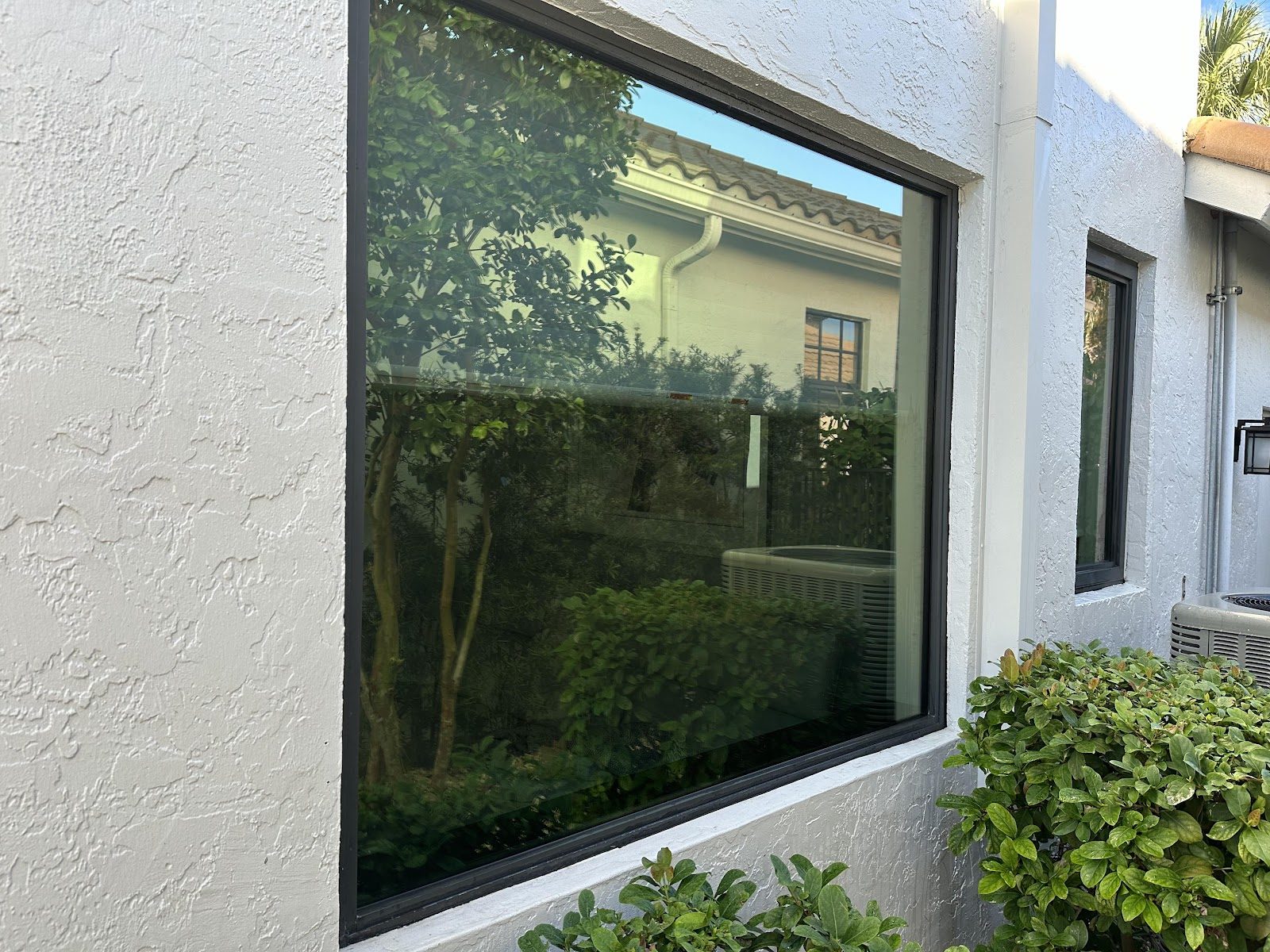
Clean exterior window on a Miami home reflecting tropical greenery

Rated 5★ · 43 reviews

Window Cleaning Miami, FL

Glass that actually looks clear in Miami sun — salt film lifted, hard-water spots dissolved, and not a streak left behind.

Serving Miami & surrounding South Florida

Rated 5★ · 43 reviewsFully InsuredResidential & CommercialSoft Wash SafeHablamos Español

The Miami problem

Why window cleaning matters in Miami

Miami is brutal on glass. Salt drifts in off the bay and bonds to your windows as a hazy film. Sprinkler overspray and rain leave chalky spots that dish soap and a squeegee will never touch. Then the afternoon sun hits all of it, and every streak and mineral deposit lights up like it was outlined in marker.

Most people just scrub harder and get the same cloudy result. That's because the two things dulling Miami glass — salt residue and hard-water spotting — aren't really dirt. Salt is a bonded film that needs the right solution to release it. Hard-water spots are calcium and magnesium fused to the glass surface, and they need a targeted treatment to break, not more elbow grease.

Moppey cleans exterior glass the way Miami actually requires: read what's on the glass first, treat it with the correct method, and finish streak-free so the window looks clear from every angle. Frames, tracks, and sills included — not just the pane.

What’s included

What our window cleaning covers

  • Exterior glass washed and finished streak-free and spot-free
  • Salt film removal on coastal and bay-facing windows
  • Hard-water and mineral spot treatment on bonded calcium/magnesium deposits
  • Window frames wiped down — vinyl, aluminum, and painted
  • Sill and ledge cleaning to clear salt grit and dead-bug buildup
  • Track and channel detailing so windows slide and seal properly
  • Screen rinse and reinstall where screens are present
  • Glass door, slider, and sidelight cleaning
  • Purified-water rinse on reachable exterior glass for a residue-free dry
  • Debris and drip cleanup so nothing is left on the patio or walkway

Our method

How we clean it safely

Every job starts by reading the glass. A light salt film comes off with a low-alkaline solution and a proper wash-and-squeegee, or a purified-water rinse — pure water carries no minerals, so it dries with nothing left to spot. Bonded hard-water spotting is a different problem: calcium and magnesium have chemically fused to the surface, so we apply a targeted mineral-restoration treatment to break the deposits, then neutralize and rinse. We tell you upfront when spots are set deep enough that the glass is etched and won't fully clear — no overselling a result the glass can't give.

We protect what's around the window while we work. Frames, sills, and tracks get hand-detailed rather than blasted, because high pressure cracks screen frames, drives water behind the glazing, and can breach the seal on a window. On reachable exterior glass we use ladders, water-fed poles, and squeegee work; ground-level and low-rise homes are our core here. For condo and high-rise glass we clean where safe access allows and are straight with you about which panes need specialized building access instead.

Soft wash vs pressure wash

Windows are a hand-detail and low-pressure job, never a high-pressure one — pressure washing a window can crack the frame, force water past the seal, and shatter older or tempered glass. We wash, squeegee, and purified-water rinse the glass; the only "pressure" involved is a gentle rinse, and even the frames and sills get wiped, not blasted.

Best for

Who this service is for

  • Coastal and bay-facing homes where salt film clouds the glass fast
  • Houses with sprinkler overspray leaving hard-water spots on lower windows
  • Single-family and low-rise homes needing ground-accessible exterior glass done
  • Listings and open houses where clear windows lift curb appeal and light
  • Move-in and move-out cleans where windows haven't been touched in years
  • Storefronts and offices wanting a recurring exterior-glass schedule

Miami surface insight

Miami has the hardest tap water among major Florida cities — roughly 11 grains per gallon — because the Biscayne Aquifer we draw from is limestone-based, so every drop of sprinkler overspray or hose splash that dries on a window leaves a dense mineral load behind. That's why Miami windows spot faster than almost anywhere else, and why the fix is a mineral-dissolving treatment plus a purified-water rinse rather than ordinary washing. On top of that, coastal homes within about a kilometer of the water sit in the most aggressive corrosion zone there is (ISO C5-M marine), so airborne salt keeps re-coating the glass — which is why we recommend cleaning coastal windows every 6 to 8 weeks before the film has time to bond and etch.

Insured — COI on request
Plant-safe soft washing
Before & after photos
Satisfaction guarantee

In-depth guide

Window Cleaning in Miami: the complete guide

What professional exterior window cleaning in Miami actually involves

Window cleaning sounds simple until you try to do it well in Miami. The glass here isn't just dusty — it's carrying a bonded salt film off the bay, chalky hard-water spots from sprinkler overspray, dead love-bug residue baked on by the sun, and a fine gray haze that returns within weeks on coastal-facing panes. A rag and a bottle of blue spray move that grime around and leave streaks. Doing it right is a trade: the correct solution for what's actually on the glass, a proper squeegee technique or a purified-water rinse, and hand-detailing of the frames, sills, and tracks that a spray-and-wipe job always skips.

Professional exterior window cleaning is a low-pressure, precision job — the opposite of pressure washing. The method changes by surface and by what's fused to the glass, and the difference between a competent wash and a great one shows up most in Miami's afternoon light, where every missed streak and mineral spot lights up like it was outlined in marker.

The specific Miami problems clean windows solve

Miami is uniquely hostile to glass, and each problem needs a different fix:

  • Salt film from marine air. Homes within roughly a kilometer of the water sit in the most aggressive corrosion zone rated — ISO C5-M marine. Airborne salt settles on glass and bonds into a haze that ordinary washing smears rather than removes. Left long enough, salt keeps re-coating and begins to etch.
  • Hard-water spotting. Miami draws from the limestone Biscayne Aquifer and has the hardest tap water among major Florida cities — around 11 grains per gallon. Every drop of sprinkler overspray, hose splash, or rain runoff that dries on a window deposits a dense load of calcium and magnesium. Those spots are minerals bonded to the glass, not dirt.
  • Sun-baked organic residue. Love bugs, pollen, palm sap, and lawn-chemical overspray cook onto glass in direct sun and resist plain water.
  • Cloudy frames and clogged tracks. Salt grit and dead-bug buildup collect in sills and channels, so the window stops sliding and sealing properly — and clean glass in a grimy frame still looks half-done.

Clear glass also does real work beyond looks: it restores natural light, sharpens curb appeal for a listing, and — on the coast — cleaning before salt bonds and etches actually slows long-term damage to the pane.

What the process looks like, step by step

A careful window cleaner works in a repeatable order rather than just wiping panes:

  1. Read the glass first. The technician looks at what's actually there — light salt haze, bonded hard-water spots, organic residue, or true etching. The treatment is chosen from that diagnosis, not applied blindly.
  2. Clear the frame and surroundings. Sills, ledges, and tracks are cleared of grit and debris so it doesn't wash back onto clean glass.
  3. Wash the glass. A low-alkaline solution lifts salt film and organic residue. Bonded mineral spots get a targeted restoration treatment that breaks the calcium and magnesium, then gets neutralized.
  4. Squeegee or purified-water rinse. Reachable glass is either squeegeed by hand or rinsed with purified water. Pure water carries no dissolved minerals, so it dries with nothing left behind to spot — no towel drying needed.
  5. Detail frames, sills, and tracks. These are wiped and hand-cleaned, never blasted, so windows slide and seal.
  6. Screens and final check. Screens are rinsed and reinstalled where present, drips and debris are cleaned up, and the glass is checked from multiple angles in the light before sign-off.

The surfaces and materials handled — and how each is treated

Windows are a cluster of materials packed into a small area, and each one demands its own approach:

  • Glass panes. Washed with the right solution for the film present, then squeegeed or purified-water rinsed streak-free. Never pressure washed — high pressure cracks frames, forces water past the seal, and can shatter older or tempered glass.
  • Hard-water and salt-etched glass. Treated with a mineral-restoration product that dissolves the deposit, then neutralized and rinsed. Where a spot has sat long enough to etch the glass surface itself, an honest cleaner tells you upfront it may not fully clear — no result the glass physically can't give.
  • Frames — vinyl, aluminum, painted. Hand-wiped. Coastal aluminum frames pick up salt corrosion, so they're cleaned gently rather than scrubbed aggressively.
  • Sills and ledges. Cleared of salt grit, pollen, and dead-bug buildup that plain glass cleaning ignores.
  • Tracks and channels. Detailed so the window slides and the weather seal works again.
  • Screens. Rinsed and reinstalled; screen frames are fragile, so they're handled by hand, not sprayed at pressure.
  • Glass doors, sliders, and sidelights. Cleaned like windows, with the door track cleared so it runs freely.
  • Storm and impact glass. Common on newer Miami builds and post-hurricane retrofits; the laminated surface is cleaned the same low-pressure way, with care around the frame glazing.

What drives the cost of window cleaning

Moppey gives fast free quotes rather than flat menu prices, because honest pricing depends on what the job actually is. The main factors:

  • Number of panes and how they divide. Grids, muntins, and French-style panes take far longer than large single sheets of the same area.
  • Height and access. Ground-level and low-rise glass is straightforward. Second-story, hard-to-reach, or high-rise panes need ladders, water-fed poles, or specialized building access — which changes the scope and, for tall towers, may fall outside safe reach.
  • Surface condition. A maintained home on a schedule is quick. Glass that hasn't been touched in years, or that's carrying set-in hard-water spots, needs mineral treatment and more time.
  • Property type. A storefront's street-level glass, a single-family home, and a condo balcony's railing glass are three different jobs.
  • Frames, tracks, and screens. Including the full detail (which we do) is more thorough than glass-only, and factors into scope.
  • Frequency. Recurring maintenance visits are lighter and more efficient than a first deep clean after years of neglect.

How often to schedule window cleaning in Miami

Cadence depends almost entirely on how close you are to the water:

  • Coastal and bay-facing homes: every 6 to 8 weeks. Salt re-coats the glass fast and bonds harder the longer it sits, so a tighter schedule keeps it from etching.
  • Homes near active sprinklers: more frequent, to stay ahead of hard-water spotting on lower windows before minerals set.
  • Inland homes: a few times a year usually keeps glass clear.
  • Storefronts and offices: a recurring exterior-glass schedule (monthly or every few weeks) keeps street-facing glass presentable, which is why so many businesses put it on a plan.
  • Pre-listing and pre-storm: an extra clean before a sale, an open house, or the April–May window ahead of hurricane season is worth it.

Between visits, rinse coastal glass with a hose after salt spray or a storm, keep sprinkler heads angled away from windows, and avoid letting overspray dry on the pane in direct sun.

How window cleaning compares to related methods and DIY

  • Squeegee-and-solution vs. purified-water pole. Both are legitimate. Hand squeegeeing gives fine control on reachable glass; a purified-water-fed pole reaches higher panes safely and dries spot-free because the water carries no minerals. A good cleaner uses whichever fits the pane.
  • Window cleaning vs. pressure washing. They are not interchangeable. Pressure washing is for durable, sealed surfaces like driveways. Aim that at a window and you risk a cracked frame, water forced behind the seal, and broken glass. Windows are strictly a low-pressure, hand-detail job.
  • Professional vs. DIY spray-and-wipe. Dish soap and a rag can't release bonded salt film or dissolve fused mineral spots — they just spread residue and leave streaks. Those problems need the right chemistry and a spot-free rinse.
  • Window cleaning vs. window tinting or restoration. Cleaning removes films and deposits from the surface. Tinting and deep glass restoration are separate trades; cleaning is the first step and often the only one needed.

Signs you need professional window cleaning

  • Glass looks hazy or cloudy even right after you wipe it.
  • Chalky white spots or rings that don't come off with normal cleaner — that's bonded hard water.
  • A gray salt film that returns within weeks on the ocean- or bay-facing side.
  • Windows that stick, grind, or won't seal because tracks are packed with grit.
  • Dead bugs, pollen, and sap baked onto the glass in the sun.
  • You're listing, selling, renting, or hosting and want the windows to actually let the light in.
  • Streaks that show up the moment afternoon sun hits the glass.

Why a careful professional beats a rental machine

The instinct in Miami is to grab a pressure washer and blast everything, including the windows. That's the single fastest way to crack a frame, force water past the seal, fog a double-pane unit, or shatter older glass — and the damage isn't covered by anything. Renting a machine also doesn't solve the two problems that actually dull Miami glass: bonded salt film and fused mineral spots need the right chemistry, not more force. A professional reads the glass, brings the correct solution and a purified-water rinse, detials the frames and tracks by hand, and is honest about which spots will clear and which panes need specialized access. Moppey works plant-safe, is insured with a certificate of insurance available for HOAs and building managers, and stands behind the finish with a 48-hour re-wash guarantee. No damage, no streaks, no shortcuts.

Want to know what clear glass would cost for your place? Call Moppey at +1 877-754-5614 for a fast, free quote — tell us the property type, roughly how many windows or stories, and whether you're seeing salt haze or hard-water spots. We answer most quotes the same day. Hablamos Español.
Recent work

Real Moppey results

Clean exterior window on a Miami home reflecting tropical greenery
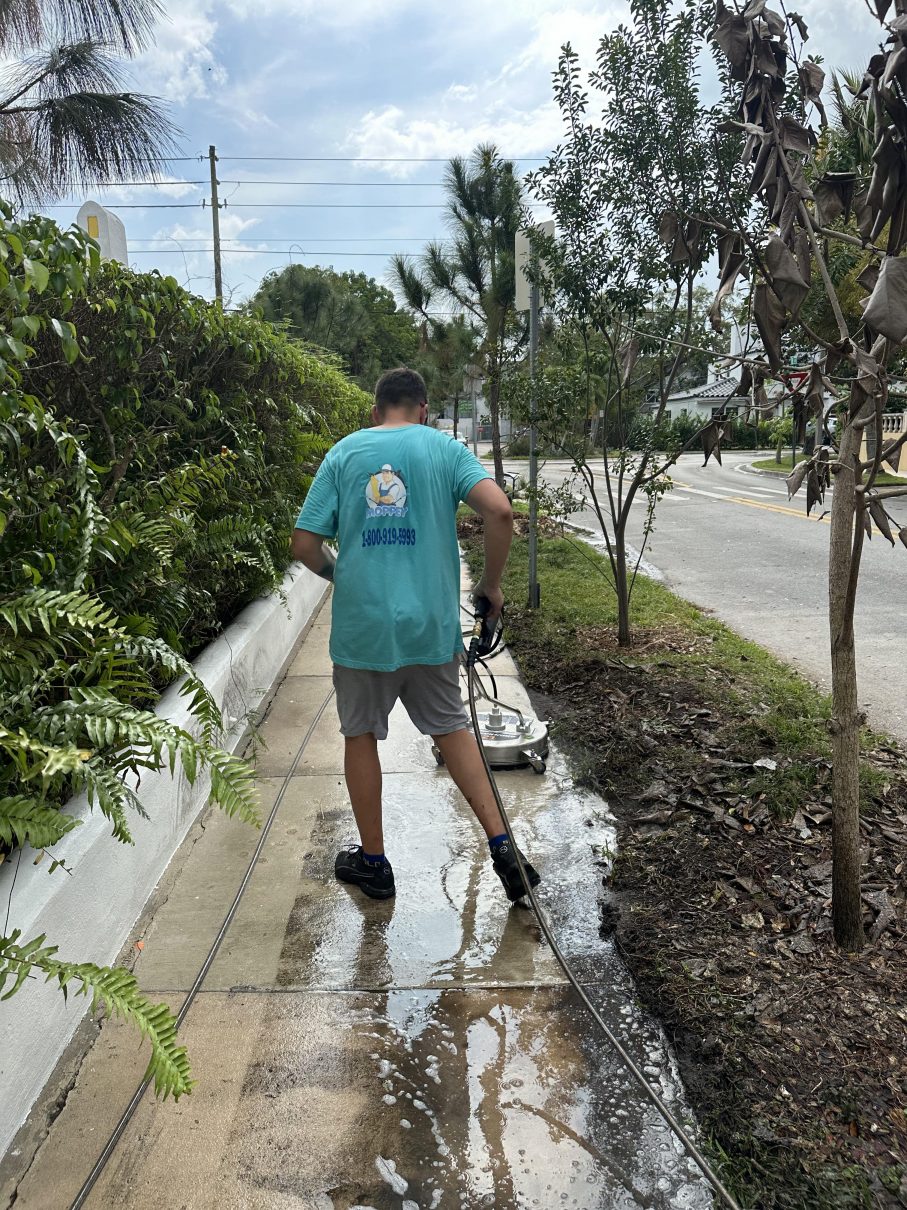
Moppey technician pressure washing a Miami walkway with a surface cleaner
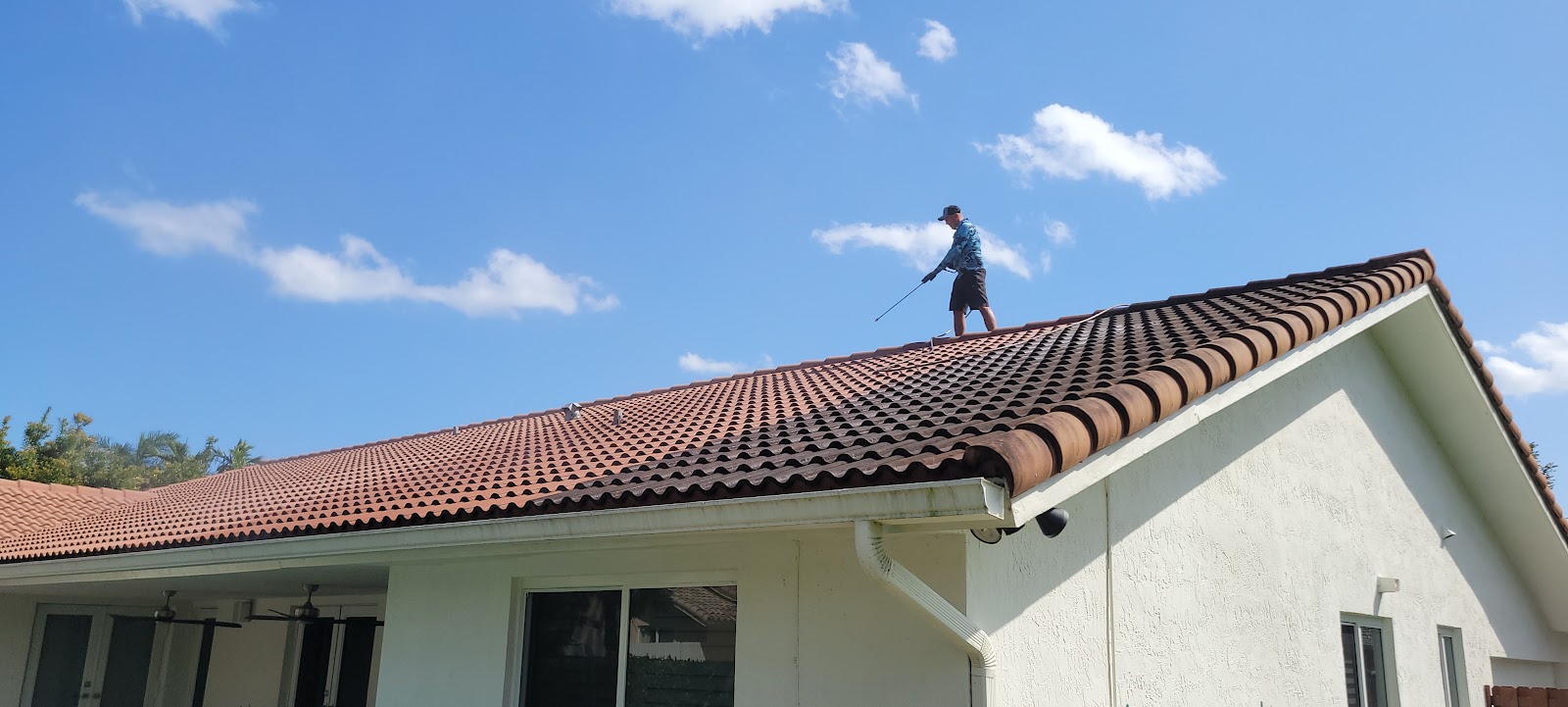
Soft washing a Miami barrel-tile roof
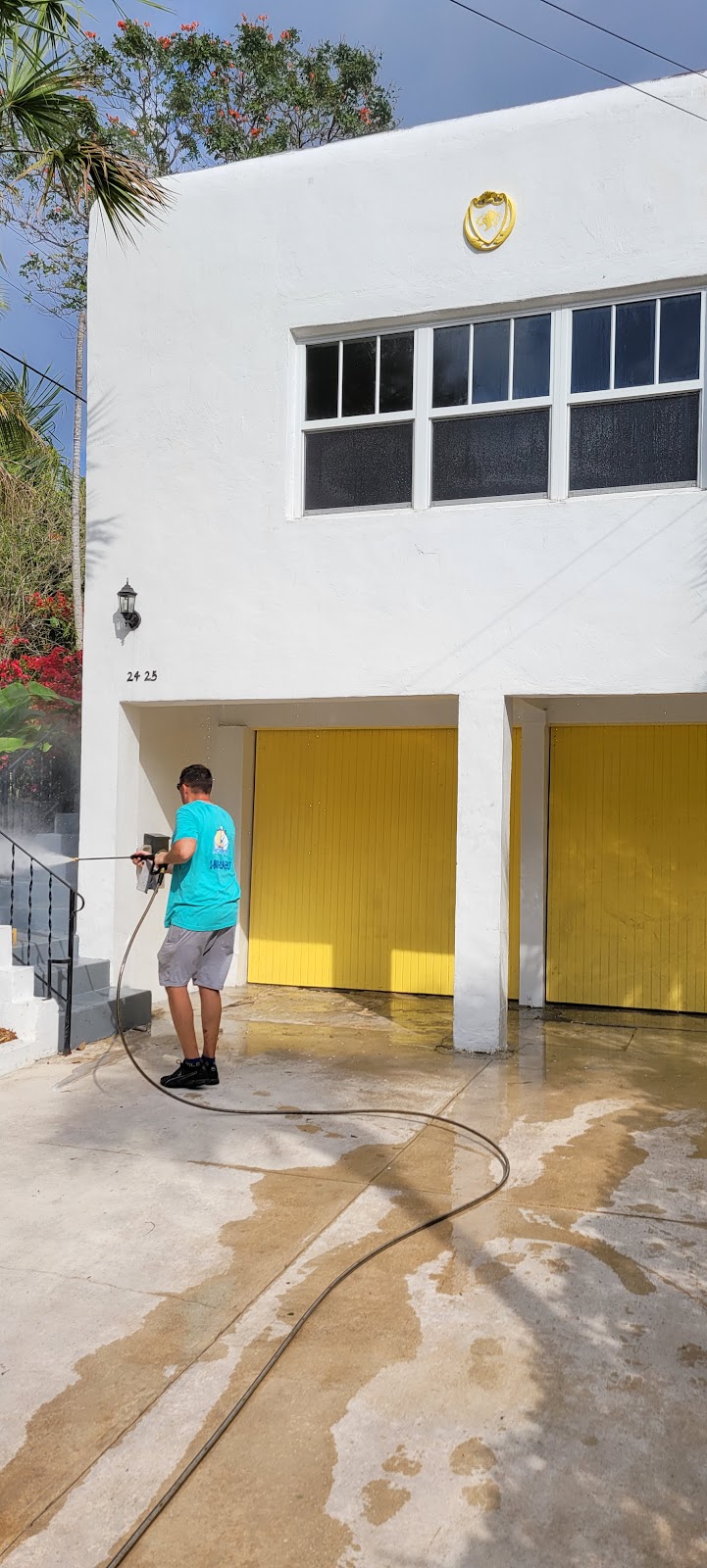
Freshly cleaned Miami driveway

Social proof

What customers say

100% recommend! I was only going to have my windows cleaned but they did such a good job I also included my patio and the driveway. They are very precise with every detail.
Jaime L.Windows • Patio • Driveway Verified Google review
Amazing service! I highly recommend them if you’re looking for someone to clean your windows and gutters. Super professional and the service is fantastic!
Ana Patricia FloresWindows • Gutters Verified Google review
My windows finally look perfect! I would totally recommend this company — great price and quality work. The best!
Sabrina CaggianoWindow Cleaning Verified Google review

Good to know

Window Cleaning FAQs

Two culprits: salt and hard water. Salt in the coastal air settles on the glass and bonds into a haze, and Miami's very hard water leaves calcium and magnesium spots wherever sprinkler overspray or rain dries. Neither is loose dirt, so wiping harder doesn't remove them — they need the right solution and, for mineral spots, a targeted treatment.

Most we can remove. Calcium and magnesium deposits chemically bond to the glass, so we use a mineral-restoration treatment that breaks them, then neutralize and rinse. If a spot has sat long enough to actually etch the glass surface, it may not fully clear — and we'll tell you that honestly before we start rather than after.

For most homes, a few times a year keeps glass clear. If you're on the coast or facing the bay, we recommend every 6 to 8 weeks, because salt re-coats the glass quickly and bonds harder the longer it sits. Homes near active sprinklers also benefit from a tighter schedule to stay ahead of hard-water spotting.

All of it. We wipe down the frames, clear salt grit and debris from the sills and ledges, and detail the tracks so the windows slide and seal properly. Clean glass in a grimy frame still looks half-done, so the frame work is included.

Moppey is an exterior specialist, so our focus is the outside glass, frames, and sills — that's where Miami's salt and hard water do their damage. If interior glass is part of what you need, mention it when you request a quote and we'll let you know what we can and can't cover.

Yes, which is why we don't do it. High pressure can crack frames, force water past the seal, and break older or tempered glass. Windows are a hand-wash, squeegee, and purified-water-rinse job — gentle and precise, not blasted.

We clean exterior glass wherever there's safe access — ground level and low-rise are our core. For taller buildings, some panes need specialized building access and equipment, and we'll be upfront about which windows we can reach safely and which we can't. Tell us the building height when you ask for a quote.

Request a free quote and tell us the property type, roughly how many windows or stories, and whether you're seeing salt haze or hard-water spots. We give fast free quotes and answer most the same day. Hablamos Español.

Yes, where it fits the pane. A water-fed pole with purified water lets us reach second-story and other high glass safely from the ground, and because purified water carries no dissolved minerals it dries spot-free with no towel drying. Reachable ground-level glass we often hand-squeegee instead — we pick whichever method gives the cleanest, safest result for each window.

The chemistry is the same idea. That shower cloudiness is usually bonded hard-water scale — the same calcium and magnesium that spots your exterior windows — so it responds to a mineral-restoration treatment rather than ordinary cleaner. Impact and storm glass clean the same low-pressure way as regular panes, with extra care around the frame glazing. Tell us what you've got when you request a quote.

After. Pressure washing and soft washing the house, roof, or driveway kicks up spray, mineral runoff, and debris that can settle back onto glass, so it makes sense to do the windows last. If you're booking multiple exterior services together, we sequence them so the windows are finished clean and stay that way.

Yes, and on the coast it's the smart way to do it. Because salt re-coats bay- and ocean-facing glass every few weeks and hard water spots quickly, a recurring plan — every 6 to 8 weeks for coastal homes, or a set interval for storefronts — keeps the film from bonding and etching. Maintenance visits are also lighter and more efficient than a first deep clean after years of neglect.

Both have a purpose, but the pre-season window matters most. Cleaning in April or May, before the June-to-November storm season, gets your glass clear while access is easy and lets you inspect frames and seals ahead of the weather. After a storm, a rinse clears salt spray and wind-driven grime before it bonds. Coastal homes benefit from both.

If spotting returns within days, the usual cause is sprinkler overspray or salt spray drying on the glass — not the cleaning. Miami's very hard water leaves a heavy mineral deposit every time overspray dries in the sun, and coastal salt re-coats glass fast. Angling sprinkler heads away from windows and rinsing after salt spray helps; a tighter cleaning schedule handles the rest.

Get your free window cleaning quote

Tell us what needs cleaning and we’ll help you choose the right service — from roof stains and driveway grime to windows, patios, balconies and commercial walkways.

Fast free quotes — most answered same day · Hablamos Español

Call NowGet QuoteDirections