
Local guide
Exterior cleaning in Coral Gables: the complete guide
Exterior Cleaning in Coral Gables: A Street-by-Street Guide
Coral Gables is not a single kind of place, and the exterior work here changes block by block. George Merrick platted The City Beautiful in the 1920s around a mandatory Mediterranean Revival look, and nearly a century of zoning has kept it intact — which is wonderful for the streetscape and demanding for anyone who cleans it. What sits between Old Cutler Road and Ponce de Leon Boulevard ranges from an original 1926 coral-rock cottage to a glass-and-stone new build behind a Cocoplum gate to a 12-story condo tower on the edge of downtown. Each wants a different wand, a different pressure, and a different chemistry. Below is how we think about the Gables, area by area and surface by surface.
The historic core and Merrick's thematic villages
The oldest streets — the Riviera section, the blocks around Coral Way and the Granada golf course, and Merrick's surviving thematic villages (Italian, French Country, Dutch South African, Chinese, Florida Pioneer) — are where cleaning goes wrong most often. These homes lean on native oolitic limestone, keystone surrounds, hand-troweled stucco, exposed rafter tails, and clay barrel tile that in many cases predates World War II. On a house this old, the finish is soft, the mortar is original, and the carved keystone detail is irreplaceable. It is soft-wash-only territory. We keep pressure off the stone entirely and let a controlled, plant-safe hypochlorite solution do the work of releasing algae and mildew, then rinse gently so nothing drives grime into the pores.
There is a regulatory wrinkle here too. Coral Gables runs a Board of Architects and a historic designation program that governs exterior work, and homes in a designated district or on the historic register are held to a higher standard for anything that touches the facade. Cleaning is not a permitted alteration, but it is the kind of work where a careless contractor can do damage that then becomes a preservation problem. On a designated property we treat every surface as if it can't be replaced — because much of it can't.
Riviera, Gables by the Sea, and the canopy streets
Move toward Riviera and the older interior streets and the dominant problem shifts from the stone to the shade. Coral Gables carries one of the densest tree canopies in South Florida — live oaks, banyans, and mature royal palms that Merrick's plan called for a century ago. A canopy street is a beautiful street, but a north-facing stucco wall or a shaded motor court under all that cover never fully dries. Damp plus Miami warmth is exactly what green algae and mildew want, and the growth comes back faster on the shaded elevations of a house than on the sunny ones. This is why we often recommend a house wash and driveway clean on the same visit here: the surfaces that green up are usually adjacent, and knocking them out together keeps the whole envelope on the same maintenance clock. For a heavily shaded Gables home, expect the north side and the walkways to need attention roughly twice as often as the sun-baked south face.
Cocoplum, Gables Estates, Deering Bay, and the waterfront
The gated waterfront enclaves — Cocoplum, Gables Estates, Old Cutler Bay, Deering Bay, Gables by the Sea — are a different world of surfaces: travertine and marble pool decks, keystone and shell-stone walls, glass railings, stone motor courts, and dock and seawall hardscape sitting right on the salt. Two forces are at work at once here. The salt air off Biscayne Bay hazes glass and works at metal and stone, so glass railings and windows on the water simply need cleaning more often than an inland home to stay ahead of the film. And the soft stone underfoot — travertine especially — needs pressure calibrated down, not cranked up, or you pit the surface. On these properties we also watch for efflorescence, the white mineral bloom that pushes up through stone, because it has to be resolved before any resealing or you seal the haze in. A stone deck on the water generally wants resealing every year or two; we can flag where you are in that cycle when we quote.
These homes also come with gates, HOAs, and expectations about who is on the property. We carry the liability and workers' comp coverage these communities require and can send a certificate of insurance ahead of the visit so the guardhouse and the association have what they need.
Downtown, Miracle Mile, Ponce, and the condo corridor
Not all of the Gables is single-family. Downtown Coral Gables, Miracle Mile, and the Ponce de Leon and Douglas corridors are dense with retail storefronts, restaurant frontages, office plazas, and mid- and high-rise residential towers. The work here is commercial and vertical: storefront glass and awnings that pick up street grime and diesel film, entry sidewalks and plaza pavers that stain from foot traffic and grease, parking-structure aprons, and building elevations that need equipment rated for height and the right access plan. For restaurants along the Mile, the value is a clean, streak-free frontage that reads as cared-for before a single customer walks in; for a condo association off Ponce, it is a common-area exterior that the board can put on a predictable schedule. We handle both, and we set commercial and HOA clients up on recurring maintenance plans so the property never drifts back to visibly dirty between cleans.
University area and the rental blocks
Around the University of Miami and the Ponce/San Amaro edge, the housing skews to rentals, duplexes, and smaller mid-century and ranch homes — plainer stucco, concrete driveways, screen enclosures, and flat or low-slope roofs. It is more forgiving stock than the historic core, but it is also the stock that gets neglected between tenants. A concrete driveway that has gone black, a screen enclosure furred with mildew, and a stucco elevation streaking green are the usual call here, and they clean up dramatically with a straightforward soft wash and controlled-pressure flatwork.
How the Gables climate drives your cleaning schedule
Miami's climate sets the pace, and the Gables gets a concentrated dose of it. Year-round humidity and near-daily summer rain grow algae on stucco and roofs. The canopy holds moisture longer than open neighborhoods do. And the tap water here is the hardest of any major Florida city — drawn from the Biscayne Aquifer at around 11 grains per gallon — so every rinse leaves calcium and magnesium behind unless the spotting is treated deliberately. As a rough local cadence:
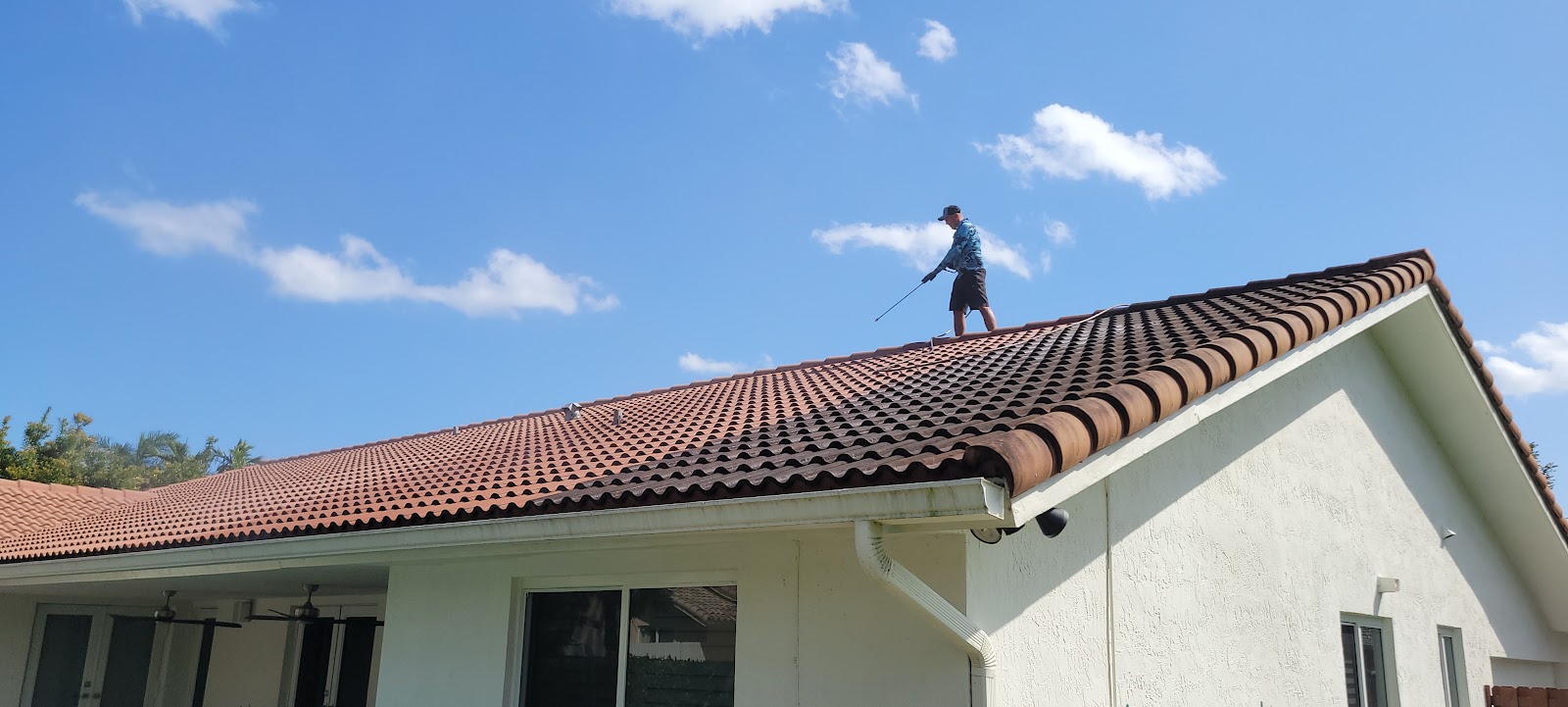
- Barrel-tile and clay roofs: soft wash on a several-year cycle, and sooner if streaking returns — a clean roof also sheds water better going into storm season.
- Stucco house wash: annually for most homes, more often on shaded north elevations.
- Driveways, walkways, and motor courts: annually, or twice a year under heavy canopy where they stay damp and slick.
- Coastal and canal-side glass: every six to eight weeks to stay ahead of salt haze; inland glass far less often.
- Travertine and stone pool decks: clean as needed, reseal every one to two years.
- Gutters: clear before hurricane season — palm fronds and canopy debris fill them fast, and an overflowing gutter pushes water toward the foundation of these older homes.
The smart window for the heavy work is April and May, before the June 1 to November 30 hurricane season. Getting the roof soft washed and the gutters cleared then means the property is shedding water correctly when the rains arrive.
Why owners here call Moppey
The Gables rewards a contractor who reads the surface first. We soft wash where pressure would strip a tile roof or open a coral-rock pore, we calibrate pressure only where a hard surface can genuinely take it, and we use plant-safe soft-wash chemistry that won't scorch the landscaping these homes are built around. Every job is documented with before-and-after photos, we can provide a certificate of insurance on request for gated communities and associations, and we stand behind the work with a 48-hour re-wash guarantee — if something isn't right, we come back. We handle high-end estates, historic homes, condos, and commercial frontages alike, hablamos español, and we're backed by 43 real Google reviews from Miami customers.
If you own or manage a property anywhere in Coral Gables — from a Riviera bungalow to a Deering Bay estate to a Miracle Mile storefront — call Moppey at +1 877-754-5614 for a free quote. Most requests get a same-day reply, and we'll tell you honestly what needs cleaning, what needs sealing, and what's better left alone.