Moppey Spottless Clean Pros
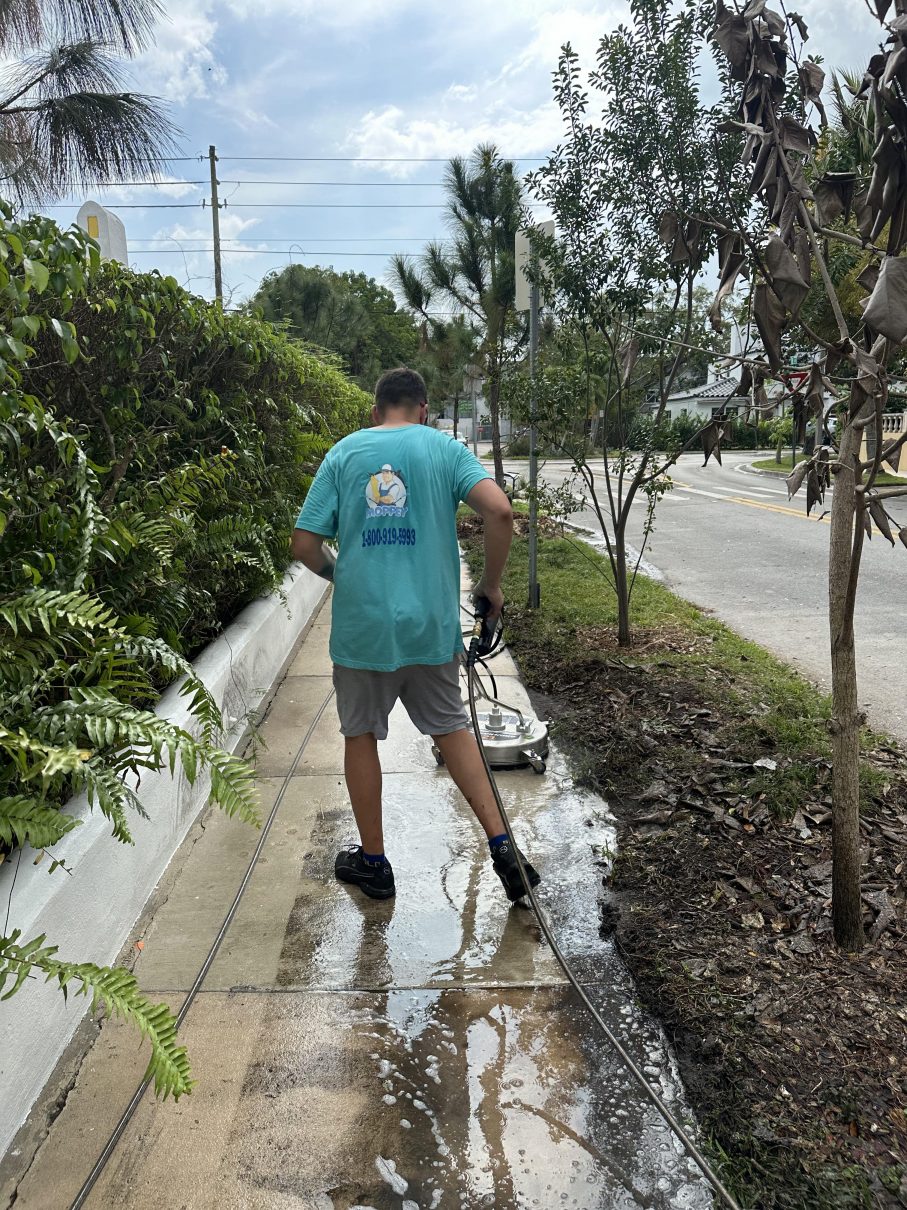
Moppey technician pressure washing a Miami walkway with a surface cleaner

Rated 5★ · 43 reviews

Pressure Washing Miami, FL

High-PSI cleaning that strips years of Miami grime off concrete, pavers, and walkways — no stripes, no gouges, no shortcuts.

Serving Miami & surrounding South Florida

Rated 5★ · 43 reviewsFully InsuredResidential & CommercialSoft Wash SafeHablamos Español

The Miami problem

Why pressure washing matters in Miami

Your driveway told the truth long before you noticed. Miami sun bleaches the top layer, humidity feeds a dark film in every low spot, and tire traffic grinds oil and rubber into the pores. What starts as a faint gray shadow ends up looking like a stain you assume is permanent. It usually isn't.

Pressure washing is the high-PSI side of exterior cleaning, and it belongs on the surfaces that can take it: poured concrete, brick, pavers, and stone flatwork. Done correctly, high pressure lifts embedded dirt, algae, and traffic grime out of the surface instead of just wetting it down. Done carelessly, the same wand leaves zebra stripes, etched swirl marks, and torn paver joints.

Moppey pressure washes the surfaces that call for it and soft washes the ones that don't. That single rule is why your concrete comes back even and bright, and why we won't drag a turbo nozzle across your roof or stucco to save time. The right method for the surface, every time.

What’s included

What our pressure washing covers

  • Driveways — concrete, exposed aggregate, brick, and paver surfaces cleaned edge to edge
  • Sidewalks, walkways, and front entry paths, including the strip between your property and the curb
  • Patios, lanais, and screened-enclosure slabs
  • Pool decks and coping (calibrated pressure so we don't chew up the surface)
  • Concrete and paver driveaprons, garage floors, and parking pads
  • Tire marks, rust bleed, irrigation stains, and organic black spotting lifted from the pores
  • Oil and grease spot pre-treatment on driveways and pads before the main wash
  • Paver joint re-sanding available after cleaning to lock the surface back in
  • Post-wash rinse of walls, foundations, and landscaping so nothing dries with a dirty film

Our method

How we clean it safely

We start with a walk of the surface, not the trigger. Concrete, pavers, and stone each take pressure differently, so we set PSI and nozzle to the material in front of us and spot-treat oil, rust, and heavy organic staining before the first pass. The workhorse for flatwork is a rotary surface cleaner — a shrouded attachment that spins the water in an even circle so the whole slab cleans at one consistent pressure. That's what erases the classic mistake homeowners fear: the striped, patchy look you get when someone free-hands a wand across a driveway. We finish edges and tight spots by hand so the clean line runs corner to corner with no missed border.

We bring our own commercial equipment and water supply, protect adjacent walls, screens, and plant beds, and keep runoff moving off the surface instead of pooling. On pavers we clean at a pressure that lifts grime without blasting out the joint sand, then re-sand on request so the surface stays locked and stable. Nothing gets left wet and dirty — we rinse the whole work area down before we pack up.

Soft wash vs pressure wash

Concrete driveways, sidewalks, brick, and pavers are exactly what high-PSI pressure washing is built for — dense, hard surfaces that clean best under real pressure. We save soft washing for the surfaces where high pressure does damage (roofs, painted stucco, wood, screens), so on this page you're getting the full-strength method the material can handle.

Best for

Who this service is for

  • Homeowners with a darkening concrete or paver driveway they assumed was permanently stained
  • Front walkways, entry paths, and the sidewalk strip that shape a home's first impression
  • Pool decks and patios that turn slick and green in the rainy season
  • Real estate agents prepping a listing's curb appeal before photos and showings
  • HOAs and property managers maintaining shared walkways, entrances, and parking pads
  • Storefronts and commercial entrances with foot-traffic grime and gum on the concrete

Miami surface insight

Miami's flatwork gets attacked from below as much as above. Poured concrete and pavers are porous, and our near-constant humidity, afternoon storms, and dense shade keep the surface damp long enough for algae and mildew to root down into those pores — which is why the darkest patches always show up in low, shaded, north-facing spots that never fully dry. Rinsing does nothing; the growth is living inside the surface. High-PSI cleaning with a surface cleaner reaches into the pores and flushes it out, and on pavers we can re-sand the joints afterward so weeds and growth have less room to creep back in.

Insured — COI on request
Plant-safe soft washing
Before & after photos
Satisfaction guarantee

In-depth guide

Pressure Washing in Miami: the complete guide

Pressure washing in Miami: the complete guide to getting hard surfaces clean the right way

Pressure washing is the highest-force method in exterior cleaning, and in Miami it does its best work on the ground: driveways, sidewalks, patios, pool decks, pavers, and concrete flatwork that have gone gray, green, or blotchy under years of sun, humidity, and traffic. The catch is that "high force" and "the right method" are not the same thing. A surface cleaner running at the correct pressure on porous concrete restores it evenly; the same machine free-handed with a turbo nozzle carves permanent stripes into it. This guide covers what professional pressure washing actually involves in South Florida, which surfaces belong under real PSI versus a soft wash, what drives the cost, and how to keep the results from disappearing by the next rainy season.

Pressure washing vs. power washing vs. soft washing — the terms that trip people up

Most Miami property owners use these three terms interchangeably. They are not the same, and knowing the difference tells you what you're actually paying for.

  • Pressure washing uses unheated water at high PSI. It's the standard for hard, durable flatwork — concrete, brick, pavers, and stone — where mechanical force lifts embedded grime out of the pores.
  • Power washing technically means the same high-pressure water, but heated. Hot water cuts grease, gum, and oily buildup faster, which is why it earns its place on commercial drive-thrus, dumpster pads, and garage floors more than on a residential driveway.
  • Soft washing drops the pressure below roughly 500 PSI and lets a cleaning solution do the work. It's the only safe method for roofs, painted stucco, siding, screens, and wood — surfaces that high pressure damages.

The mistake that ruins Miami properties is applying pressure washing to soft-washing surfaces. High PSI blasts the granules off asphalt shingles and voids most roof warranties, etches stucco, splinters wood fences, and shreds screen enclosures. A careful company runs both methods and picks by the material in front of it. Pressure for the driveway, soft wash for everything the driveway connects to.

Why Miami flatwork gets dirty faster than almost anywhere else

South Florida stacks four problems on top of ordinary weathering, and all four hit hard surfaces:

  • Relentless organic growth. Southeast Florida sits in the highest-density algae zone in the country. Poured concrete and pavers are porous, and near-constant humidity, daily storms, and dense shade keep flatwork damp long enough for algae and mildew to root down inside the pores. That's why the darkest patches always appear in low, shaded, north-facing spots that never fully dry — and why rinsing does nothing. The growth is living inside the surface, not sitting on top of it.
  • Efflorescence. The white, chalky haze that surfaces on pavers, concrete, and travertine is efflorescence — mineral salts migrating up through the material and crystallizing as moisture evaporates. It's cosmetic but stubborn, and it has to be treated correctly before any sealing, or you lock the haze in permanently.
  • Miami's hard water. The city draws from the limestone Biscayne Aquifer and has the hardest water among major Florida cities, around 11 grains per gallon. That mineral load leaves crusty deposits and can flash-spot a surface if it's allowed to dry mid-wash — one reason technique and rinse discipline matter.
  • Salt air and coastal corrosion. Properties near the water sit in a coastal ISO C5-M corrosion zone. Salt accelerates rust bleed from rebar, railings, and hardware, and those rust runs stain concrete and pavers below.

Put together, a Miami driveway doesn't just get "dirty." It grows an ecosystem. That's what a proper pressure wash flushes out.

What professional pressure washing actually looks like, step by step

A real job is a sequence, not a single pass with a wand:

  1. Surface walk and assessment. Concrete, pavers, exposed aggregate, and stone each take pressure differently. The tech identifies the material, spots oil, rust, and heavy organic staining, and sets PSI and nozzle accordingly.
  2. Spot pre-treatment. Oil and grease get a degreaser, rust bleed gets an appropriate rust remover, and heavy algae gets a pre-application so the pressure has something to lift rather than smearing it around.
  3. Surface-cleaner pass. The workhorse for flatwork is a rotary surface cleaner — a shrouded attachment that spins water in an even circle so the entire slab cleans at one consistent pressure. This is what prevents the striped, patchy "zebra" look that comes from someone free-handing a wand.
  4. Hand-detailing the edges. Corners, borders, expansion joints, and the strip against walls get finished by hand so the clean line runs corner to corner with no missed border.
  5. Paver joint re-sanding (on request). Pavers are cleaned at a pressure that lifts grime without blasting out the joint sand, then re-sanded so the surface stays locked, stable, and slower to regrow weeds.
  6. Full rinse-down. Walls, foundations, and landscaping in the splash zone get rinsed so nothing dries with a dirty film, and runoff is kept moving off the surface instead of pooling.

A professional crew brings its own commercial equipment and water supply — no scrambling to hook up to your spigot — and protects adjacent walls, screens, and plant beds throughout.

Surfaces we pressure wash, and how each is treated

Not all hard surfaces are handled identically. The pressure, nozzle, and prep change by material:

  • Poured concrete (driveways, sidewalks, garage floors, parking pads) — the highest-durability flatwork; takes a surface cleaner at full working pressure with oil and rust pre-treatment.
  • Pavers — cleaned at moderated pressure to protect the joint sand, then re-sanded to lock the field back in and slow weed growth.
  • Brick and exposed aggregate — pressure tuned so mortar joints and exposed stone aren't undercut.
  • Travertine and natural stone pool decks and coping — treated gently; travertine is soft and porous, so pressure is dialed down and efflorescence is addressed before any resealing.
  • Pool decks and lanais — calibrated pressure to avoid chewing up textured or painted deck coatings, plus attention to the slick, green film that forms in the rainy season.
  • Commercial concrete — sidewalks, entrances, dumpster pads, and drive lanes where gum, grease, and foot-traffic grime often call for hot water and higher volume.

Sealed surfaces get special care. If pavers or stone are sealed, an overly aggressive wash can cloud or strip the sealer — a good crew checks first and cleans accordingly.

What drives the cost of a pressure washing job

There are no flat, one-size prices in this trade, and any honest quote depends on what the tech sees. The real cost factors are:

  • Square footage and layout. A long driveway plus walkways plus a pool deck is more surface and more time than a single slab.
  • Surface type and condition. A lightly grayed driveway cleans fast; one with years of embedded algae, deep oil, or rust bleed needs pre-treatment and multiple passes.
  • Access and obstacles. Second-story balconies, tight side yards, gated communities, and long hose runs from the water source all add labor.
  • Add-ons. Paver re-sanding, sealing, rust or efflorescence treatment, and hot-water degreasing are separate line items because they're separate work.
  • Whether soft washing is mixed in. If the house, roof, or fence needs a soft wash alongside the flatwork, that's a different method and price.

The right way to get a number is a free quote where someone actually looks at the surface, not a per-square-foot guess sight unseen. Bundling driveway, walkways, and patio into one visit almost always costs less per surface than booking them separately.

How often to pressure wash in Miami — and the hurricane-season angle

For most Miami homes, once a year keeps concrete and pavers ahead of the algae, with high-shade or heavily trafficked surfaces closer to every 6 to 9 months. Coastal properties near Miami Beach, Key Biscayne, and Sunny Isles trend toward the shorter end because salt and constant moisture speed everything up.

Timing matters beyond frequency. Hurricane season runs June 1 through November 30, and the smart maintenance window is April to May, before the storms arrive. There's a practical reason: clean flatwork and clear drainage handle heavy rain far better. Clogged gutters — packed with palm fronds — overflow toward the foundation, and algae-slick pool decks and walkways turn dangerously slippery in daily downpours. A pre-season wash is as much about safety and water management as appearance.

DIY rental machine vs. a careful professional

A rented pressure washer looks like a money-saver until you understand what it can do to a South Florida surface:

  • Permanent striping and etching. Consumer machines lack a surface cleaner, so a homeowner free-hands a wand — and porous Miami concrete records every inconsistent pass as a stripe you can't wash back out.
  • Blown-out paver joints. Too much pressure blasts the sand out from between pavers, destabilizing the whole field and inviting weeds.
  • Damage to the wrong surfaces. People point rental machines at roofs, stucco, and screens and cause exactly the granule loss, etching, and tearing that soft washing exists to prevent.
  • The growth comes right back. Without proper chemistry and prep, high pressure only knocks off the visible top layer; the algae rooted in the pores regrows within months.

A professional brings a rotary surface cleaner, matched chemistry, the correct PSI for each material, insurance with a COI available on request, and — at Moppey — a 48-hour re-wash guarantee and before/after photos. The difference isn't the machine. It's knowing which pressure, nozzle, and solution each surface can take.

Signs it's time to book a pressure wash

  • Dark gray, green, or black patches in shaded, low, or north-facing sections of your driveway or patio
  • A pool deck or walkway that turns slick and slippery after rain
  • White chalky haze (efflorescence) surfacing on pavers, concrete, or travertine
  • Rust runs bleeding down concrete from railings, furniture, or rebar
  • Oil, tire, and traffic grime ground into the driveway apron
  • Weeds and growth creeping up through paver joints
  • A listing going on the market where curb appeal drives the first impression

If two or three of these sound familiar, the surface is overdue — and the longer organic staining sits, the deeper it roots. Annual maintenance costs far less than restoring flatwork that's been left to darken for years.

Moppey pressure washes the surfaces that call for it, soft washes the ones that don't, and tells you honestly what to expect before we start. If your Miami driveway, pavers, pool deck, or walkways are past due, call +1 877-754-5614 for a fast, free quote — most answered the same day, no hidden fees, and yes, hablamos español.
Recent work

Real Moppey results

Moppey technician pressure washing a Miami walkway with a surface cleaner
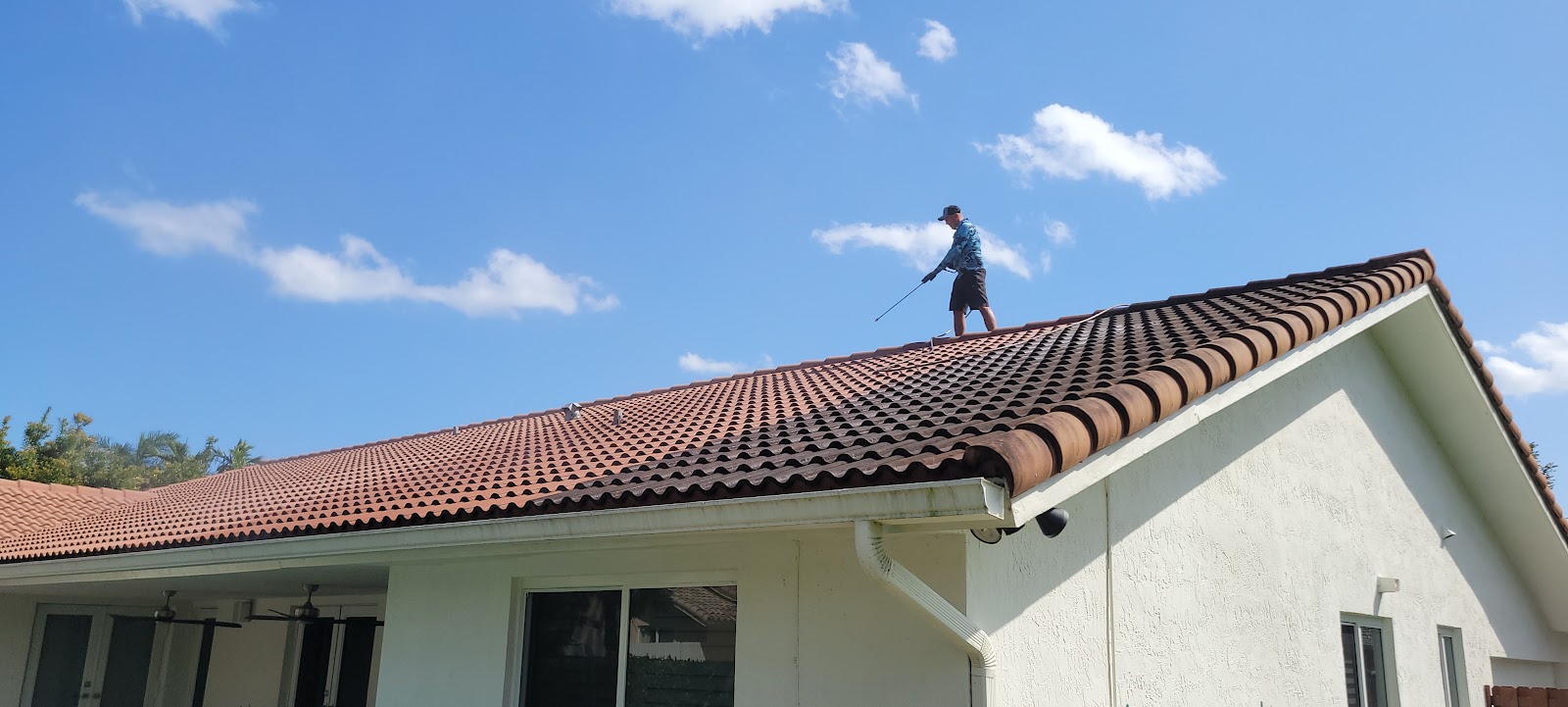
Soft washing a Miami barrel-tile roof
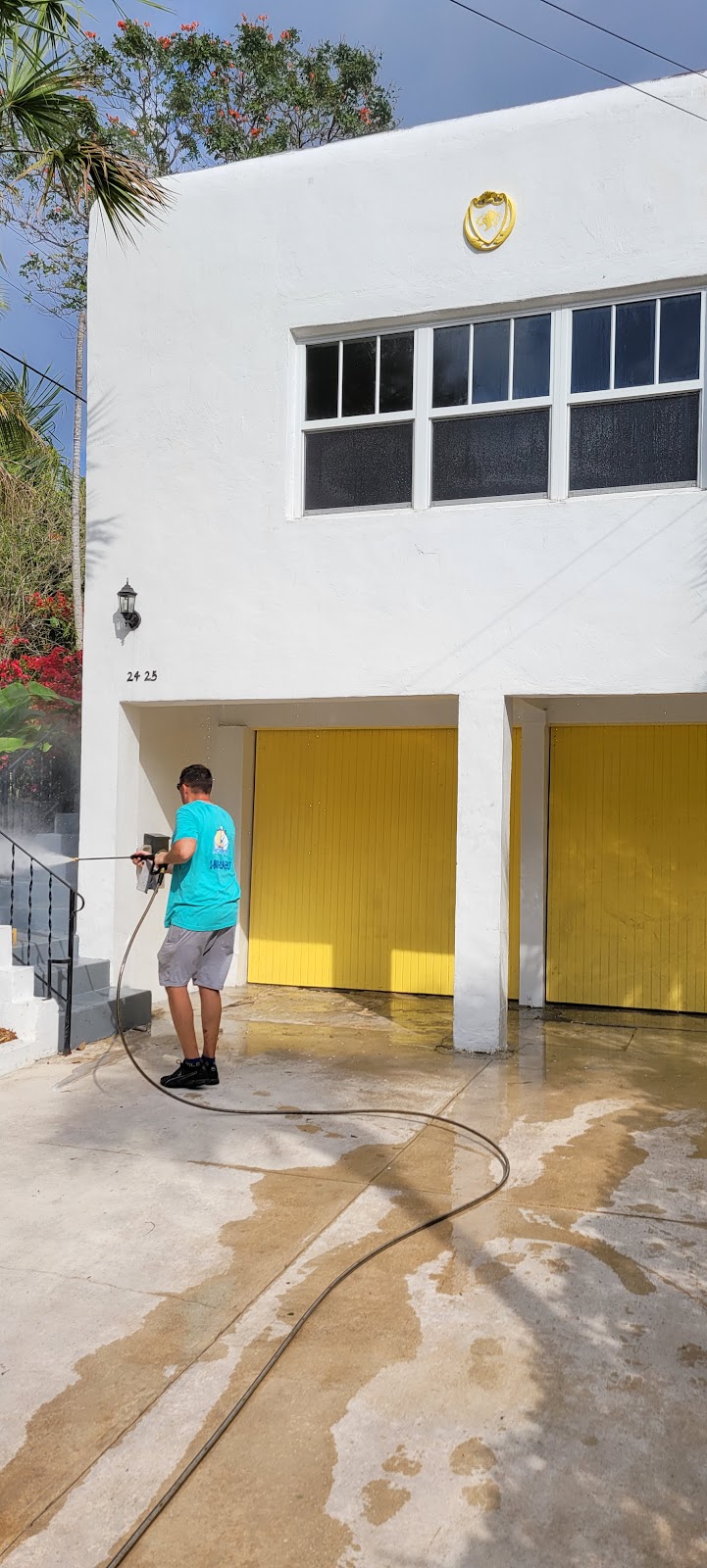
Freshly cleaned Miami driveway
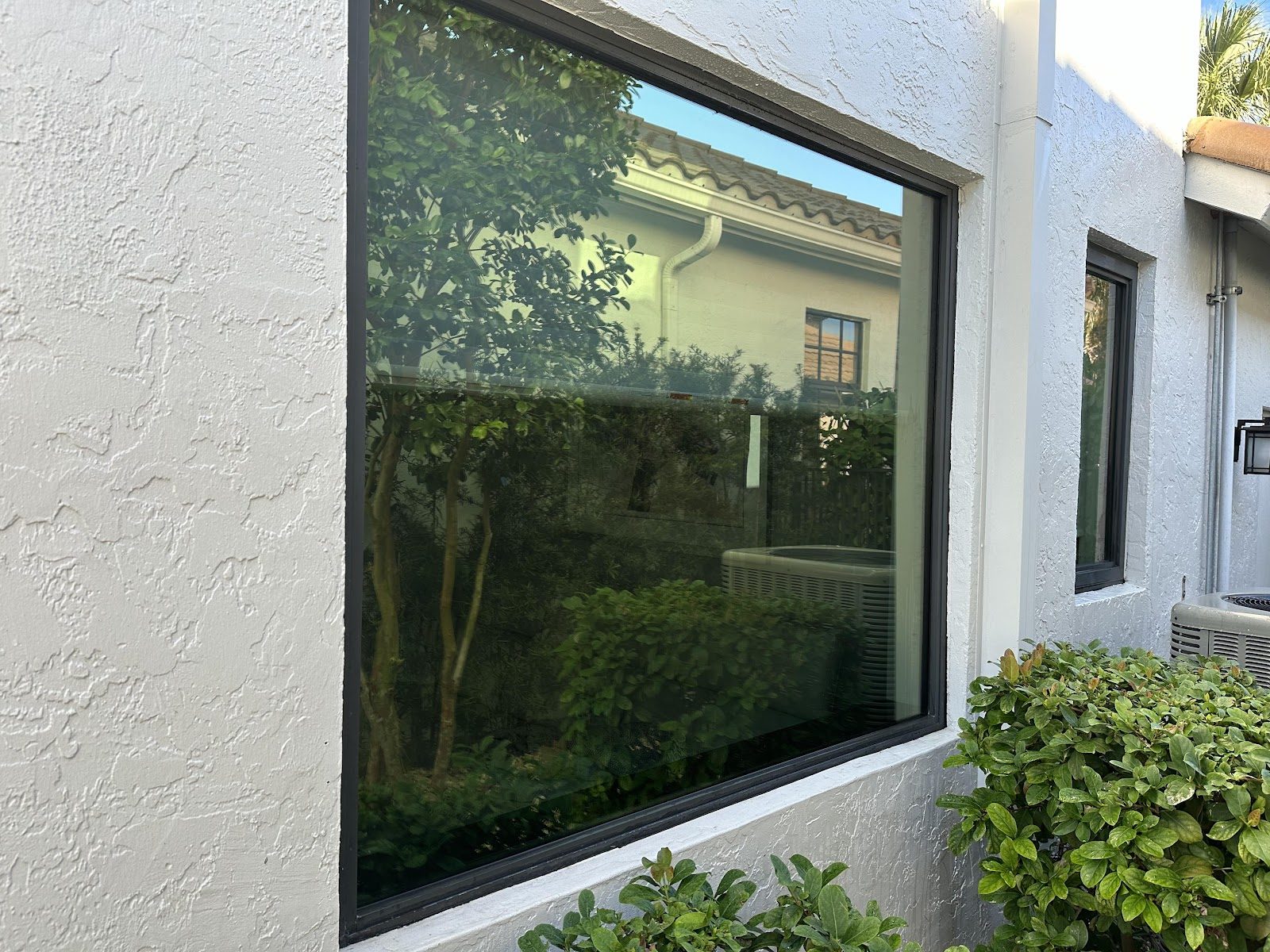
Clean exterior window on a Miami home

Social proof

What customers say

I had an issue with a dirty driveway and pool. I didn’t have the time or tools. Moppey came on time, fast — my drive looks like I can show it to my neighbor and my pool is usable again. Highly recommended.
MR GarfieldDriveway • Pool Verified Google review
They pressure-cleaned our pool deck and driveway and left everything spotless! Excellent service and team. Totally recommend them.
Gabriela RibeiroPool Deck • Driveway Verified Google review
100% recommend! I was only going to have my windows cleaned but they did such a good job I also included my patio and the driveway. They are very precise with every detail.
Jaime L.Windows • Patio • Driveway Verified Google review

Good to know

Pressure Washing FAQs

Not the way we do it. Zebra stripes and swirl marks come from free-handing a wand at close range. We clean flatwork with a rotary surface cleaner that applies one even pressure across the whole slab, then hand-detail the edges. The result is a consistent finish with no lines and no gouging.

Most of them, yes. We pre-treat oil, grease, and rubber with a degreaser before the main wash so the pressure has something to lift. Deep, old oil that has soaked all the way through cured concrete can leave a faint shadow, and we'll tell you honestly what to expect before we start rather than promise a miracle.

Both. Pavers need a lighter touch so we don't blast the sand out of the joints, so we adjust pressure for them and can re-sand the joints after cleaning to lock everything back in place. Concrete, brick, exposed aggregate, and stone flatwork are all in scope.

For most Miami homes, once a year keeps concrete and pavers ahead of the algae, with high-shade or heavily-trafficked surfaces closer to every 6 to 9 months. Our humidity and rain grow organic film fast, so annual maintenance costs far less than restoring a surface that's been left to darken for years.

Because high pressure damages them. It strips protective granules off shingles (and voids most roof warranties) and etches stucco. Those surfaces get our soft wash instead — low pressure plus a cleaning solution. We match the method to the material, which is why your driveway gets full pressure and your roof does not.

Yes. We clean front walkways, entry paths, and the public sidewalk strip along your property — the surfaces that set the first impression before anyone reaches your door. It's a small add that makes the whole frontage read clean.

Yes. We arrive with commercial pressure-washing equipment, our own water supply, and surface-cleaner attachments, so there's no scramble to hook up to your spigot. We protect nearby walls, screens, and landscaping and rinse the full work area down when we finish.

Request a free quote by phone or through the form and tell us roughly what you need cleaned — driveway, walkways, patio, pool deck, or a mix. We give you a straight price with no hidden fees. Fast free quotes, most answered the same day, and yes, hablamos español.

Power washing uses heated water; pressure washing uses unheated water at the same high PSI. For a typical residential concrete or paver driveway, unheated pressure washing with a surface cleaner is all it takes. Heat mainly earns its place on greasy commercial surfaces like drive-thrus, dumpster pads, and garage floors, where hot water cuts oil and gum faster. We bring the right setup for the surface, so you don't pay for heat you don't need.

No, that's almost always efflorescence: natural mineral salts migrating up through the pavers and crystallizing as moisture evaporates. It's cosmetic and common in Miami because of our humidity and hard water. It has to be treated with the right solution before any sealing, or sealing will lock the haze in permanently. We identify it during the walkthrough and treat it correctly rather than sealing over it.

Standard pressure alone usually won't fully lift them. Miami has the hardest water among major Florida cities, drawn from the limestone Biscayne Aquifer at around 11 grains per gallon, so mineral crusting and efflorescence are common on flatwork. These respond to a targeted acid or mineral treatment paired with the wash, not to pressure by itself. We assess the deposit type and treat it specifically instead of just blasting harder and risking etching.

It can if it's done at the wrong pressure, which is exactly why we check for sealer before we start. On sealed pavers or soft, porous travertine we drop the pressure and adjust technique so we lift the grime without clouding or peeling the sealer. If the sealer is failing anyway, we'll tell you honestly and can discuss stripping and resealing as a separate step.

Before. The best window is April to May, ahead of the June 1 to November 30 hurricane season. Clean flatwork and clear drainage handle heavy rain far better, and algae-slick pool decks and walkways get dangerously slippery in daily storms. A pre-season wash is as much about safety and water management as curb appeal, and it sets the surface up for the wettest months.

For straight hard-surface pressure washing, the runoff is mostly water and lifted grime, and we keep it moving off the surface instead of pooling. When we pre-treat oil, rust, or organic staining, we use the appropriate product and rinse and neutralize the surrounding plants and landscaping so nothing gets scorched. We work responsibly around your beds and drains rather than letting concentrated runoff pool where it can do harm.

Yes. We handle HOA and property-management flatwork including shared walkways, entrances, drive lanes, and parking pads, and we can provide a certificate of insurance on request before any work begins. Larger commercial concrete often benefits from hot water and higher volume for gum and traffic grime, and we can set up recurring maintenance so the common areas stay consistently clean instead of being cleaned reactively.

Get your free pressure washing quote

Tell us what needs cleaning and we’ll help you choose the right service — from roof stains and driveway grime to windows, patios, balconies and commercial walkways.

Fast free quotes — most answered same day · Hablamos Español

Call NowGet QuoteDirections