Local guide
Exterior cleaning in Design District: the complete guide
Exterior Cleaning in a Neighborhood That Is Itself a Design Object
The Miami Design District is not a strip mall with expensive tenants. It is eighteen or so blocks north of Wynwood where the architecture is the product. Craig Robins and Dacra rebuilt it in the 2000s so that no two storefronts match: one facade is polished concrete, the next is perforated aluminum, the one after that is mirrored glass or a living vertical garden. The parking garages are landmarks — the Museum Garage with its white blobs and pink graphics, City View clad like a diamond-cut tin. Palm Court has Sou Fujimoto's blue-glass "Fly's Eye Dome" and a geometric canopy over a central paseo lined with shade trees. Hermes, Dior, Cartier, Balenciaga, Fendi, Chanel and roughly two hundred other brands run immersive flagships here, and every one of them treats its exterior as an extension of the retail experience.
That changes what "exterior cleaning" means. On most Miami properties you are removing grime. Here you are protecting a finish that a designer specified, a client paid a premium for, and a brand audits. The wrong nozzle on a mirrored facade, the wrong chemical on anodized aluminum, or a rinse that leaves hard-water spots on flagship glass is not a cosmetic miss — it is visible damage on a surface where the whole point is that nothing is out of place. This guide goes past the basics and into the specifics of keeping Design District exteriors immaculate without ever compromising the material.
The Facade Materials Here Need Named Methods, Not a Default Setting
The District was built to avoid the cookie-cutter storefront, which means an exterior tech has to identify the material before choosing a method — there is no single "facade wash" that works building to building.
- Perforated and coated aluminum screens and canopies. These are everywhere as sunshades, garage skins and signage backers. The coating (anodized or powder) is what gives them their color and corrosion resistance. Acidic degreasers and abrasive pads pit that coating; once it's compromised, coastal salt accelerates oxidation. We use pH-neutral cleaning and soft rinsing so the finish stays intact.
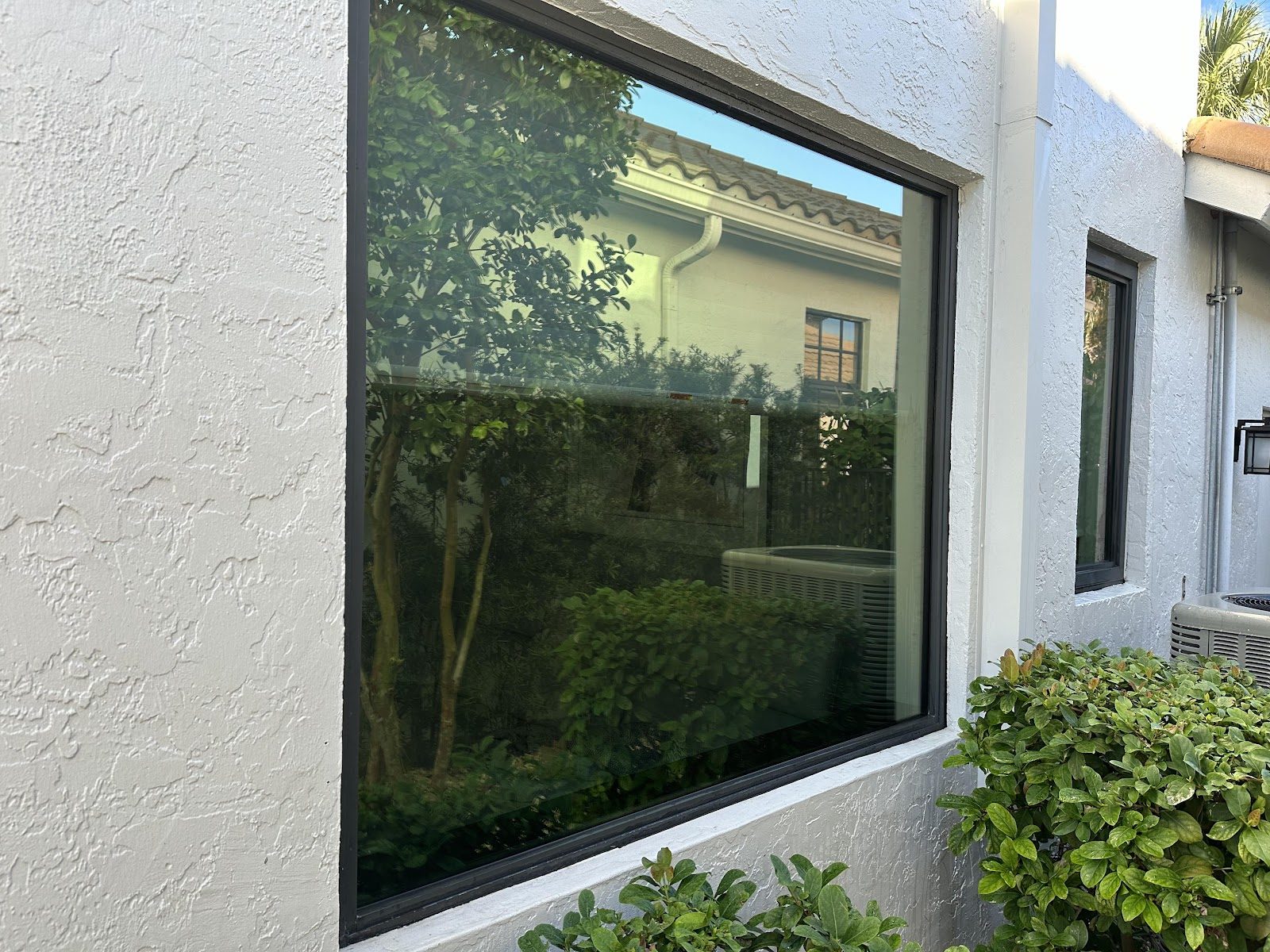
- Mirrored and highly reflective glass facades. Reflective panels show every water drop and squeegee streak because there is no busy background to hide them. They also show mineral spotting instantly. These get a purified-water or spot-treated finish, not a garden-hose rinse.
- Polished and architectural concrete. Beautiful, and porous. Miami humidity feeds algae and mildew in the shaded recesses, and once organic growth roots into the pores a pressure blast just drives it deeper while scarring the surface. Soft washing under 500 PSI with a controlled solution lifts the growth without opening the concrete up further.
- Living/green walls and planted facades. These are a signature District element and they sit right next to hard surfaces we're cleaning. The chemistry we bring matters here specifically because overspray reaches plants — our soft-wash approach uses plant-safe application and we shield vegetation rather than betting a boutique's vertical garden on it.
Awnings, Canopies, Valet Zones and the Public Realm
Beyond the storefront itself, a Design District property has exterior surfaces most cleaners overlook until a brand manager points at them.
Fabric and metal awnings and entry canopies collect a green-black film in this climate — the same Gloeocapsa magma and algae that streak roofs elsewhere in Miami settle on any shaded horizontal surface. On a boutique canopy that film sits directly above the logo. Awning fabric is delicate; it gets low-pressure soft washing, never a wand held close. Valet drop-offs and porte-cocheres take concentrated tire marks, brake dust and oil drip in a tight footprint that photographs badly because it's the first thing an arriving shopper sees. Rooftop amenity decks on the residential and hospitality buildings add pool decks, pavers, glass railings and screen enclosures to the list — soft, salt-exposed surfaces that need the coastal treatment, not a suburban one.
The Cadence Is Faster Here Than Anywhere Else in Miami
Two Miami realities compound in the District. First, the water: Miami pulls the hardest water of any major Florida city from the limestone Biscayne Aquifer, around 11 grains per gallon, so every rinse that dries on glass leaves calcium and magnesium spots. Second, the salt: the District sits close enough to Biscayne Bay to fall in a coastal exposure band (ISO C5-M territory), and salt aerosol etches glass and rusts unprotected metal continuously, not seasonally.
Now add the foot traffic. Flagship glass here is touched, breathed on, and photographed by thousands of shoppers a day. Coastal Miami storefront glass generally needs professional attention every six to eight weeks just to stay clear; in the District's highest-traffic corridors, brands that want a spotless open every morning run tighter recurring cycles than that. This is exactly why a recurring maintenance plan beats one-off calls here — the surfaces never get the chance to build up spotting, biofilm or salt haze that then requires aggressive (and riskier) removal. It also protects the material: routine soft washing prevents the deep-rooted growth that eventually forces someone to over-pressure a delicate facade to catch up.
Brand Standards, Photo Days and Event Prep
The District runs on a calendar of art fairs, fashion activations, gallery openings and the Miami Design District's own programming. Brands schedule exterior refreshes ahead of these — a facade and glass clean the night before a launch so morning press photos are flawless. This is scheduling-sensitive work: it happens off-hours, moves around retail and event timing, and has to be finished and dry before doors open or a photographer arrives. It also has to leave zero residue on the sidewalk or plaza, because the public realm here is curated and shared, not just a strip of concrete out front.
Hurricane Season in a Walkable District
Atlantic hurricane season runs June 1 to November 30, and the pre-storm window in April and May is the right time to get exteriors in shape. In a low-slung, tree-shaded, pedestrian-first district the priorities are specific: clear the roof and any rooftop drains so water sheds instead of pooling, clean gutters and scuppers that palm fronds and District landscaping clog, and get glass and facades cleaned before the storms drive salt spray and organic debris across them. After a storm, exteriors need a salt-and-debris rinse promptly — leaving wind-blown salt film on flagship glass and coated metal is how permanent etching and rust start.
Residential and Mixed-Use Above the Shops
Not everything here is retail. Lofts and residential units sit above the boutiques, and the District's newer residential and hospitality buildings bring balconies, floor-to-ceiling residential glass, exterior walls and shared amenity spaces. These have their own access and liability requirements — high-rise and HOA exterior work needs the right equipment and proper liability and workers-comp coverage, and building managers can request a certificate of insurance before we're on site. Whether it's a single loft balcony or a full building's storefront program, we bring the method the surface calls for and the paperwork the property requires.
Why Design District Operators Call Moppey
We treat premium surfaces like they cost what they cost. We identify the material before we pick a method, we soft wash where high pressure would do damage, we treat hard-water and salt spotting on glass instead of re-rinsing it, and we schedule around retail hours, events and photo days so the exterior is spotless and dry before it's seen. We offer recurring maintenance plans that keep these surfaces from ever building up the grime that forces risky catch-up cleaning, before/after photos, a certificate of insurance on request, and a 48-hour re-wash guarantee. Forty-three real five-star Google reviews back it up. No damage, no streaks, no shortcuts. Hablamos Español.
For a facade, storefront, sidewalk or full-building program in the Design District, call Moppey Spottless Clean Pros at +1 877-754-5614 or send photos through our quote form for a free quote — most requests are answered the same day.