Moppey Spottless Clean Pros
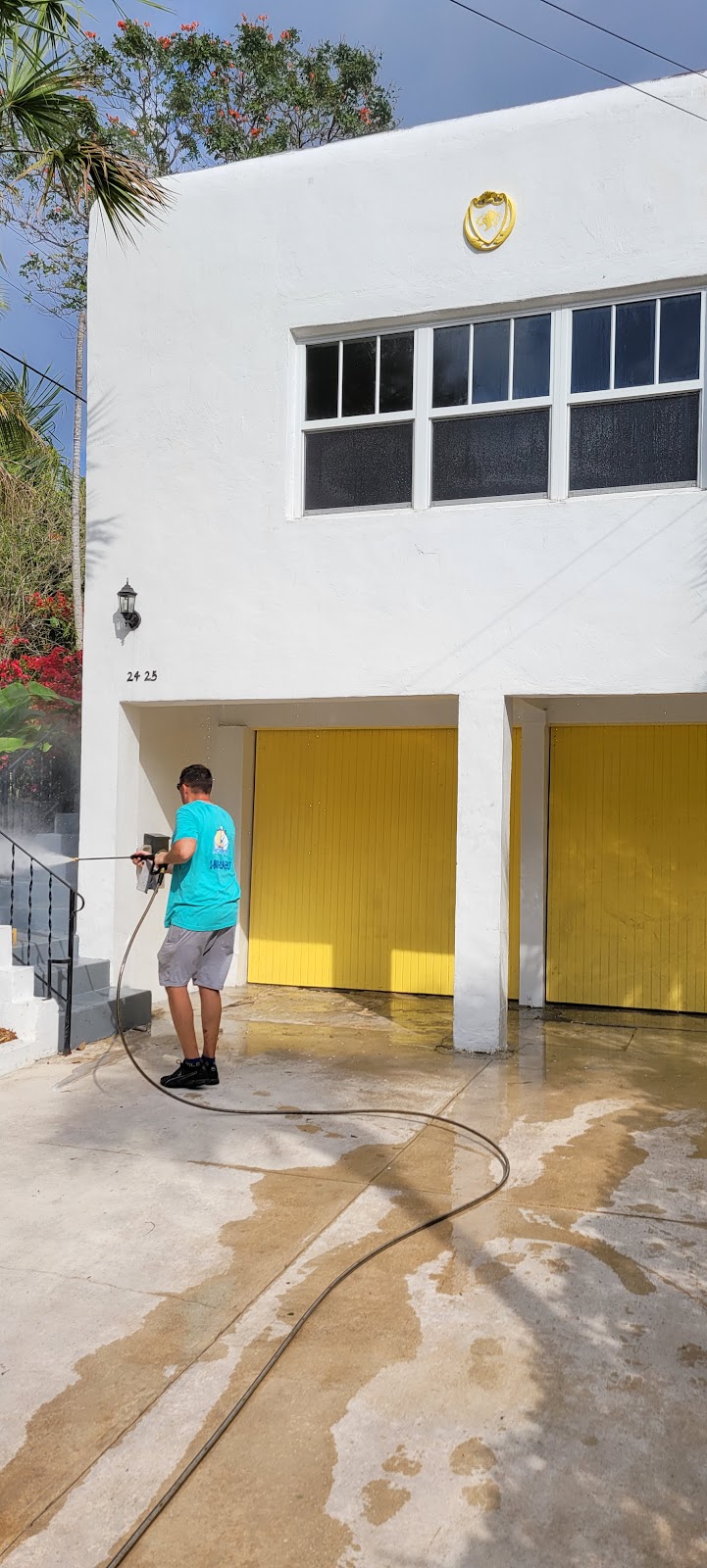
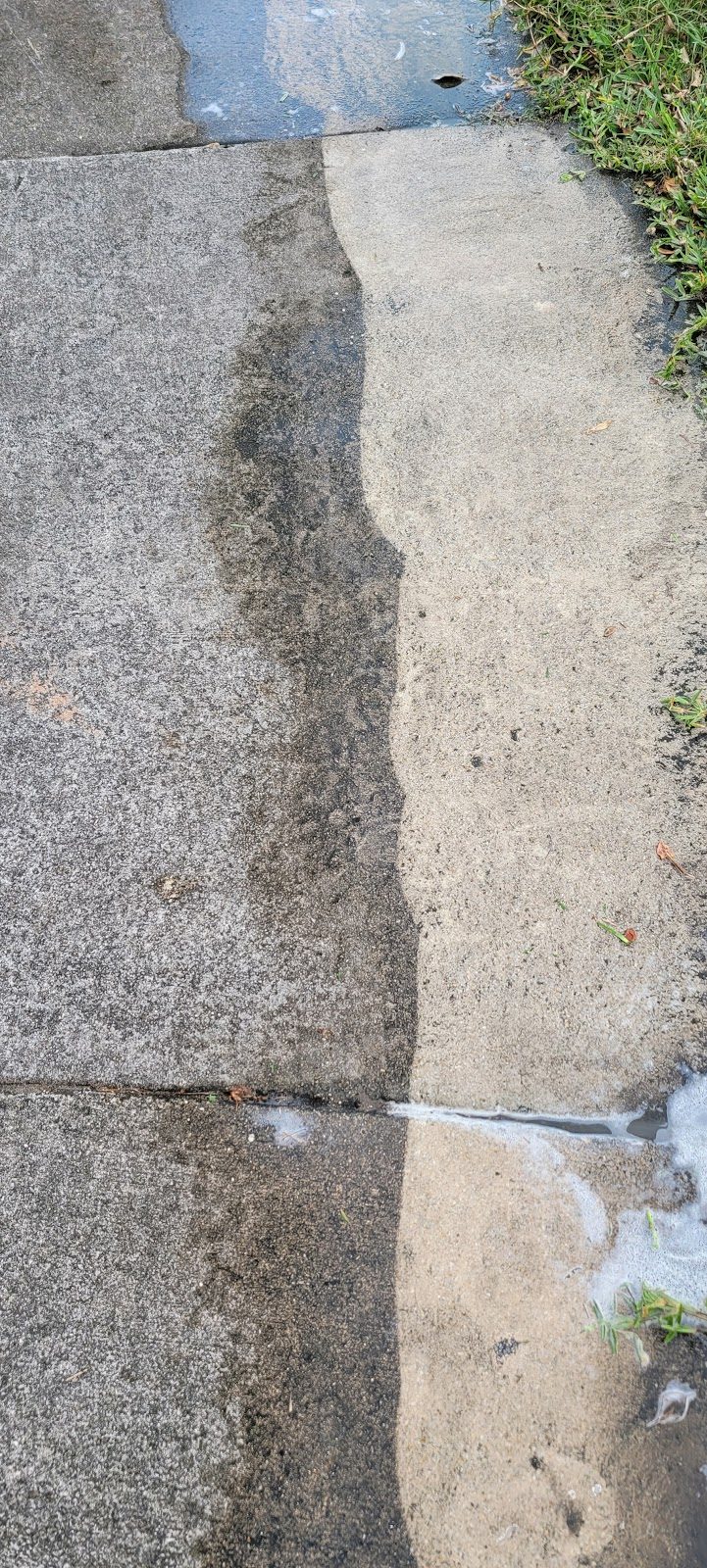
Concrete cleaning before and after in Miami

Rated 5★ · 43 reviews

Concrete Cleaning Miami, FL

Bare concrete restored to one even, bright tone — rust bleed, red clay, oil, and deep organic staining flushed out of the pores, no wand stripes.

Serving Miami & surrounding South Florida

Rated 5★ · 43 reviewsFully InsuredResidential & CommercialSoft Wash SafeHablamos Español

The Miami problem

Why concrete cleaning matters in Miami

Concrete is porous, and in Miami that works against you every single day. The slab looks solid, but under a microscope it is a sponge of open capillaries, and our humidity, daily rain, and dense shade keep those pores damp long enough for organic growth to root down inside them. That is why bare concrete goes from a clean pale gray to a mottled green-black over a few seasons, and why a garden hose barely dents it — the staining is living below the surface, not sitting on top of it.

Then there is everything the concrete pulls in from the outside. Rebar and metal furniture bleed rust up through the slab. Red landscaping clay tracks in and sets. Oil, fertilizer, leaf tannins, and irrigation minerals each leave their own kind of mark, and each one needs its own treatment before pressure ever touches it. Blast a stained slab with a bare wand and you get zebra stripes over stains that never actually lifted.

Moppey cleans concrete as a material, not just a shape. Poured slabs, broom-finish flatwork, stamped concrete, garage floors, and large commercial pads all come back to one even tone with a surface cleaner and the right pre-treatment for whatever is staining them. No striping, no missed lanes, no shortcuts.

What’s included

What our concrete cleaning covers

  • Whole slab cleaned to one uniform tone with a rotary surface cleaner — no light-and-dark wand lanes
  • Deep organic staining (the green-black film living in the pores) pre-treated so it lifts instead of smearing
  • Rust bleed treated with an oxalic-based remover — sprinkler rust, rebar bleed, and metal-furniture stains
  • Oil, grease, and transmission-fluid spots degreased and worked before the main pass
  • Red clay, leaf tannin, and fertilizer staining identified and spot-treated by hand
  • Efflorescence (chalky white mineral haze) flagged on the slab and treated before any sealing
  • Broom-finish, smooth-troweled, stamped, and exposed-aggregate concrete each cleaned at the right pressure
  • Garage floors, carport pads, patios, walkways, and slab entries done edge to edge
  • Commercial and HOA flatwork — parking pads, loading zones, breezeways, and equipment aprons
  • Cracks, spalling, and surface pitting noted for you so nothing gets made worse under pressure
  • Full rinse of the work area and adjacent walls so no dirty film dries back down

Our method

How we clean it safely

We read the slab before we pull a trigger. Concrete varies more than people think — a smooth-troweled garage floor, a broom-finished walkway, and a stamped patio all take pressure differently, and a decorative or older, softer mix can pit under the same PSI that a dense new pour shrugs off. So we set pressure and nozzle to the finish in front of us, then spot-treat by stain type: an oxalic remover for rust bleed, a degreaser for oil, an organic solution for the green-black growth, and a separate approach for red clay and tannins. Each one gets dwell time to break down before the wash, because raw pressure on an untreated stain just polishes around it.

The main pass is a rotary surface cleaner — a shrouded head that spins two matched jets at a fixed height, so the entire slab lifts at one consistent pressure and dries to a single even shade instead of the striped, patchy look a hand-held wand leaves. We overlap passes, then hand-detail edges, control joints, and the tight spots a round head can't reach. On stamped or colored concrete we ease off and lean on chemistry so we don't chew the surface texture or fade the color. We watch for efflorescence, that chalky mineral haze that rises through the slab, because it has to be handled before anyone seals — seal over it and the concrete clouds within months. We bring our own commercial equipment and water, protect adjacent walls and landscaping, keep runoff moving off the surface, and rinse the whole area down before we pack up.

Soft wash vs pressure wash

Bare, cured concrete is dense and hard — this is exactly what high-PSI surface cleaning is built for, and it's the only way to flush ground-in grime out of the pores. We ease off only on decorative concrete: stamped, colored, or older soft-mix slabs get lower pressure and more chemistry so we don't erode the texture, and if concrete abuts stucco, paint, or wood, those adjacent surfaces get a soft-wash touch, never full pressure.

Best for

Who this service is for

  • Bare concrete driveways, aprons, and carport pads gone gray, blotchy, or green from Miami humidity
  • Garage and warehouse floors with ground-in oil, tire marks, and traffic film
  • Stamped or colored concrete patios and entries that need cleaning without stripping the finish
  • Slabs with rust bleed from rebar, sprinkler heads, or metal patio furniture
  • Concrete with set-in red clay, leaf tannin, or fertilizer staining
  • Commercial and HOA flatwork — loading zones, breezeways, dumpster pads, and parking slabs
  • Slabs being prepped for sealing or resurfacing that need a clean, efflorescence-free surface first
  • Homes prepping to list where a bright, even slab lifts curb appeal at the street

Miami surface insight

Concrete takes a specific beating in Miami. Our tap water is the hardest of any major Florida city — roughly 11 grains per gallon pulled from the limestone Biscayne Aquifer — so every cycle of sprinkler overspray dries a fresh load of calcium and rust onto the slab, and those mineral and metal stains set stubbornly. At the same time, the porosity that makes concrete durable makes it a perfect host: near-constant humidity, afternoon storms, and shade keep the pores wet long enough for algae and mildew to colonize deep inside, which is why the darkest patches always sit in the low, north-facing, never-fully-dry corners. Rinsing does nothing because the growth is inside the material. A surface cleaner run at real pressure reaches into the pores and flushes it out — and treated first, it stays out far longer than a quick blast-off.

Insured — COI on request
Plant-safe soft washing
Before & after photos
Satisfaction guarantee

In-depth guide

Concrete Cleaning in Miami: the complete guide

Concrete cleaning in Miami is a materials problem, not a spray-and-go job

Most people think of concrete as inert — a hard, permanent surface that just gets dirty on top. In Miami, that mental model is exactly why so many slabs look tired. Concrete is a porous, mineral-rich material that behaves less like stone and more like a hard sponge, and in a subtropical climate it is constantly absorbing water, feeding biological growth, and pulling in stains from the water, soil, and metal around it. A proper concrete cleaning treats the slab as a material with its own chemistry and finish, not as a flat shape to blast. That distinction is what separates a wash that lasts a year from one that greens up again by the next rainy season.

This guide goes past the basics already on this page. It covers how professional-grade surface cleaning actually works, the full stain-by-stain playbook, the sealing question everyone eventually asks, how concrete differs from pavers and travertine, and the specific Miami conditions — humidity, the limestone Biscayne Aquifer, salt air, and hurricane season — that make local slabs stain faster than almost anywhere in the country.

Why a surface cleaner beats a pressure-washing wand on concrete

The single biggest quality difference on concrete comes down to the tool. A bare pressure-washing wand concentrates all its force into a narrow fan that you sweep by hand. Held an inch too close or dragged a hair too slow, it etches the cement paste and blows out the fines, leaving the striped "zebra" or "tiger stripe" pattern you see on so many DIY driveways. Those stripes are permanent — they are gouges in the surface, not dirt.

A rotary surface cleaner solves this with basic physics:

  • Two matched jets spin inside a shrouded head at a fixed height, so every square inch of the slab gets the same pressure and the same dwell time. The result dries to one uniform tone instead of light-and-dark lanes.
  • The shroud contains overspray and slurry, which keeps dirty runoff off freshly cleaned walls, screens, and windows — a real issue on tight Miami lots where the driveway sits three feet from the stucco.
  • Even, overlapping passes clean faster and more consistently than free-handing a wand, which matters on big commercial pads and HOA breezeways where a hand-held approach would take all day and still look patchy.

Edges, control joints, and the tight corners a round head cannot reach still get hand-detailed with a wand afterward — but that is finishing work, not the main clean. The difference in the final look is dramatic, and it is the number-one reason a careful professional result outlasts a rental-machine job.

The stain-by-stain playbook

"Clean the concrete" is really a dozen different jobs, because each stain type is a different problem with a different fix. Pressure is only the last step; the treatment that comes before it is what actually lifts the stain.

  • Organic growth (the green-black film): This is the most common Miami stain and it lives inside the pores, which is why rinsing does nothing. It gets a hypochlorite-based cleaning solution that kills the biology at the root, then the surface cleaner flushes it out. Treated properly, it stays gone far longer than a plain blast-off.
  • Rust bleed: Orange fans from sprinkler heads, rebar bleed rising through the slab, and stains under metal furniture are chemical bonds, not dirt. They need an oxalic-acid-based rust remover that reacts with the iron and lifts it. Deep, long-set rust may lighten dramatically rather than vanish completely — an honest crew tells you that before starting.
  • Oil, grease, and transmission fluid: These sit in the pores of garage floors, carports, and parking pads. A degreaser is worked in and given dwell time before the main pass, sometimes with hot water where available, because cold water alone smears petroleum rather than releasing it.
  • Red clay, leaf tannins, and fertilizer: South Florida landscaping tracks in red clay that sets fast, and dropped leaves and fertilizer granules leave tannin and burn stains. Each gets identified and spot-treated by hand.
  • Efflorescence (chalky white haze): Not dirt at all — mineral salts pushed up through the slab by moisture. It has to be treated with a specific acid wash, and critically, it must be removed before any sealing. Seal over efflorescence and the slab clouds within months.

The through-line: raw pressure on an untreated stain just polishes the concrete around it. The pre-treatment is the job.

What the cleaning process actually looks like

A well-run concrete cleaning follows a repeatable sequence, and knowing it helps you spot a crew that is doing it right:

  1. Read the slab. Finish (broom, smooth-troweled, stamped, exposed-aggregate), age, and mix hardness all change the pressure setting. A decorative or older soft-mix slab pits at PSI a dense new pour shrugs off.
  2. Identify and pre-treat by stain type. Rust, oil, organic, clay, and efflorescence each get their own chemistry and dwell time.
  3. Protect the surroundings. Plants and grass get saturated with water first, metal and painted trim get masked, and runoff is kept moving off the surface rather than pooling into beds.
  4. Main pass with the surface cleaner, overlapping for even coverage.
  5. Hand-detail edges, joints, and corners.
  6. Full rinse of the work area and adjacent walls so no dirty film dries back down, plus a note of any cracks, spalling, or pitting so nothing gets made worse under pressure.

Should you seal concrete after cleaning?

Sealing is the question most Miami homeowners eventually ask, and the honest answer is: sometimes, and always in the right order. Cleaning and sealing are two separate jobs. A sealer locks a clean, dry, efflorescence-free surface so it resists staining and biological growth longer — but it can only ever preserve the condition it goes over. Seal a dirty or hazy slab and you trap the problem underneath permanently.

Key points to weigh:

  • Efflorescence must be gone first. If the chalky mineral haze is present, it has to be treated before any sealer, or the finish clouds.
  • Decorative and stamped concrete benefit most, because a sealer protects the color and texture that make those surfaces worth the money.
  • Bare broom-finish driveways often do fine on cleaning alone, on a recurring schedule, without the added cost of sealing.
  • Timing matters in Miami. The slab has to be fully dry, which in a humid climate means planning the seal for a dry stretch, not the afternoon after an August storm.

If sealing is on your radar, the cleaning is the non-negotiable first step, and it is worth having the surface assessed honestly rather than sealing on a schedule.

Concrete vs. pavers vs. travertine — why they are not the same wash

Miami hardscapes mix materials, and the same driveway may run from a poured concrete apron into a paver motor court and a travertine pool deck. Each cleans differently:

  • Concrete is dense and hard once cured, which is exactly what high-PSI surface cleaning is built for.
  • Pavers are individual units with sand joints. Aggressive pressure blows the joint sand out and can dislodge pavers, so they get lower pressure and usually a re-sand afterward.
  • Travertine is a soft, calcium-based stone that etches and dulls under the pressure and acids that concrete tolerates. It needs a genuinely gentle, stone-safe approach.

A crew that runs the same wand at the same PSI across all three will damage two of them. Matching method to material is the whole game.

Why Miami concrete stains faster than almost anywhere

Several local conditions stack against a slab here:

  • Hardest water among major Florida cities. Miami tap water runs roughly 11 grains per gallon of dissolved limestone from the Biscayne Aquifer, so every sprinkler cycle dries a fresh load of calcium — and where the water carries iron, rust — onto the concrete.
  • Constant humidity and afternoon storms keep the pores wet long enough for algae and mildew to colonize deep inside. The darkest patches always sit in the low, north-facing, never-fully-dry corners.
  • Salt air near the coast accelerates the corrosion of any embedded or nearby metal, feeding more rust bleed onto the slab.
  • Hurricane season, June 1 to November 30, drives a natural maintenance rhythm: the April-to-May window is the ideal time to clean, because a bright, clear slab and clean surroundings are easier to inspect and photograph before storm season, and clean gutters and hardscape shed water instead of overflowing toward the foundation.

How cost is determined (without guessing)

Nobody can quote concrete cleaning by the square foot sight-unseen, and any real number depends on a handful of factors:

  • Size and layout of the slab, and how much of it is tight, hand-detail work versus open surface cleaner passes.
  • Condition and stain load — a lightly greened driveway is a different job from one carrying set-in rust, oil, and clay that each need separate treatment.
  • Surface type — bare broom-finish is straightforward; stamped, colored, or older soft-mix concrete takes more care and time.
  • Access — ground-level residential is simple; commercial pads, parking structures, and multi-level HOA flatwork need more equipment and traffic control.
  • Whether sealing or re-sanding is added after the clean.

A photo of the slab and any specific stains lets a crew give an accurate, no-surprises quote quickly.

DIY rental vs. a careful professional

A rental machine is tempting, but the failure modes are predictable: wand stripes that never come out, blown-out control joints, rust stains that pressure alone cannot touch, and organic growth that regrows in weeks because it was never treated at the root. The gear that avoids all of that — a proper rotary surface cleaner, the right stain chemistry, water supply, and plant protection — is what a professional brings, along with the judgment to match pressure to each finish. On decorative or older concrete, that judgment is the difference between a clean slab and a permanently damaged one.

Moppey cleans concrete as a material: the right method for the surface, honest expectations on deep stains, plant-safe chemistry, insured with a certificate on request, before-and-after photos, and recurring maintenance plans that keep a slab ahead of the algae year-round. For a straight, same-day answer on your driveway, patio, garage floor, or commercial flatwork — and hablamos español — call Moppey for a free quote at +1 877-754-5614.
Recent work

Real Moppey results

Concrete cleaning before and after in Miami
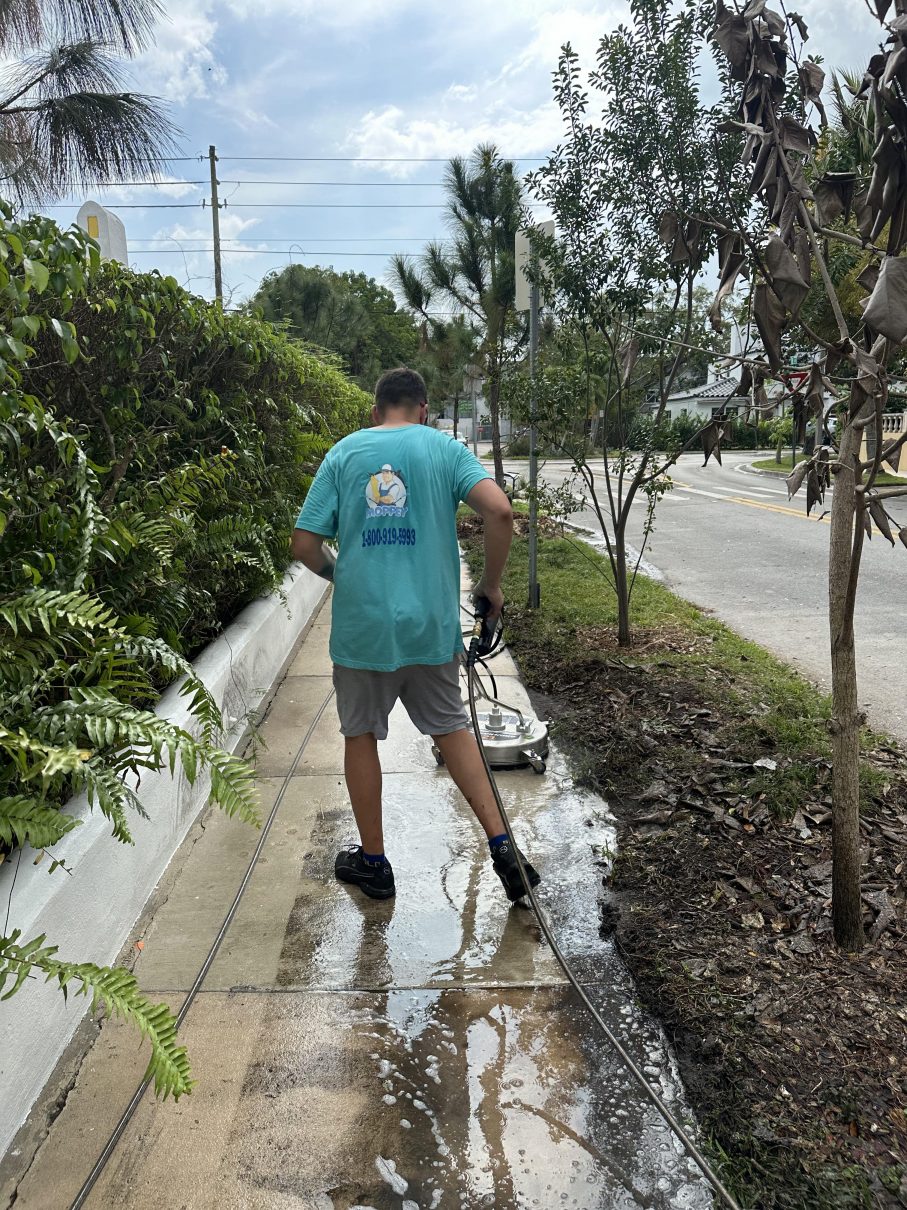
Moppey technician pressure washing a Miami walkway with a surface cleaner
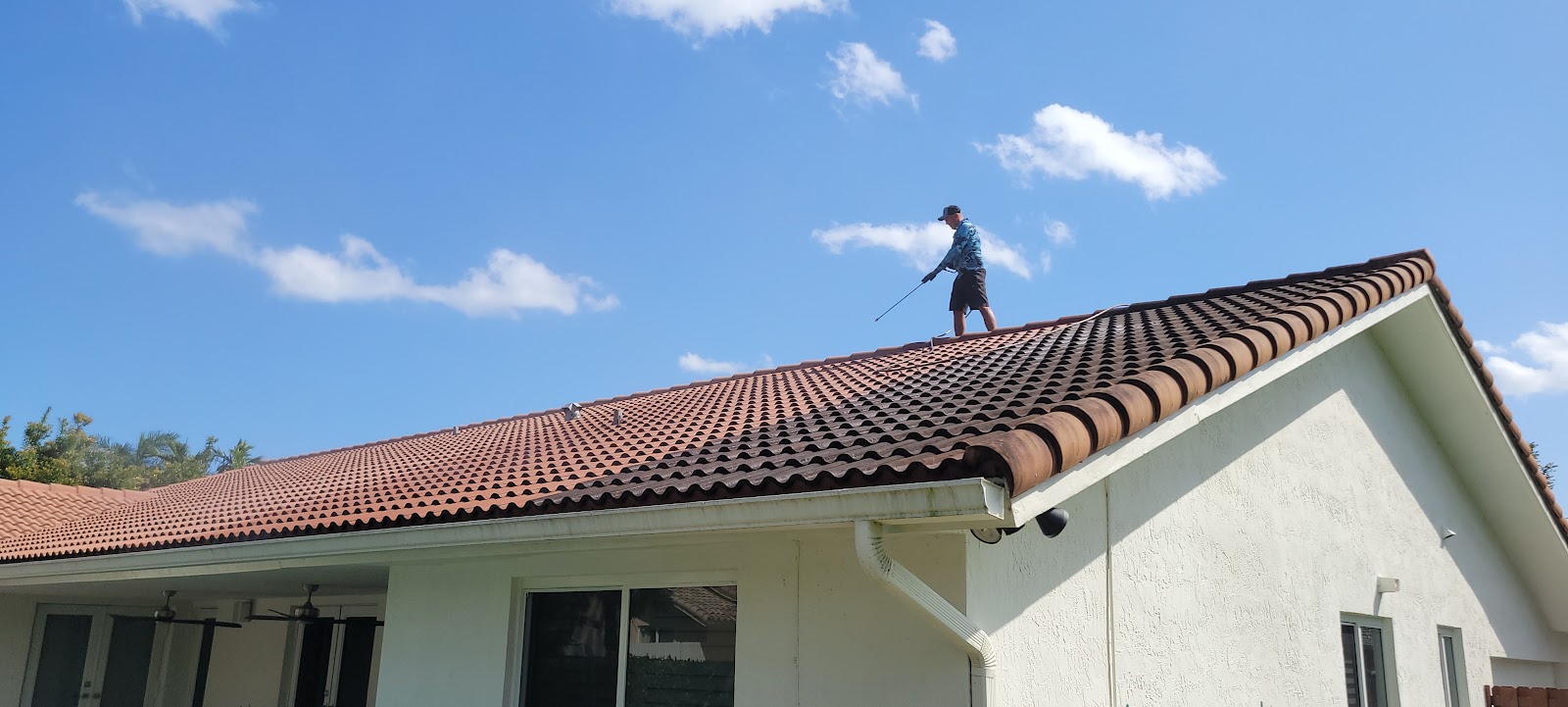
Soft washing a Miami barrel-tile roof
Freshly cleaned Miami driveway

Social proof

What customers say

I had an issue with a dirty driveway and pool. I didn’t have the time or tools. Moppey came on time, fast — my drive looks like I can show it to my neighbor and my pool is usable again. Highly recommended.
MR GarfieldDriveway • Pool Verified Google review

Good to know

Concrete Cleaning FAQs

It's the same family of work looked at from the material side. Concrete cleaning is about the slab itself — its porosity, its finish, and the specific stains that set into cement, whether that slab is a driveway, a garage floor, a patio, or a commercial pad. We match pressure to the finish and pre-treat by stain type, so a bare broom-finish drive and a stamped patio get handled very differently even though both are concrete.

Usually, yes. Rust from sprinkler heads, rebar bleed, or metal furniture is a chemical stain, not surface dirt, so pressure alone won't touch it. We apply an oxalic-acid-based rust remover that reacts with the iron and lifts it, then rinse. Deep, long-set rust may lighten dramatically rather than vanish completely, and we'll tell you honestly what to expect when we see it.

Not the way we do it. Etching and zebra stripes come from a bare wand held too close and free-handed across the slab. We use a rotary surface cleaner that holds a fixed height and applies one even pressure across the whole surface, and we drop the PSI on stamped, colored, or older softer concrete so the texture stays intact. Bare, cured concrete is dense enough to take honest pressure without harm.

Yes, and it needs a lighter hand. Stamped and colored concrete has a textured, tinted surface that full driveway-level pressure can erode or fade, so we back off the pressure and rely more on the cleaning solution to lift the grime. The pattern and color come clean without getting blasted flat.

That's usually efflorescence — mineral salts pushed up through the concrete by moisture, which is constant in Miami. It's not ordinary dirt, so it needs a specific treatment, and it has to be handled before any sealing. Seal over efflorescence and the slab clouds within months, so we flag it during the assessment and treat it in the right order.

Yes. Parking pads, loading zones, dumpster areas, warehouse and equipment aprons, HOA breezeways, and multi-unit common slabs are all in scope. We carry general liability and workers' comp coverage that property managers and boards require, can provide a certificate on request, and schedule around your hours to keep the area usable.

For most homes, once a year keeps a slab ahead of the algae and mineral staining. Shaded, tree-covered, or heavily irrigated concrete greens up faster and may want it every six to nine months, and commercial flatwork with steady traffic usually does best on a recurring schedule. The April-to-May window before hurricane season is a good time to book.

Request a free quote by phone at +1 877-754-5614 or through the form, and a photo of the slab plus any specific stains helps a lot. We give straight quotes with no hidden fees, most answered the same day, and hablamos espanol if that's easier for you.

Always clean first. Sealer only preserves the condition of whatever it goes over, so sealing a dirty or hazy slab locks the problem in permanently. After cleaning, the concrete has to be fully dry before sealing — in humid Miami that usually means waiting for a genuinely dry stretch of a day or two, not sealing the same afternoon. If efflorescence is present it must be treated before the sealer, or the finish will cloud within months.

Yes. The rotary surface cleaner runs inside a shroud that contains most of the overspray and slurry, which keeps dirty runoff off adjacent stucco, screens, and windows. We also protect surrounding surfaces before we start and rinse the whole area and nearby walls down afterward so no dirty film dries back onto them. On tight Miami lots where the driveway sits close to the house, that containment is a big part of a clean-looking result.

Because the growth lives inside the pores, not on top, so a plain pressure rinse only knocks the surface film off while the biology underneath survives and regrows — often within weeks in Miami's humidity. A proper clean pre-treats the slab with a hypochlorite-based solution that kills the growth at the root before the surface cleaner flushes it out. Treated that way, and kept on a recurring schedule, it stays clear far longer. Shaded, north-facing, and heavily irrigated slabs regrow fastest and benefit most from a maintenance plan.

For general organic and mineral staining, cold water with the right pre-treatment and a surface cleaner does the job. Heavy oil, grease, and transmission fluid on garage floors and parking pads release better with heat where it's available, because cold water tends to smear petroleum rather than lift it. Either way, the degreaser doing the chemical work and the dwell time we give it matter more than temperature alone.

Sometimes we can improve them, but often not fully, and we'll tell you honestly when we assess the slab. Those stripes aren't dirt — they're shallow gouges where a bare wand etched the cement paste, so a fresh even cleaning can blend and soften the contrast but can't rebuild removed material. This is exactly why we run a fixed-height surface cleaner instead of free-handing a wand, so the problem never gets created in the first place.

With care, yes, but it needs judgment. We drop the pressure around cracks, spalling, and pitted areas so we don't drive water under the surface or worsen loose material, and we flag anything structural for you rather than blasting through it. Cleaning a compromised slab is fine; the goal is to make it look its best without accelerating damage that's already begun.

Get your free concrete cleaning quote

Tell us what needs cleaning and we’ll help you choose the right service — from roof stains and driveway grime to windows, patios, balconies and commercial walkways.

Fast free quotes — most answered same day · Hablamos Español

Call NowGet QuoteDirections