Moppey Spottless Clean Pros
Wood and composite deck cleaning in Miami

Rated 5★ · 43 reviews

Wood & Composite Deck Cleaning Miami, FL

Bring a mildewed, grey-weathered wood or composite deck back to life with cleaning matched to the boards — no fuzzed grain, no blotchy composite, no gouged planks.

Serving Miami & surrounding South Florida

Rated 5★ · 43 reviewsFully InsuredResidential & CommercialSoft Wash SafeHablamos Español

The Miami problem

Why wood & composite deck cleaning matters in Miami

A deck is one of the few exterior surfaces you actually walk on barefoot, and in Miami it takes a beating from every direction. Sun bleaches the wood grey. Humidity feeds mildew and algae in the shaded gaps between the boards. Afternoon rain never fully dries out of the low spots, so a slick green film builds up right where you step. What was a warm cedar or ipe deck a few years ago now looks tired, grey, and a little dangerous when it's wet.\n\nWood and composite are not the same job, and this is where most cleaning goes wrong. Real wood is soft and fibrous — aim a pressure washer at it and you tear the surface fibers open, leaving a fuzzy, splintered plank that soaks up more dirt than before. Composite boards (Trex, TimberTech, Azek and the like) have a factory cap that heavy pressure can blotch, streak, or dull permanently. Neither surface belongs under a turbo nozzle.\n\nMoppey cleans the deck the way the boards can take it: low pressure and the right solution, working with the grain, lifting the mildew and grey weathering out instead of blasting it off. No fuzzed wood. No streaked composite. Just a deck that looks and grips like new again.

What’s included

What our wood & composite deck cleaning covers

  • Free walkthrough to identify the board type — pressure-treated pine, cedar, ipe or other hardwood, or capped composite — and set the method to it
  • Low-pressure, solution-based cleaning that lifts mildew, algae, and the grey biofilm out of the wood without fuzzing the grain
  • Composite deck washing (Trex, TimberTech, Azek and similar) with a cleaner matched to the cap so it comes back even, not blotchy
  • Attention to the shaded board gaps and end grain where mildew and green film root in first
  • Railings, balusters, posts, stair treads, and the fascia skirt cleaned along with the deck floor
  • Grey UV weathering and surface graying brightened back toward the board's natural tone on wood
  • Full pre-wet and post-rinse of surrounding plants, grass, and beds so nothing gets scorched
  • Slippery algae film cleared off so the deck grips underfoot again when it's wet
  • Honest read on whether the wood is ready to be re-sealed or re-stained after it dries, without a hard upsell

Our method

How we clean it safely

The method starts with knowing what's under your feet. Softwoods like pressure-treated pine and cedar, dense tropical hardwoods like ipe, and capped composite each react to water and cleaner differently, so we identify the board type first and set the approach to it. On wood we work at low pressure with a wood-safe cleaning solution, moving with the grain, letting the chemistry lift the mildew and grey out rather than forcing it with PSI. That's what keeps the surface smooth instead of raising a fuzzy nap that greys again twice as fast. On composite we use a cleaner made for the factory cap and a gentle wash that clears the mildew and chalky film without dulling the finish or leaving lap marks.\n\nWe clean the whole structure, not just the walking surface — railings, balusters, posts, stair treads, and the fascia skirt, plus the board gaps and end grain where growth hides. Before any solution goes down we saturate the plants, grass, and beds around and under the deck with water, and we rinse the area again when we finish so nothing is left coated. The deck comes back clean, even, and safe to walk on wet, and we'll give you a straight answer on whether the wood is due for a fresh seal or stain once it's fully dry.

Soft wash vs pressure wash

Decks are a soft-wash job. Wood is fibrous and tears under high pressure into a splintered, fuzzy surface that traps more dirt, and composite's factory cap can blotch or dull permanently if it's blasted — so we clean both at low pressure with the solution doing the work. High-PSI pressure washing has its place on hard flatwork like concrete and pavers, not on the boards you walk on barefoot.

Best for

Who this service is for

  • Wood decks that have gone grey and dull from Miami sun and need the natural tone brought back
  • Decks with a slick green or black film in the shaded, low-drying spots that get dangerous when wet
  • Composite decks (Trex, TimberTech, Azek) with mildew streaks or a chalky haze the boards weren't supposed to get
  • Homeowners planning to re-seal or re-stain a wood deck and needing it properly cleaned first
  • Coastal decks in Key Biscayne, Miami Beach, and along the water taking constant salt air and moisture
  • Elevated and second-story decks and their railings that are hard to reach and rarely get cleaned
  • Rental, Airbnb, and listing decks that need to photograph and feel clean before guests or buyers arrive

Miami surface insight

Miami is about the toughest climate a deck can face. The grey you see on a wood deck is the sun breaking down lignin in the surface fibers, and our year-round UV drives that faster than almost anywhere in the country. At the same time the humidity, daily rain, and dense shade keep the boards damp long enough for mildew and algae to root in the gaps and end grain — which is why the darkest, slickest spots are always the low, shaded, north-facing sections that never dry out. On coastal decks near the water, salt air adds its own load, keeping surfaces damp and feeding growth even harder. Rinsing does nothing because the film and greying live in the wood, not on top of it; low-pressure cleaning with the right solution reaches into the surface and clears it, then leaves the boards ready to be sealed against the next round.

Insured — COI on request
Plant-safe soft washing
Before & after photos
Satisfaction guarantee

In-depth guide

Wood & Composite Deck Cleaning in Miami: the complete guide

The complete guide to wood and composite deck cleaning in Miami

A deck in Miami lives a harder life than almost anywhere else in the country. It absorbs full tropical UV, sits in 70-plus percent humidity for months at a stretch, gets soaked by daily summer downpours, and near the water it takes a constant salt load on top of all that. The result is a surface that greys, greens, and gets slick faster than a homeowner expects — and one that responds badly to the wrong cleaning method. This guide goes deeper than the basics: how the two big deck families (real wood and capped composite) actually fail, what a professional restoration wash involves step by step, the stains that need chemistry rather than pressure, and how to keep a South Florida deck looking right between cleanings.

Wood decks and composite decks are two different jobs

The single most important thing to get right is what your boards are made of, because the two materials degrade — and get cleaned — in completely different ways.

  • Real wood (pressure-treated pine, cedar, redwood, and dense tropical hardwoods like ipe, cumaru, and teak) is porous and fibrous. It absorbs water, food for mildew lives inside the grain, and UV breaks down the surface lignin into that familiar silver-grey layer. Wood needs low pressure and cleaning chemistry that reaches into the fibers, sometimes followed by a brightener to reset the pH and pull the tone back.
  • Capped composite (Trex, TimberTech, Azek, Fiberon, and similar) is a wood-plastic core wrapped in a factory polymer shell. It doesn't rot and won't grey the way wood does, but that cap can be permanently blotched, streaked, or dulled by heat and pressure, and it still grows surface mildew and develops a chalky film in the shade.
  • Older uncapped composite (first-generation Trex and lookalikes) has no protective shell, so mold roots directly into the surface and it stains more like wood. It needs a gentler, mold-specific approach and often a dedicated composite deck cleaner rather than a generic degreaser.

Cleaning all three the same way is how decks get ruined. A turbo nozzle that's fine on a concrete driveway will raise a fuzzy nap on cedar and leave permanent lap marks on a Trex board. The method has to match the board.

What a professional deck restoration wash actually involves

Competitors in Miami describe this loosely as "power washing," but a proper deck job is closer to a controlled soft wash with several deliberate stages:

  • Inspection and board ID. The type of wood or composite, the age of any existing stain or seal, the direction of the grain, and where the growth is worst all set the plan before any water touches the deck.
  • Clearing and protection. Furniture, grills, and planters come off; gaps between boards get swept clear of leaves and debris that trap moisture; and the surrounding plants, grass, and beds get saturated with water so no cleaning solution can scorch them.
  • Solution and dwell. A wood-safe or composite-specific cleaner goes down and is given time to break the bond between the mildew, algae, and grey biofilm and the board. Chemistry does the lifting here — not pressure.
  • Low-pressure agitation and rinse. The surface is worked with the grain at a pressure the board can take, then rinsed evenly so nothing streaks or lap-marks.
  • Brightening (wood only, when needed). On greyed or tannin-darkened wood, an oxalic-acid brightener neutralizes the cleaner, evens the tone, and opens the grain so a future stain or seal takes properly.
  • Final rinse and landscape check. The whole area — including the plants below and around the deck — gets rinsed again so nothing is left coated.

That sequence is what separates a deck that comes back even and clean from one that's blotchy, fuzzy, or two-toned a month later.

The specific Miami problems this solves

South Florida creates deck problems that a homeowner in a dry climate never sees:

  • Runaway greying. The grey on a wood deck is UV destroying the lignin in the surface fibers. Miami's year-round sun drives that faster than almost anywhere, so a deck that looked warm and new two summers ago can be uniformly silver.
  • Slick, shaded growth. Humidity plus daily rain plus dense shade keeps the low, north-facing sections of a deck damp long enough for algae and mildew to build a film — right where you step. That green or black slick is a genuine trip hazard on stairs and around a pool.
  • Salt load on waterfront decks. In Key Biscayne, Miami Beach, Coconut Grove, and along the canals and Intracoastal, salt air keeps surfaces damp, feeds growth harder, and corrodes deck screws and railing hardware. Coastal decks green up faster and need attention more often.
  • Trapped moisture and rot risk. Water that never fully dries out of board gaps and end grain is what eventually turns surface greying into soft, punky wood. Cleaning the growth out and keeping the deck sealed is preventive maintenance against real structural rot.
  • Pre-hurricane timing. A clean, sealed deck sheds water and resists the storm season better. The Miami window to get exterior wood cleaned and re-sealed is spring — April and May — before the June-through-November wet season sets in.

Stains that need chemistry, not pressure

A lot of what looks like "dirt" on a Miami deck is actually a stain that will laugh at a pressure washer and only respond to the right chemistry:

  • Tannin bleed and grey weathering on wood are neutralized and brightened with an oxalic-acid wood brightener, not blasted.
  • Rust stains from planters, furniture feet, and corroding coastal hardware are also an oxalic-acid job.
  • Mildew and algae film is lifted with a diluted hypochlorite or a purpose-made deck cleaner, then rinsed — the growth is killed and released, not scrubbed off dry.
  • Efflorescence or mineral haze where a wood deck meets a paver or travertine pool surround needs a mild acid treatment on the stone side, handled carefully so it never touches the wood.

Reaching for high pressure to remove any of these usually damages the board before it removes the stain.

Surfaces and structures we handle — and how each is treated

A deck is more than its floor, and the parts people forget are usually the parts that fail first:

  • Deck floor / walking surface — low-pressure solution wash, worked with the grain on wood, even passes on composite.
  • Railings, balusters, and posts — hand-detailed; these hold growth in the shaded inner faces and are where coastal salt corrodes hardware.
  • Stair treads — cleaned carefully because this is the highest slip-and-fall risk on the whole structure.
  • Fascia skirt and under-deck framing — rinsed so the visible edge matches the deck and moisture isn't trapped against the joists.
  • Board gaps and end grain — where mildew and green film root first and where rot starts; cleared and flushed.
  • Docks, boat decks, and waterfront platforms — a common Miami add-on that takes the same salt-and-growth beating as a residential deck.

What drives the cost of a deck cleaning

Nobody can quote a real number online, and any company that throws one at you before seeing the deck is guessing. Honest cost factors include:

  • Size and layout — total square footage, plus how many separate levels, landings, and stair runs are involved.
  • Board type — hardwoods and uncapped composites are more delicate and slower to clean correctly than pressure-treated pine.
  • Condition — how deep the greying and growth have set in, and whether the deck needs a brightener step or just a straight wash.
  • Railings and detail — long runs of balusters and posts are hand work and add time.
  • Access — second-story and elevated decks, tight side yards, and rooftop terraces take more equipment and setup.
  • Add-ons — whether you also want it re-sealed or re-stained after it dries.

The way to get a straight number is a free on-site quote, which Moppey answers fast — most the same day — with no hidden fees. Call +1 877-754-5614.

How often to clean a deck in Miami, and how to maintain it

Most Miami decks want cleaning once or twice a year. Shaded, low-drying, and coastal decks green up faster and often need it more. Between professional cleanings:

  • Sweep leaves and debris out of the board gaps regularly so moisture doesn't sit and feed mildew.
  • Rinse the floor down after heavy pollen or salt spray, especially near the water.
  • Move planters and furniture occasionally so they don't leave permanent damp rings or rust marks.
  • Re-seal or re-stain a wood deck every one to two years — Miami's UV and humidity break coatings down faster than up north — but only ever onto a clean, fully dry deck, so cleaning always comes first.

Professional cleaning versus a rental machine

A rental pressure washer is exactly the wrong tool for a deck, and it's where most DIY deck jobs go wrong:

  • Consumer machines run one aggressive pressure and no real chemistry, so people compensate with PSI — which fuzzes wood grain and blotches composite caps permanently.
  • Without a brightener step, a greyed wood deck comes back cleaner but two-toned and blotchy, and the raised grain greys again twice as fast.
  • Unprotected landscaping gets scorched by cleaner runoff, and unmanaged rinse water near the water runs toward the bay.
  • The slip-critical spots — stair treads and shaded corners — are the hardest to judge, and getting them wrong is a safety problem, not just a cosmetic one.

A careful professional matches the method to the board, uses chemistry instead of brute force, protects the plants and the deck structure, and gives you an honest read on whether it's time to re-seal — without a hard upsell. That's the difference between a deck that looks new for a season and one that greys, blotches, and gets slick again a month later.

If your Miami deck has gone grey, greened up in the shaded spots, or feels slick underfoot, Moppey will clean it the way the boards can take it — no fuzzed grain, no streaked composite, no shortcuts. Call +1 877-754-5614 for a fast, free quote. Hablamos español.
Recent work

Real Moppey results

Wood and composite deck cleaning in Miami
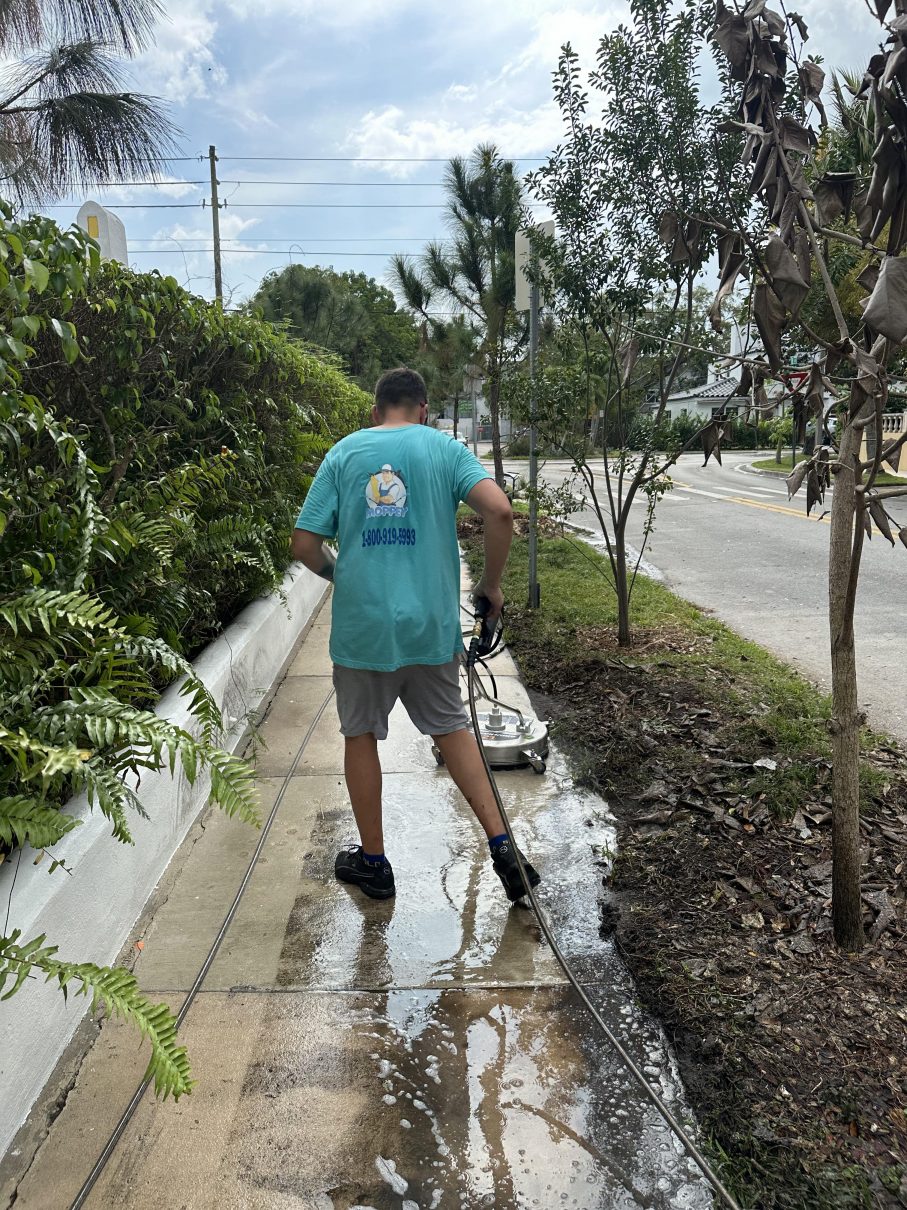
Moppey technician pressure washing a Miami walkway with a surface cleaner
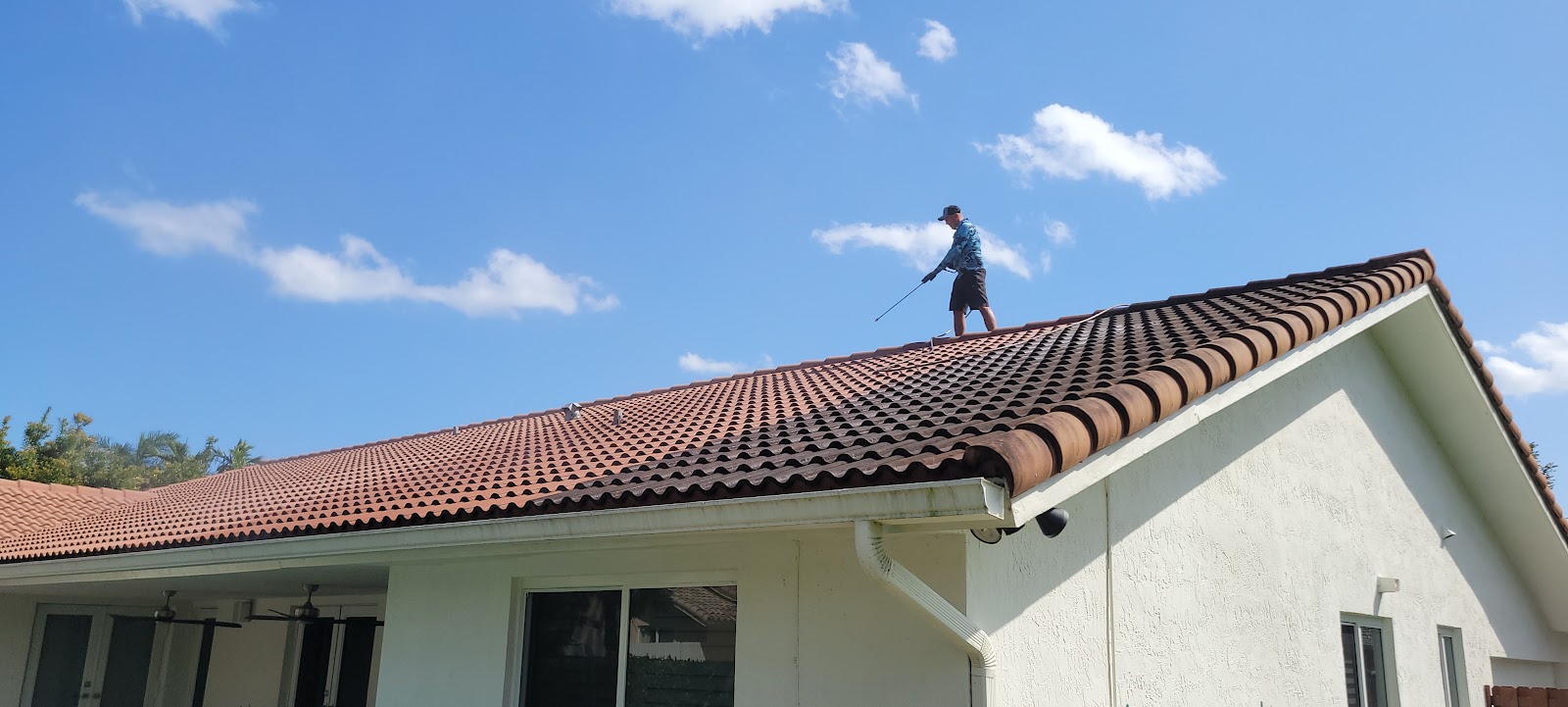
Soft washing a Miami barrel-tile roof
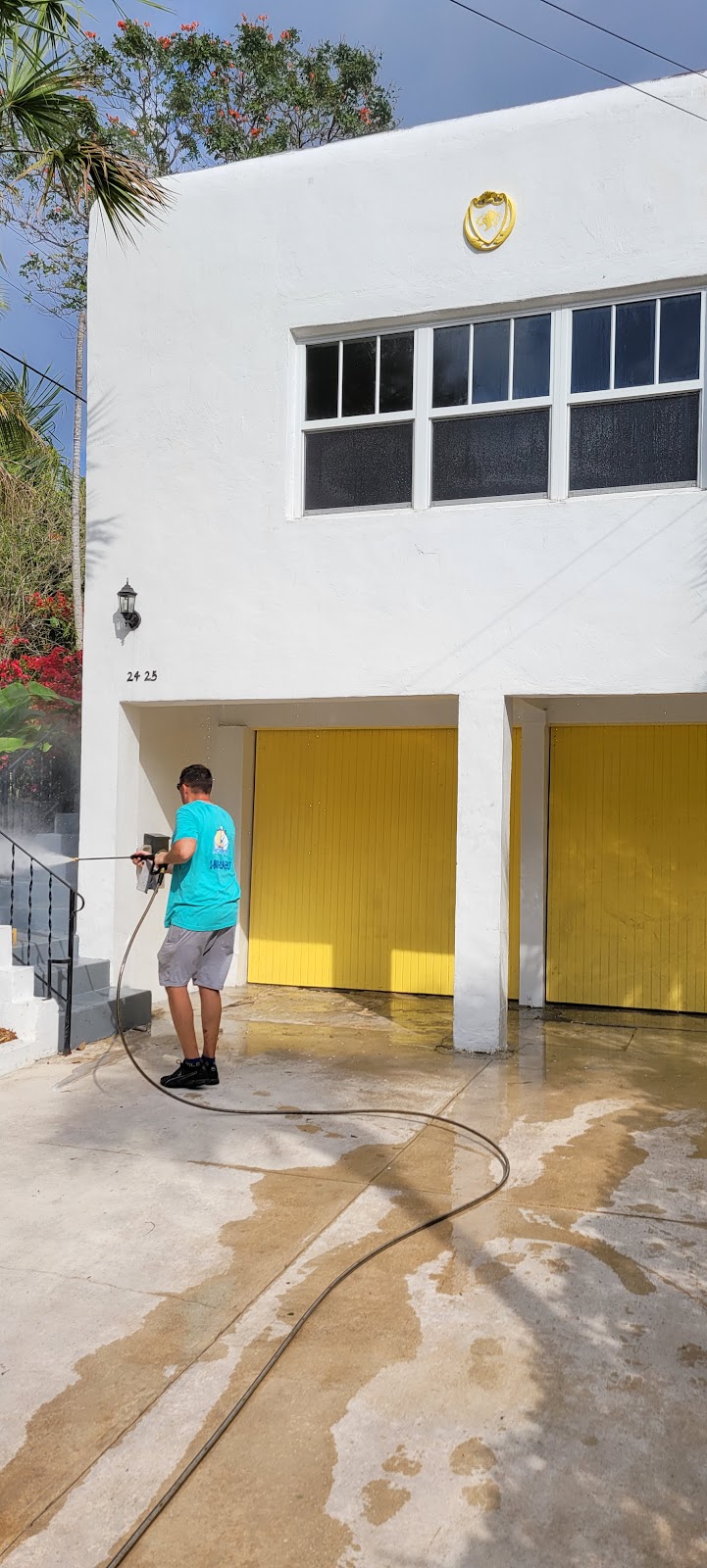
Freshly cleaned Miami driveway

Social proof

What customers say

I had a very last-minute request to clean my roof that I thought needed to be changed, but I was amazed with the work quality the Moppey team provided. It appears our roof only needed a good cleaning — it looks like new! Excellent customer service. I definitely recommend Moppey.
Audrius G.Roof Cleaning Verified Google review
100% recommend! I was only going to have my windows cleaned but they did such a good job I also included my patio and the driveway. They are very precise with every detail.
Jaime L.Windows • Patio • Driveway Verified Google review
Wonderful experience dealing with Moppey Spotless Clean Pros. Very professional and their pricing was extremely competitive. Will definitely use them again and recommend to my family and friends!
Melissa SanchezExterior Cleaning Verified Google review

Where we work

Wood & Composite Deck Cleaning across Miami & South Florida

Good to know

Wood & Composite Deck Cleaning FAQs

We don't blast wood with high pressure, and you don't want us to. High PSI tears open the soft surface fibers of a wood deck, leaving it fuzzy and splintered — which actually traps more dirt and greys faster afterward. We clean wood decks at low pressure with a wood-safe solution that does the lifting, working with the grain, so the boards come back smooth and clean instead of damaged.

Yes, and they need the right touch too. Composite boards have a factory cap that heavy pressure can blotch, streak, or permanently dull. We use a cleaner made for that cap and a gentle wash that clears mildew and the chalky film without leaving lap marks or dead spots, so the deck comes back even across every board.

Usually a good amount of it, yes. That grey is UV weathering breaking down the surface fibers of the wood. Our low-pressure cleaning lifts the greyed layer and the mildew out of the grain and brightens the boards back toward their natural tone. For the fullest color restoration, the deck is then a clean, dry surface ready for a fresh stain or seal, which we'll advise on honestly.

That slickness is almost always a thin layer of algae or mildew film sitting in the shaded, slow-drying areas of the deck. It's a real trip hazard, especially on stairs. Clearing that growth off is exactly what restores the surface's natural grip, so the deck is safe to walk on wet again after we clean it.

Not with the way we work. Before any solution goes down we saturate the plants, grass, and beds around and under the deck with water, and we rinse the whole area again when we finish so nothing is left coated. Protecting your landscaping is a standard part of the job, not an add-on.

Cleaning and sealing are two separate steps. A wood deck should always be cleaned and fully dry before any seal or stain goes on, otherwise you trap moisture and mildew under the coating. We'll give you an honest read on whether your deck is due — in Miami's sun and humidity, most wood decks benefit from a reseal every one to two years — but there's no pressure to add it.

For most Miami decks, once or twice a year keeps mildew, algae, and grey weathering from taking hold. Shaded, low-drying, or coastal decks near the water tend to green up and grey out faster and may want it more often. We'll recommend a cadence based on your deck's exposure when we quote, not a rigid schedule.

It depends on the deck's size, the board type, how many levels and railings are involved, and how much growth has built up, so we give you a free quote after we see it rather than a made-up number online. The price is straight with no hidden fees. Fast free quotes, most answered the same day, and hablamos español.

When a wood deck is heavily greyed, tannin-darkened, or spotted with rust, we follow the wash with an oxalic-acid brightener. It neutralizes the cleaning solution, evens out the tone across the boards, and opens the grain so any future stain or seal soaks in properly. A lightly soiled deck often only needs the wash, so we set the steps to what your boards actually need rather than charging for a process the deck doesn't call for.

Yes. Dense tropical hardwoods like ipe, cumaru, and teak are prized for their color, and high pressure will fuzz and gouge them just like it does softwoods. We clean them at low pressure with a hardwood-safe solution and, when they've greyed, a brightener that pulls the natural tone back. From there they're ready for a hardwood oil if you want to lock the color in, which we'll advise on honestly.

Usually, yes. Rust from planter feet, furniture, and corroding coastal screws and hardware is a chemistry problem, not a pressure problem — it responds to an oxalic-acid treatment rather than blasting, which would only damage the board around the stain. We treat rust spots directly as part of the wash and can advise on lifting furniture and coastal hardware issues to keep them from coming back.

It does. Waterfront decks in spots like Key Biscayne, Miami Beach, and along the canals take constant salt air that keeps the boards damp, feeds mildew and algae harder, and corrodes screws and railing hardware. That means coastal decks green up faster and want cleaning more often, and we pay extra attention to the railing hardware and end grain where salt does the most quiet damage. We also manage rinse water responsibly since waterfront runoff heads straight to the bay.

Before, in the spring. The ideal window to clean and re-seal a South Florida wood deck is April and May, before the June-through-November wet season. A clean, sealed deck sheds water and resists the storm season far better than a greyed, growth-covered one that stays damp. Cleaning right after a storm is also worth it to clear debris and organic matter out of the board gaps before it roots in.

We clean the whole visible structure — the floor, railings, balusters, posts, stair treads, and the fascia skirt — and we clear and flush the board gaps and end grain where growth and rot start. We rinse the framing and the ground beneath so moisture isn't trapped against the joists and nothing under the deck is left coated with solution. Full under-deck structural cleaning is scoped during the walkthrough based on access and how the deck is built.

Cleaning restores greyed, mildewed, and slick boards, but it can't rebuild wood that's already gone soft and punky from long-term trapped moisture. During the walkthrough we'll give you a straight read: if the boards are just weathered and dirty we clean and, if you want, prep them for seal; if we find true structural rot in spots, we'll tell you honestly rather than wash over it. Catching a deck before rot sets in is exactly why regular cleaning and sealing matter in this climate.

Get your free wood & composite deck cleaning quote

Tell us what needs cleaning and we’ll help you choose the right service — from roof stains and driveway grime to windows, patios, balconies and commercial walkways.

Fast free quotes — most answered same day · Hablamos Español

Call NowGet QuoteDirections