Moppey Spottless Clean Pros
HOA and community pressure washing in Miami

Rated 5★ · 43 reviews

HOA & Community Pressure Washing Miami, FL

Community-wide exterior cleaning on a schedule your board can count on — common walkways, perimeter walls, mailbox kiosks, clubhouse and pool areas kept consistently clean.

Serving Miami & surrounding South Florida

Rated 5★ · 43 reviewsFully InsuredResidential & CommercialSoft Wash SafeHablamos Español

The Miami problem

Why hoa & community pressure washing matters in Miami

A community is judged the second someone drives through the gate. Streaked entry monuments, a green-shadowed perimeter wall, mailbox kiosks going gray, sidewalks slick in the shade — every resident sees it daily, and so does every prospective buyer touring a unit. In Miami's heat and humidity, that slide happens across the whole property at once, not one house at a time.

HOA and community cleaning is a coordination job as much as a cleaning one. You have dozens or hundreds of residents moving through shared space, a board that answers to owners, deed restrictions that set a standard, and a budget that has to be justified line by line. One-off scrambles before an annual meeting don't hold; the growth is back by the next rainy season.

Moppey keeps Miami communities presentable on a plan the board can actually rely on — common walkways, breezeways and stairwells, perimeter and retaining walls, entry features, mailbox and amenity areas, the clubhouse and pool deck, and shared parking. We map the property by surface, match the method to each one, and keep results repeatable visit after visit. No damage, no streaks, no shortcuts.

What’s included

What our hoa & community pressure washing covers

  • Community common walkways, sidewalks and shared entry paths surface-cleaned edge to edge for an even, no-stripe finish
  • Perimeter walls, retaining walls and entrance monuments soft washed to lift the green shaded-side film without etching the stucco or paint
  • Breezeways, exterior stairwells, catwalks and landings in condo and townhome buildings
  • Mailbox kiosks, community signage bases, bus-stop shelters and package rooms cleaned so shared touchpoints look maintained
  • Clubhouse exterior, pool deck, pavilion and cabana areas where residents gather and slip risk matters
  • Shared parking areas, guest spaces and covered carport pads degreased and cleared of traffic film
  • Amenity surfaces — pool cage frames, tennis and pickleball court surrounds, dog-park pads and tot-lot borders
  • Certificate of insurance (general liability and workers' comp) sent to your property manager or board before work begins
  • Recurring community maintenance plan — monthly, quarterly or seasonal — scoped and priced so the board can budget it in advance

Our method

How we clean it safely

We start with a property map, not a wand. A community is a patchwork of surfaces, so we walk it with the manager or a board member and sort every shared area into what handles pressure and what does not. Common concrete — sidewalks, breezeway floors, stair treads, pool decks and parking pads — gets a rotary surface cleaner running real pressure for a flat, even result with no zebra stripes across the length of a walkway. Perimeter walls, painted entrance monuments and stucco building faces get soft washing instead: a low-pressure application under 500 PSI with a hypochlorite solution that kills the mold, mildew and algae at the root, where high pressure would only blast the surface and etch it. Around amenities, we detail the edges and the shaded corners by hand where growth hides.

Working inside a live community is its own discipline. We stage the work so residents keep safe access to their doors, mailboxes and cars, section off wet areas around the pool and clubhouse, and time noisy passes away from early mornings where we can. Landscaping the association pays to maintain gets pre-wet and rinsed so no solution sits on it, and wash-water is managed away from storm drains and the lake. Our crews are insured, and we hand the board or manager a certificate of general liability and workers' comp up front so vendor approval clears without back-and-forth. On buildings and walls above ground level we bring the right access equipment for the height rather than improvising.

Soft wash vs pressure wash

A community needs both methods on the same visit: high pressure with a surface cleaner on hard shared flatwork — sidewalks, breezeways, stair treads, pool decks and parking — where traffic film and algae grind in, and soft washing on perimeter walls, entrance monuments and building faces, because high PSI etches stucco and strips the association's paint scheme while low-PSI chemistry removes the growth for far longer.

Best for

Who this service is for

  • HOA and condo association boards responsible for common-area upkeep and property values
  • Gated and single-family communities with long perimeter walls, entry monuments and mailbox kiosks
  • Townhome and villa communities with shared walkways, breezeways and exterior stairwells
  • Property managers running an HOA portfolio who need consistent results across multiple communities
  • Communities with a clubhouse, pool deck and amenity areas that must stay presentable and slip-safe
  • Associations enforcing deed restrictions who need common areas to meet the same standard as the homes
  • Boards prepping for annual meetings, reserve inspections, insurance renewals or a community-wide reset

Miami surface insight

A long HOA perimeter wall is Miami's favorite place to grow algae — it's often shaded on one side, backs up to landscaping and irrigation, and stays damp long after the afternoon storm passes, so the green film spreads the full length of the community before a board even schedules a vote. Left on a maintenance plan it's a quick soft wash; left for years it becomes a full restoration the reserve fund feels. Communities near the water carry an extra load: airborne salt in the coastal ISO C5-M zone dulls glass on the clubhouse, rusts metal railings and mailbox kiosks, and re-coats surfaces faster, so waterfront associations in areas like Key Biscayne and Miami Beach benefit from a tighter cadence than inland ones. Cleaning also matters before hurricane season — clear common walkways and unclogged shared drainage let a community shed water instead of pooling it toward buildings when the summer storms roll in.

Insured — COI on request
Plant-safe soft washing
Before & after photos
Satisfaction guarantee

In-depth guide

HOA & Community Pressure Washing in Miami: the complete guide

HOA and Community Pressure Washing in Miami: The Complete Board-Level Guide

Cleaning a Miami community is a different job from cleaning a single home. A house is one owner, one decision, one surface map. An association is a governing board, a reserve budget, deed restrictions the community agreed to enforce, and dozens or hundreds of residents who all use the same walkways, walls, and amenities every day. The pressure-washing part is straightforward for a competent crew. The part most vendors get wrong is everything around it — scoping the property correctly, coordinating access without disrupting residents, documenting the work so it holds up at an annual meeting, and pricing it so the board can defend the line item to owners. This guide covers that operational layer: how community exterior cleaning actually works in South Florida, what drives the number on the quote, and how a maintained community stays cheaper than one that gets let go.

What community pressure washing actually covers

An HOA or condo association owns and maintains the shared exterior — everything a resident touches or sees that isn't inside their own unit. On a typical Miami community that means:

  • Common walkways and flatwork — sidewalks, breezeway floors, exterior stair treads and landings, catwalks, pool deck, pavilion and cabana pads, and shared or guest parking.
  • Vertical shared surfaces — perimeter and retaining walls, entrance monuments, building faces and stucco, screen and pool-cage frames, painted railings.
  • Community touchpoints — mailbox kiosks, package rooms, bus-stop shelters, dog-park pads, tot-lot borders, signage bases, and clubhouse exteriors.

Each of those wants a different method, which is why a real community quote starts with a walk of the property and a surface-by-surface plan, not a flat per-visit number. Hard horizontal concrete takes a rotary surface cleaner at genuine pressure for an even, stripe-free finish. Stucco walls, painted monuments, and building faces take soft washing — a low-pressure application under roughly 500 PSI with a hypochlorite-based solution that kills the organism instead of blasting the surface. Put high pressure on stucco or association paint and you etch it and strip the color scheme; put a gentle rinse on it and the green comes right back because the growth lives in the pores, not on top.

The Miami problems it solves

South Florida grows exterior grime faster and more evenly than almost anywhere in the country, and a community feels it as a single event rather than one house at a time.

  • Algae on the perimeter wall. A long HOA wall is Miami's favorite algae farm. It's usually shaded on one side, backed by landscaping and irrigation, and stays damp long after the afternoon storm — so a green film spreads the full length of the community before the board even schedules a vote. Left on a plan it's a quick soft wash. Left for years it becomes a restoration the reserve fund actually feels.
  • Roof black streaks. Those dark stains on community roofs are Gloeocapsa magma, a cyanobacteria that feeds on the limestone filler in shingles. It spreads roof to roof across a community. It must be soft washed — high pressure blows off shingle granules and voids manufacturer warranties, which is not a bill a board wants to defend to owners.
  • Coastal salt load. Waterfront communities in the ISO C5-M corrosion zone — Key Biscayne, Miami Beach, Brickell-area high-rises — take airborne salt that dulls clubhouse glass, rusts metal railings and mailbox kiosks, and re-coats surfaces faster. They need a tighter cadence than inland associations.
  • Efflorescence and hard water. Travertine pool decks and paver walkways develop a white haze — efflorescence — that has to be treated before any sealing, or you seal the problem in. Miami also has the hardest water among major Florida cities (roughly 11 grains per gallon off the limestone Biscayne Aquifer), so mineral spotting on clubhouse glass and rinsed surfaces is a real factor.
  • Hurricane readiness. Season runs June 1 to November 30, with the smart pre-storm cleaning window in April and May. Clean walkways and clear shared drainage let a community shed water instead of pooling it toward buildings; gutters clogged with palm fronds overflow toward foundations exactly when the storms hit.

What the process looks like, start to finish

A well-run community job follows the same arc every time, and the coordination is what separates a professional from a truck-and-wand operation.

  1. Site walk and surface map. We walk the property with the manager or a board member, inventory every shared surface, and sort each into pressure-safe flatwork versus soft-wash-only vertical. This is where the accurate scope — and the accurate price — comes from.
  2. Scope, quote, and COI. The board gets an itemized quote it can compare line by line, plus a certificate of insurance for general liability and workers' comp, addressed however the governing documents require. Most associations won't let a vendor touch community property without that on file, so it's part of setup, not an afterthought.
  3. Access and logistics. We confirm gate codes, water-source spigots, notice requirements, and any building-height access needs before the truck rolls. On upper breezeways, catwalks, and taller walls we bring the right equipment for the height rather than improvising.
  4. Staged cleaning. Crews work the community in a planned sequence so residents keep safe access to doors, mailboxes, and cars throughout. Wet zones around the pool and clubhouse get sectioned off; the loudest passes get timed considerately. Landscaping the association pays to maintain gets pre-wet and rinsed so no solution sits on it, and wash-water is managed away from storm drains and the community lake.
  5. Documentation. Before/after photos give the board something to show owners, and a recurring plan puts the next visit on the calendar before growth returns.

What drives the cost (without quoting a number)

Community pricing is genuinely custom, and boards should be suspicious of anyone who quotes a flat per-visit rate sight unseen. The real drivers:

  • Scope and square footage — linear feet of perimeter wall, total common walkway and flatwork, number of buildings, and how many amenity areas are in play.
  • Surface mix — a community that's mostly plain concrete cleans differently from one heavy on travertine, painted monuments, and screen enclosures.
  • Condition — a maintained property is a light, fast pass; one that's been let go for years carries deep-set staining, rust, and efflorescence that take real work.
  • Access and height — upper breezeways, tall walls, and gated logistics add equipment and labor.
  • Coastal exposure — waterfront salt load pushes toward a tighter cadence.
  • One-time vs. recurring — recurring maintenance almost always earns a better per-visit rate than a one-off scramble, because the work stays light.

You'll see competitors express community pricing two ways — per unit per month or per square foot. Both are just different ways of spreading the same scope across the budget. A per-unit figure is convenient for the reserve study and easy for owners to understand; a per-square-foot basis is more precise for oddly shaped or amenity-heavy communities. Moppey scopes the property and gives the board a clear itemized figure either way — no published flat rates, because no two communities are the same.

How often to schedule it in Miami

Most Miami associations land on quarterly cleaning of common areas — the humidity and rapid algae growth make anything longer a losing battle, and the property visibly slides between visits. High-traffic communities often go monthly on the surfaces residents judge hardest: entryways, pool deck, clubhouse, and main sidewalks, with a broader quarterly or seasonal pass on walls and outlying areas. Waterfront associations tighten further because of the salt load. The right cadence depends on shade, coastal exposure, and how fast your specific surfaces show it — which is exactly what a maintenance plan is for. On a plan, the perimeter wall never gets the chance to green up in the first place, and the annual-meeting scramble disappears.

How it compares to the alternatives

  • vs. a one-time deep clean before the annual meeting — a single scramble looks great for a few weeks, then the growth is back by the next rainy season. Boards that only clean reactively pay more over time and never actually control the property's appearance.
  • vs. a rental machine and a volunteer or handyman — a rental delivers one pressure setting and no soft-wash chemistry, which is the fast route to etched stucco, stripped monument paint, blown-off shingle granules, and a warranty problem. It also puts an uninsured person on association property, which is a liability the board owns.
  • vs. a general janitorial vendor — janitorial and landscaping crews rarely carry the equipment or the corrosion-zone experience for correct exterior cleaning, and almost never the right soft-wash approach for Miami's biology.

The professional advantage isn't just a bigger machine. It's matching the method to each surface, carrying the general-liability and workers'-comp coverage the board needs on file, working around live residents safely, and documenting the result — the whole package a board can defend to owners.

Signs your community needs it now

Green shadow creeping along the perimeter wall. Sidewalks and breezeways slick in the shade. Mailbox kiosks and monuments going gray. Black streaks marching across roofs. A pool deck that's picked up traffic film and a slip risk. Owner complaints trickling into the manager's inbox, or a reserve inspection, insurance renewal, or unit sales tour on the calendar. Any one of those is the moment a maintenance plan pays for itself — and it's a lot cheaper to keep a community clean than to restore one that's been let go.

Moppey keeps Miami HOAs and communities presentable on a schedule the board can actually rely on — insured, board-ready, with a certificate of insurance up front and before/after photos on file. We work directly with your board or your property manager, scope the whole property by surface, and give you an itemized free quote you can put in the budget. Call +1 877-754-5614 for a walkthrough and a free community quote. Hablamos Español.
Recent work

Real Moppey results

HOA and community pressure washing in Miami
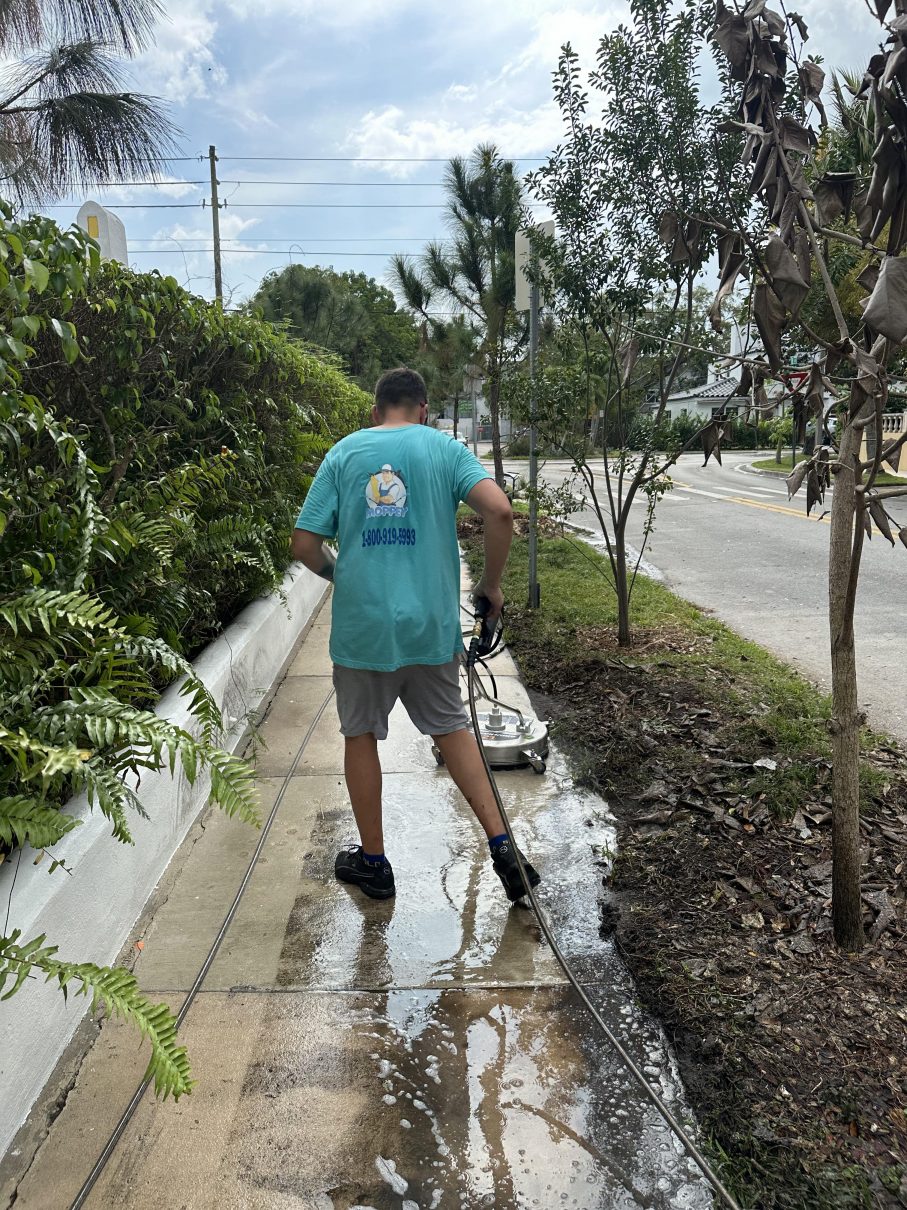
Moppey technician pressure washing a Miami walkway with a surface cleaner
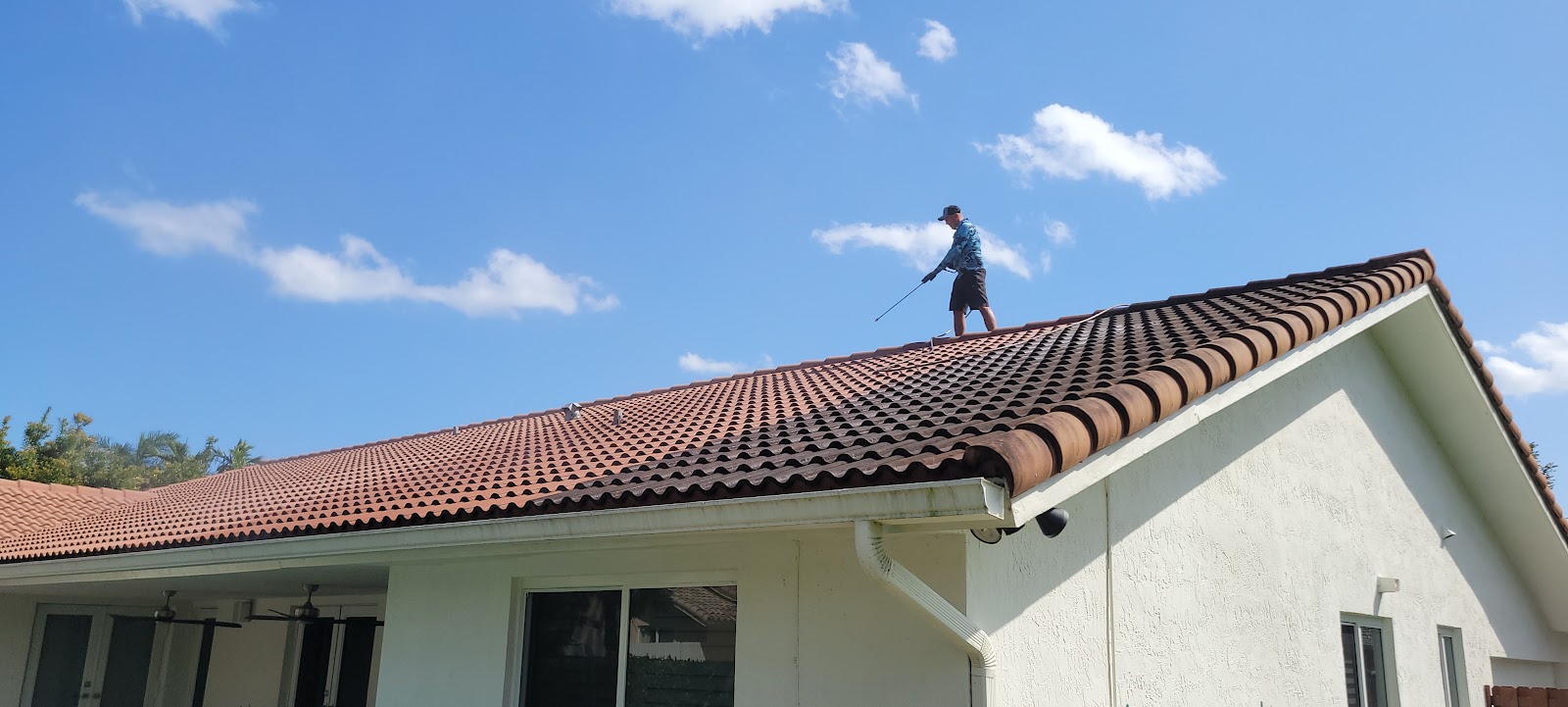
Soft washing a Miami barrel-tile roof
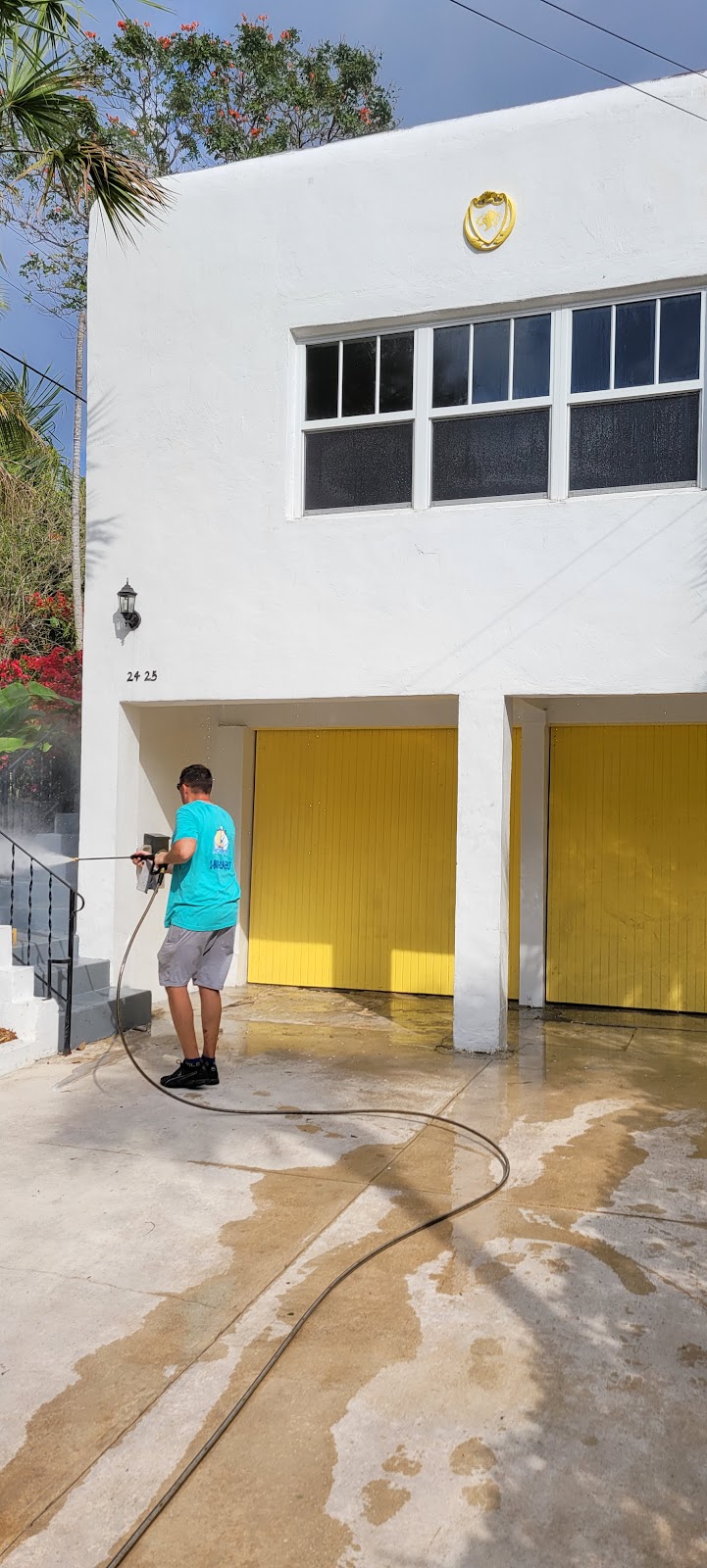
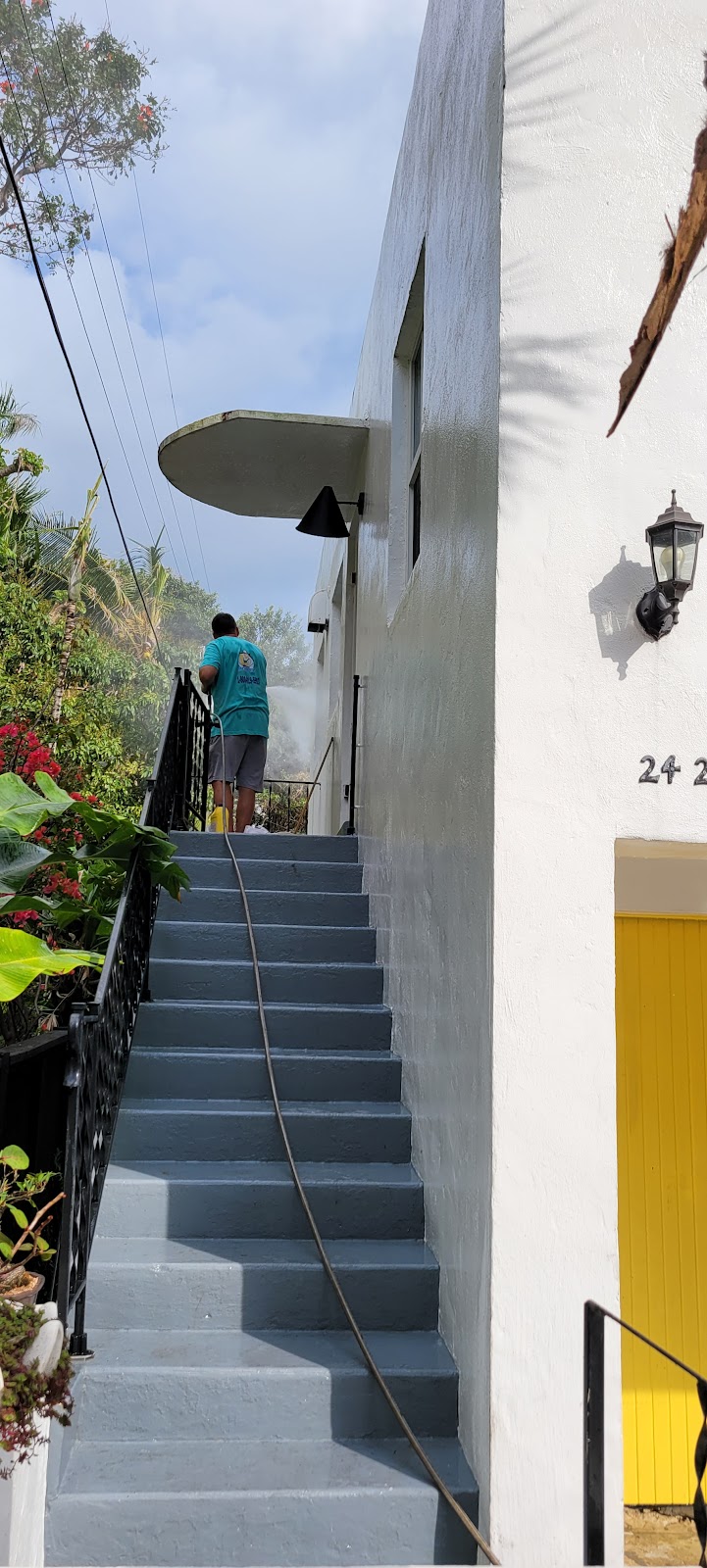
Freshly cleaned Miami driveway

Social proof

What customers say

These guys are awesome. I’ve used Moppey on 2 commercial projects and they exceeded my expectations. Top-notch team and great to work with.
Olivier LemoineCommercial Verified Google review

Where we work

HOA & Community Pressure Washing across Miami & South Florida

Good to know

HOA & Community Pressure Washing FAQs

Either, whichever the community prefers. Many associations have us coordinate through the property manager for scheduling and access, while the board approves the scope and budget. Tell us who the point of contact is and who needs to sign off, and we'll route the quote, the certificate of insurance, and the schedule accordingly so nothing stalls at approval.

Yes. We carry general liability and workers' comp, and we send a certificate of insurance to your manager or board before any work starts, addressed however your governing documents require. Boards and managers need that on file before a vendor touches community property, so we make it part of the setup rather than an afterthought.

That's how most communities work with us. We scope a monthly, quarterly, or seasonal plan for your common areas and give you a set price the board can put in the budget and reserve study. Miami growth comes back, so a maintained community is far cheaper to keep clean than one that's let go until it needs a full restoration. We'll recommend a cadence based on shade, coastal exposure, and how fast your surfaces show it.

We stage it so residents keep safe access to their doors, mailboxes, and vehicles throughout. We section off wet zones around the pool and clubhouse, work through the community in a planned sequence rather than closing everything at once, and time the loudest passes considerately. For larger communities we can share a simple schedule the manager can post so residents know what's being cleaned and when.

Not the way we do it. Perimeter walls, stucco building faces, and painted monuments get soft washing under 500 PSI with a cleaning solution, never high pressure, because high PSI etches stucco and strips the association's paint scheme. High pressure is reserved for hard flatwork like sidewalks, breezeways, and pool decks. Right method for the surface, every time.

Yes. We clean condo and townhome communities with multiple buildings, and we use the appropriate access equipment for upper breezeways, catwalks, and stairwells rather than improvising, backed by the liability and workers' comp coverage boards require for higher-access work. Tell us the building heights and access points and we'll factor them into the quote and schedule.

Because a rinse only removes the growth on the surface, while the algae and mildew live in the pores of the stucco — and a shaded, irrigation-fed perimeter wall in Miami stays damp enough to feed it year-round. Our soft wash uses a solution that kills it at the root, so it stays clean far longer than a quick blast-off. On a recurring plan the wall never gets the chance to green up in the first place.

It depends on the community's size, how many buildings and how much common walkway and wall are in scope, coastal exposure, access, and whether it's one-time or recurring — so we don't publish flat rates. We'll walk the property with your manager or review a site plan and send the board a clear, itemized free quote. Most quote requests are answered the same day, and hablamos Español.

Make every vendor scope from the same surface inventory — linear feet of perimeter wall, total flatwork, building count, and amenity areas — so you're comparing like for like instead of guessing what each price includes. A suspiciously low bid usually means high pressure everywhere (which etches stucco and strips monument paint), no soft-wash chemistry, or no insurance on file. Ask each bidder for an itemized scope and a certificate of insurance up front; the cheapest number rarely covers the same work.

Yes. We scope a monthly, quarterly, or seasonal plan and give the board a set price you can drop into the operating budget and reference in the reserve study. Recurring maintenance is predictable, which is exactly what a reserve analyst and your owners want to see. A maintained community also protects the reserve fund from the much larger cost of restoring surfaces that have been let go for years.

That's a common setup for us. A property manager running multiple associations gets one point of contact, consistent methods across every community, and certificates of insurance addressed to each association as its governing documents require. We keep results repeatable community to community so you're not re-explaining the standard on every property, and we schedule around each community's cadence and access separately.

We clean the association's common areas to a consistent standard, which sets the visual baseline the board enforces against. Many communities also arrange for us to handle owner-level exterior cleaning — driveways, roofs, house washing — either as an association-coordinated service or as a vendor owners can be pointed to when a violation letter goes out. Tell us how your governing documents split responsibility and we'll fit the scope to it.

Mainly gate codes or a way in, the location of usable water spigots, any resident-notice requirements in your rules, and a heads-up on building heights for upper breezeways and taller walls. If your community requires posted notice before vendor work, we'll give you a simple schedule the manager can share so residents know what's being cleaned and when. Sorting this before the truck rolls is what keeps the visit smooth.

Communities in the coastal ISO C5-M corrosion zone — think Key Biscayne, Miami Beach, and waterfront high-rises — take airborne salt that dulls clubhouse glass, rusts metal railings and mailbox kiosks, and re-coats surfaces faster than inland grime. That pushes waterfront associations toward a tighter cadence, often monthly on the most-seen surfaces. We factor coastal exposure into the recommended plan rather than treating every community the same.

The smart window is April and May, before the June-1-to-November-30 season opens. Clean common walkways and clear shared drainage let the property shed water instead of pooling it toward buildings during summer storms, and gutters clogged with palm fronds overflow toward foundations exactly when you can least afford it. A pre-season pass also gets the community looking its best before the wetter months accelerate algae growth.

Get your free hoa & community pressure washing quote

Tell us what needs cleaning and we’ll help you choose the right service — from roof stains and driveway grime to windows, patios, balconies and commercial walkways.

Fast free quotes — most answered same day · Hablamos Español

Call NowGet QuoteDirections