In-depth guide
Paver Cleaning in Miami: the complete guide
What paver cleaning actually involves in Miami
Paver cleaning is the restorative deep-clean of an interlocking stone surface — driveway, patio, walkway, pool deck or entry — where the goal is to bring back the original color of the stones and clear out the joints between them without damaging either. It is a fundamentally different job from washing a poured concrete slab. A paver surface is not one continuous material; it is dozens or hundreds of individual units, each holding grime in its texture and each connected to its neighbors by a bed of joint sand. That structure is what makes pavers beautiful, and it is exactly what makes them tricky to clean correctly.
In Miami, three forces work against pavers constantly. Humidity and daily rain feed algae, moss and mildew straight into the porous surface and down into the joints. Mineral-heavy water drawn up through the stone leaves a chalky white haze — efflorescence — especially on travertine and on newer installs. And the sheer amount of foot and tire traffic grinds embedded dirt, oil, tire rubber and organic matter into the texture until a warm terracotta driveway reads muddy gray and a bright travertine pool deck turns green and slick.
Done properly, paver cleaning is a sequence, not a blast: read the material, clean the stones with the correct pressure and solution, clear and treat the joints, address the minerals, then decide whether and when to reseal. A rental machine reverses that logic — it points maximum PSI at everything and calls the mess "clean."
The right method for each paver material
Miami yards run on more than just brick and travertine. A careful cleaner sets pressure, water temperature and technique to the specific material rather than treating every stone the same.
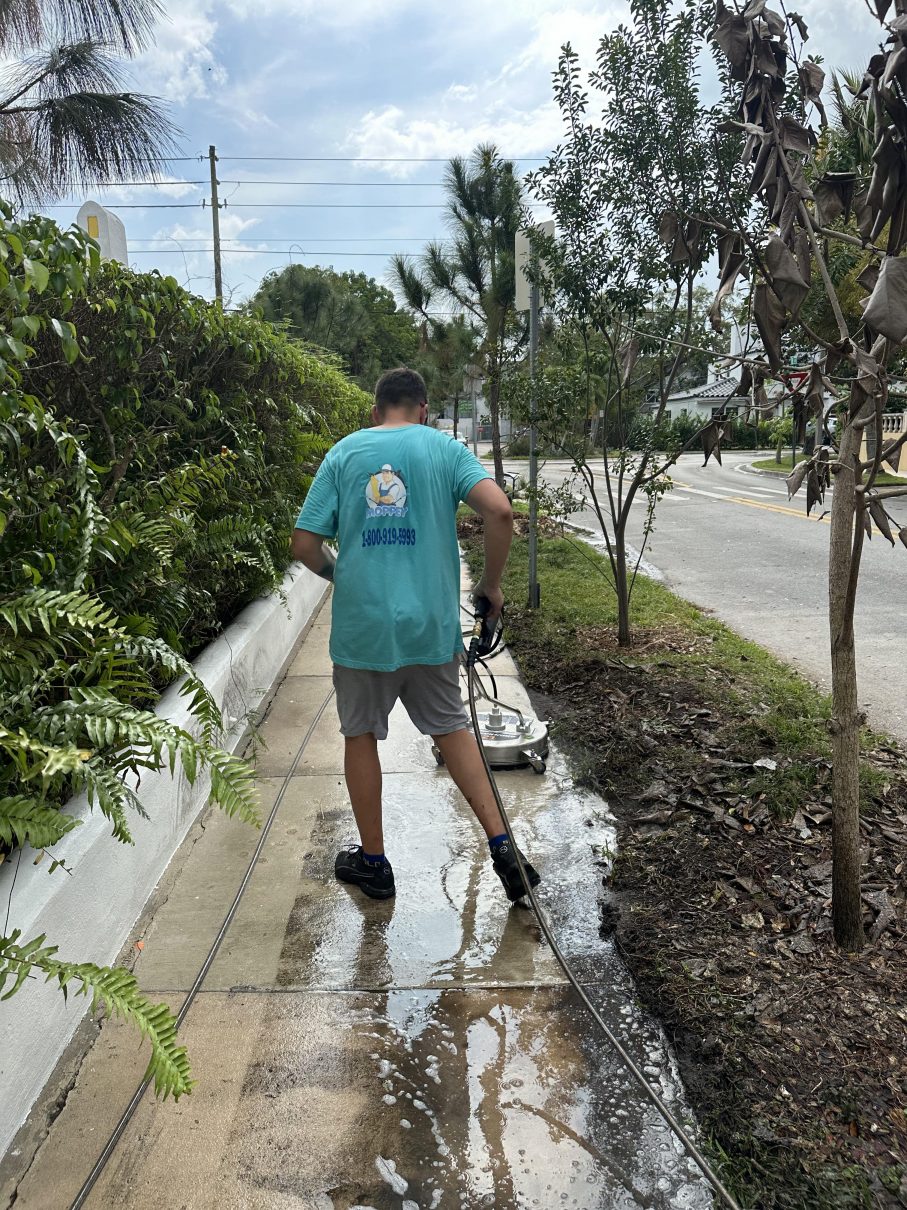
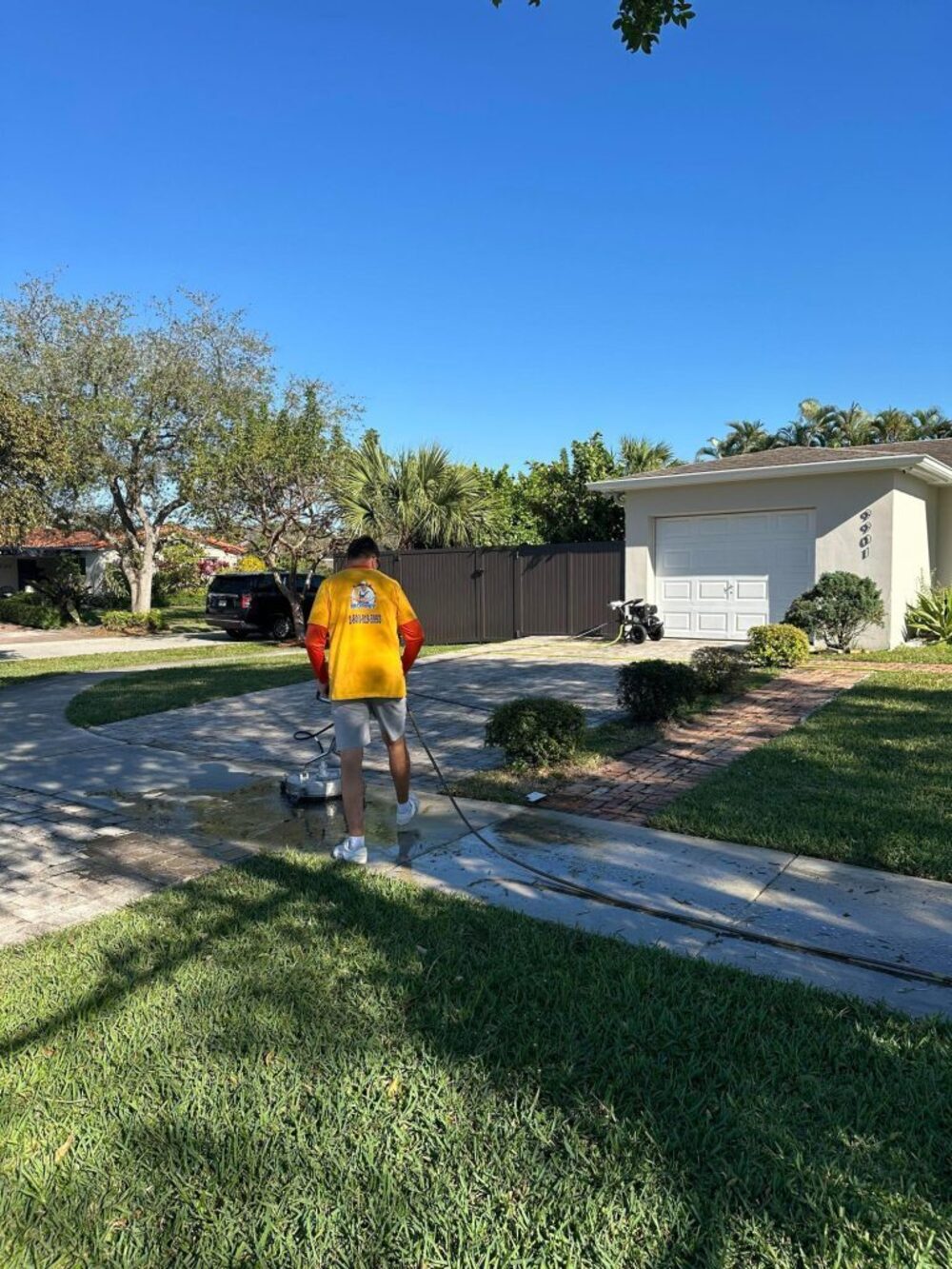
- Brick pavers (clay and concrete brick): The most forgiving. They tolerate moderate pressure through a rotary surface cleaner, which keeps the clean even across every unit instead of leaving zebra stripes from a narrow wand.
- Travertine: Soft, calcium-based and easily etched. Aggressive pressure carves visible lines and opens the pores so it dirties faster. Travertine gets calibrated low pressure or a soft-wash chemical clean, never a turbo tip.
- Keystone and coral/oolite stone: Common on older Miami and coastal properties, very porous, and prone to holding algae deep. These respond best to a soft-wash solution that kills growth at the root rather than surface blasting.
- Concrete interlocking pavers: Durable and pressure-tolerant, but the pigment layer sits on the surface — over-aggressive cleaning strips color and exposes the gray aggregate underneath.
- Marble and precast pavers: Soft and stain-sensitive; treated like travertine, with low pressure and pH-appropriate solutions.
The universal rule is the one competitors gloss over: the material dictates the method, not the operator's impatience. High PSI is a tool, not a strategy.
Cold water, hot water, and why chemistry beats pressure
The instinct that "more pressure equals more clean" is what damages pavers. On organic staining — algae, mold, mildew, the black film that coats shaded pool decks — pressure only removes the top layer, so the growth returns within weeks. The lasting fix is chemistry: a sodium-hypochlorite-based soft-wash solution that kills the organism at the root, followed by a controlled rinse. Hot water adds real value on greasy and oily contamination — driveway oil drips, tire rubber, food and grill grease on entertaining patios — because heat breaks down the bond that cold water and pressure alone leave behind. The best results come from combining the right solution and the right water, then using the lowest effective pressure. On Miami's soft coastal stone, that approach is the difference between a surface that stays clean for a season and one that greens up again by the next rain.
The joints: sand, weeds, and long-term stability
The joints between pavers are the part homeowners forget and the part that determines how the surface ages. Cleaning naturally flushes some joint sand out — that is unavoidable and normal — but leaving the joints empty invites shifting stones, standing water and fast weed regrowth. There are two ways to refill them, and the choice matters:
- Regular joint sand is the standard fill: it locks the stones, is easy to top up, and is the correct base if you plan to seal (a penetrating sealer or a joint-stabilizing sealer bonds the sand in place).
- Polymeric sand contains a binder that hardens when wetted, resisting washout, ant tunneling and weed germination far better. In Miami's rain and humidity it holds up well between cleanings, though it must be installed on a bone-dry surface or it hazes.
Weeds and moss growing up through the joints are not a cosmetic afterthought — they are a moisture and root problem. Clearing them during the clean, and choosing a joint fill that discourages regrowth, is what keeps the surface looking finished months later instead of sprouting green lines after the first storm.
Efflorescence and why cleaning must come before sealing
That chalky white film is efflorescence: mineral salts drawn up through the stone and joints by Miami's constant moisture, then deposited on the surface as the water evaporates. It is most common on travertine and on newer paver installs still curing out their salts. The single most damaging mistake in this trade — and one many quick "clean and seal in a day" operators make — is sealing right over it. Trap efflorescence or damp joints under a seal coat in South Florida's humidity and the whole surface clouds, blushes white and turns milky within roughly six months, and the only fix is a chemical strip and redo. Efflorescence has to be treated so it releases, and the pavers have to dry completely, before any sealer goes down. That is precisely why paver cleaning and paver sealing are two separate steps, in that order.
Sealing: types, benefits, and Miami timing
Sealing is optional, but on Miami driveways and pool decks it earns its keep. A good sealer locks the joint sand, repels water and oil, resists staining, blocks UV fade, and slows the return of algae and efflorescence. The type of sealer changes both the look and the maintenance:
- Penetrating (impregnating) sealers soak in and protect without changing appearance — a natural, matte finish. They are breathable, which matters in humid Florida because they let residual moisture escape instead of clouding.
- Film-forming sealers sit on top and come in matte, satin or wet-look/gloss. Wet-look deepens color dramatically and is popular on brick and travertine, but a film coat needs a genuinely clean, dry, efflorescence-free base or it fails.
- Solvent-based vs water-based: solvent-based tends to give richer color enhancement; water-based is lower-odor and more forgiving of slight surface moisture. Around pools, a non-slip additive keeps a sealed deck from turning slick when wet.
In Miami's sun, rain and salt, most sealed pavers benefit from resealing roughly every one to two years — sooner for a high-gloss film coat, longer for a penetrating sealer. The correct workflow for a full restoration is: deep clean, treat efflorescence and stains, clear and refill joints, let everything dry, then seal. Rushing a sealer onto a surface that is not clean, dry and mineral-free is the fastest way to ruin a good paver.
Stains, tire marks and rust on pavers
Beyond general grime, Miami pavers collect specific stains that need targeted treatment rather than more pressure:
- Oil and transmission drips on driveways — pulled with a degreaser and hot water, ideally before they fully penetrate.
- Rust from patio furniture, irrigation water and fertilizer — Miami's hard, iron-tinged water leaves orange staining that requires a rust-specific acid treatment, not scrubbing.
- Tire marks and rubber scuff near garage aprons — broken down with the right solvent and heat.
- Battery acid, leaf tannin and berry stains on shaded patios — each responds to a different chemistry, which is why identifying the stain matters before touching it.
Signs your Miami pavers need professional cleaning
- The color has faded from warm-toned to a flat, dull gray.
- Green or black growth is spreading, and the pool deck feels slick underfoot.
- White chalky haze (efflorescence) has appeared on the surface or in the joints.
- Weeds, moss or ant sand are pushing up between the stones.
- You are prepping to seal, host, sell or reseal, and the surface has to look uniform.
- A previous seal coat has clouded, hazed or is peeling — a redo starts with a proper clean and strip.
Why a careful pro beats a rental machine
A pressure washer from the hardware store has no idea what a travertine pore or an efflorescence bloom is. In inexperienced hands it etches soft stone, blows out joint sand into craters, strips pigment off concrete pavers, and drives water and salts deeper so everything comes back faster. Worse, sealing over a poorly cleaned surface locks in every mistake. A professional matches pressure, temperature and chemistry to the exact material, treats the joints and minerals, and — just as importantly — tells you honestly whether your pavers are ready to seal or need to dry first. Moppey backs its work with a 48-hour re-wash guarantee, plant-safe soft-wash chemistry, before-and-after photos, and insurance with a certificate of insurance available on request. If you want your brick or travertine to look the way it did the day it was installed, without cracked stones or a clouded seal coat, call Moppey Spottless Clean Pros at +1 877-754-5614 for a free, same-day quote.