In-depth guide
Residential Pressure Washing in Miami: the complete guide
Residential pressure washing in Miami: the complete homeowner's guide
Residential pressure washing is the coordinated exterior cleaning of an entire home — not a single driveway or one stretch of wall, but every washable surface on the property handled in one planned visit. Done right, it is less about raw water pressure and more about diagnosis: reading each surface, choosing the correct method, and matching the water temperature, pressure, and cleaning chemistry to the material in front of you. In Miami, where subtropical humidity, salt air off Biscayne Bay, and the hardest municipal water among major Florida cities all conspire against your exterior, that judgment is the entire difference between a house that looks restored and a house that looks damaged.
This guide goes past the basics. If you already know you want your home cleaned, here is what actually happens, what makes one job cost more than another, how the local climate changes the playbook, and how to tell a careful professional from someone with a rented machine and a wide-open trigger.
What "whole-home" pressure washing actually covers
The value of a residential package is that one crew, already set up on your property with water and equipment staged, handles surfaces that would otherwise mean three or four separate service calls. A typical Miami home involves a surprising number of distinct materials, and each one has its own rulebook:
- Concrete driveways, garage aprons, and parking pads — hard, flat, and forgiving; cleaned with a rotating surface cleaner for stripe-free, even results.
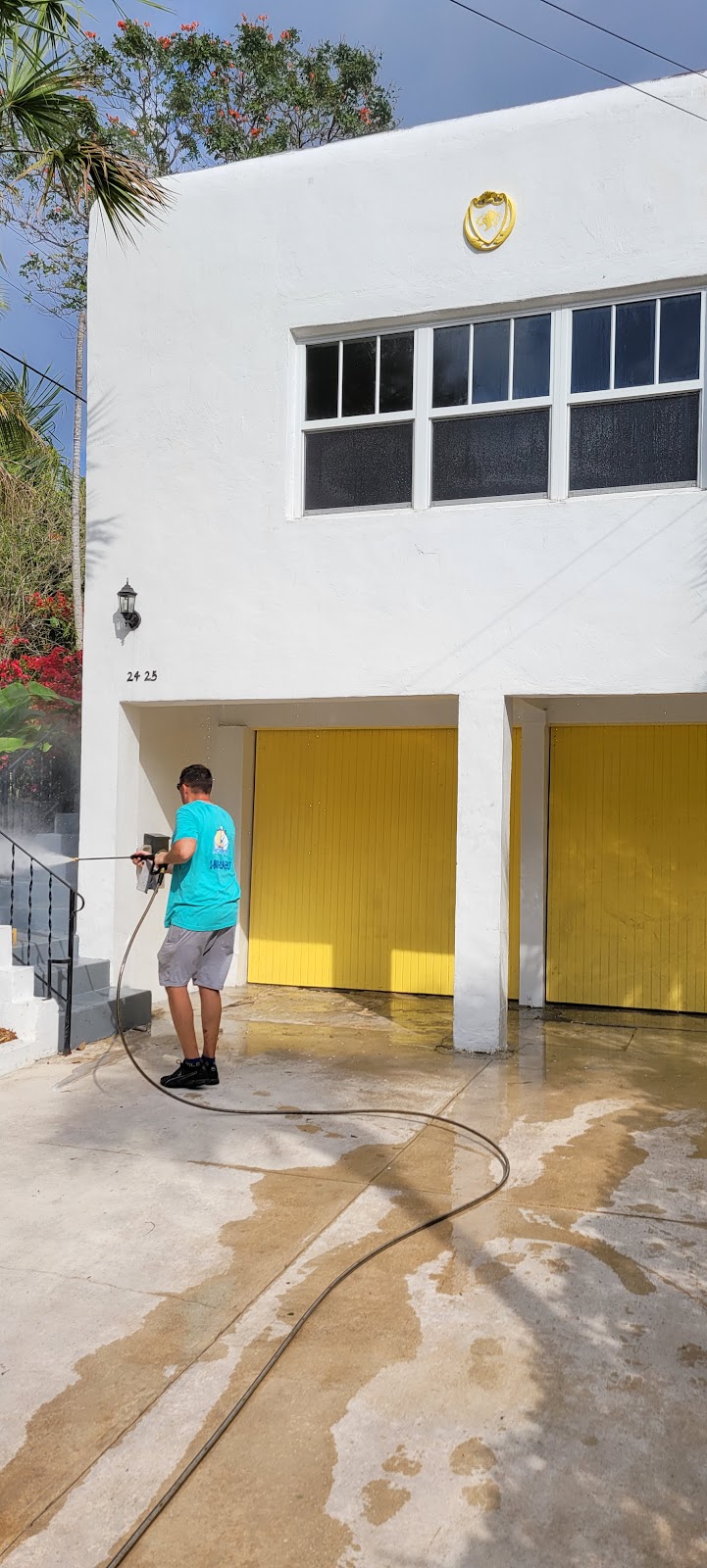
- Stucco walls — the default South Florida wall finish, and the single easiest surface to ruin with too much pressure.
- Walkways, entry steps, and side paths — where shade and moisture breed the slick algae film that makes a path genuinely dangerous.
- Screen enclosures and pool cage frames — aluminum and screen that flex and tear under a hard tip.
- Painted trim, garage doors, front doors, and mailbox areas — so the whole entry reads as one clean picture, not a clean driveway next to a dirty door.
- Fences, pool decks, patios, and paver surfaces — often brick or soft travertine, each demanding a different touch.
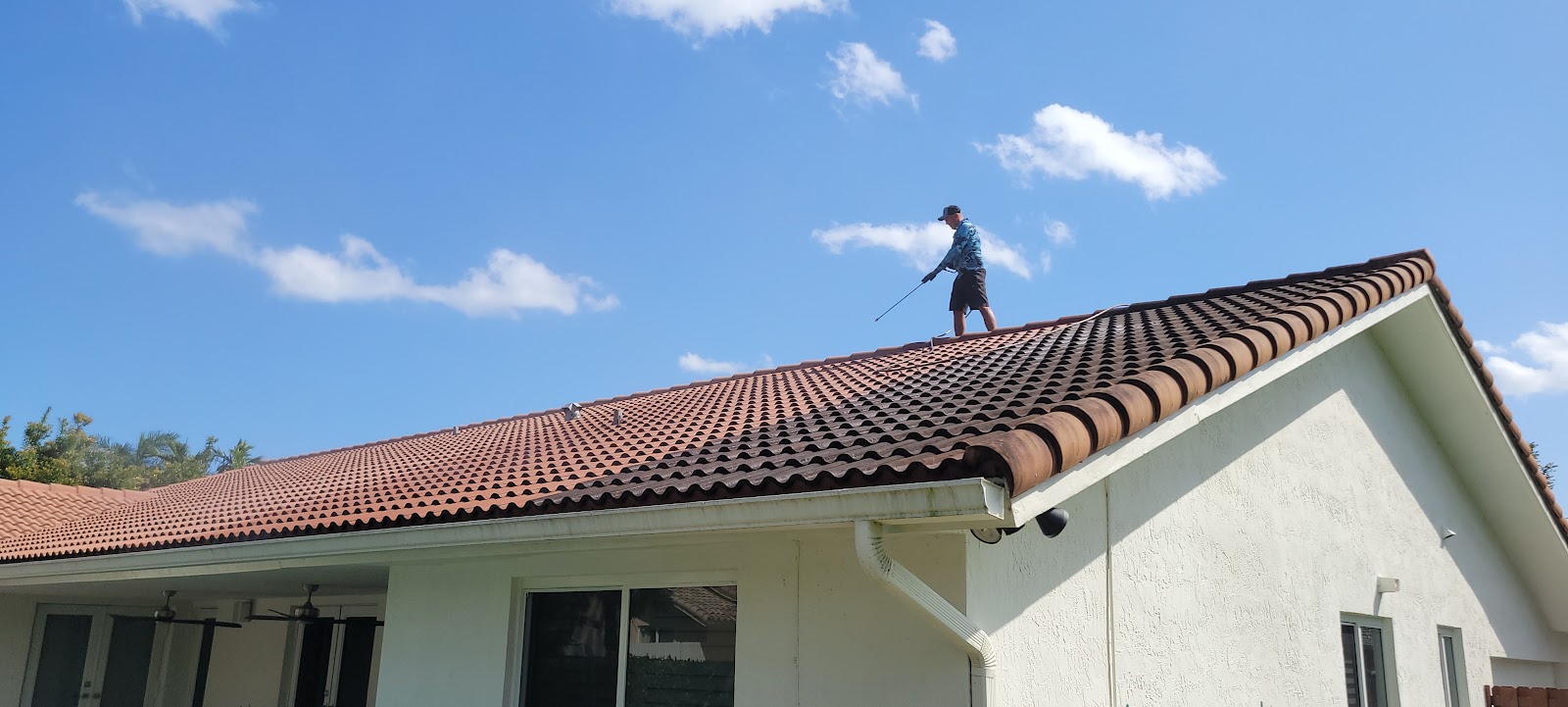
- Roof surfaces and gutters — usually a distinct soft-wash service, but part of the same whole-property conversation.
The Miami problems this service actually solves
South Florida is a hard place to keep an exterior clean, and the reasons are specific. Understanding them tells you why the work is needed more often here than almost anywhere else in the country.
- Organic growth on stucco and concrete. Warm rain plus year-round humidity feed mold, mildew, and algae on any shaded surface. The green and black staining you see on walls and walkways is living biology, not loose dirt — which is why blasting the top layer off does nothing; the roots stay and it returns in weeks.
- Roof black streaks. Those dark stains running down a Miami roof are Gloeocapsa magma, a cyanobacteria that feeds on the limestone filler in asphalt shingles. High pressure blows off the protective granules and can void your shingle warranty, so roofs are always soft washed — never power washed.
- Salt-air corrosion. Coastal Miami sits in an ISO C5-M corrosivity zone. Airborne salt etches glass and rusts metal fixtures, screen frames, and railings, accelerating the grime cycle on everything facing the water.
- Hard-water spotting. Miami draws from the limestone Biscayne Aquifer and has the hardest water of any major Florida city, around 11 grains per gallon. That mineral load leaves stubborn white spots on glass and surfaces that plain rinsing won't touch and sometimes needs a mild acid treatment.
- Efflorescence on pavers. That chalky white haze on brick and travertine is mineral salt drawn to the surface by moisture. It has to be treated before any sealing, or it clouds under the seal coat within months.
- Hurricane-season prep. With the season running June 1 through November 30, the smart cleaning window is April–May. Clean roofs shed water; gutters clogged with palm fronds overflow toward your foundation right when the heaviest rain arrives.
What the process looks like, step by step
A professional residential wash follows a repeatable sequence, and the diagnostic front end is what separates it from a rental-machine free-for-all:
- Property walk-around and surface plan. The crew walks the whole home first, sorting every surface into "handles pressure" versus "must be soft washed," and flagging anything fragile — old paint, loose caulk, screens, delicate coping.
- Protection and prep. Landscaping gets pre-wet so cleaning solution can't concentrate on foliage. Fixtures, lights, outlets, and vents are covered or avoided, and water is kept away from doors and windows.
- Soft washing the delicate surfaces. Walls, screens, and painted trim get low pressure under 500 PSI paired with a hypochlorite-based solution that kills mold, mildew, and algae at the root and dwells long enough to actually work.
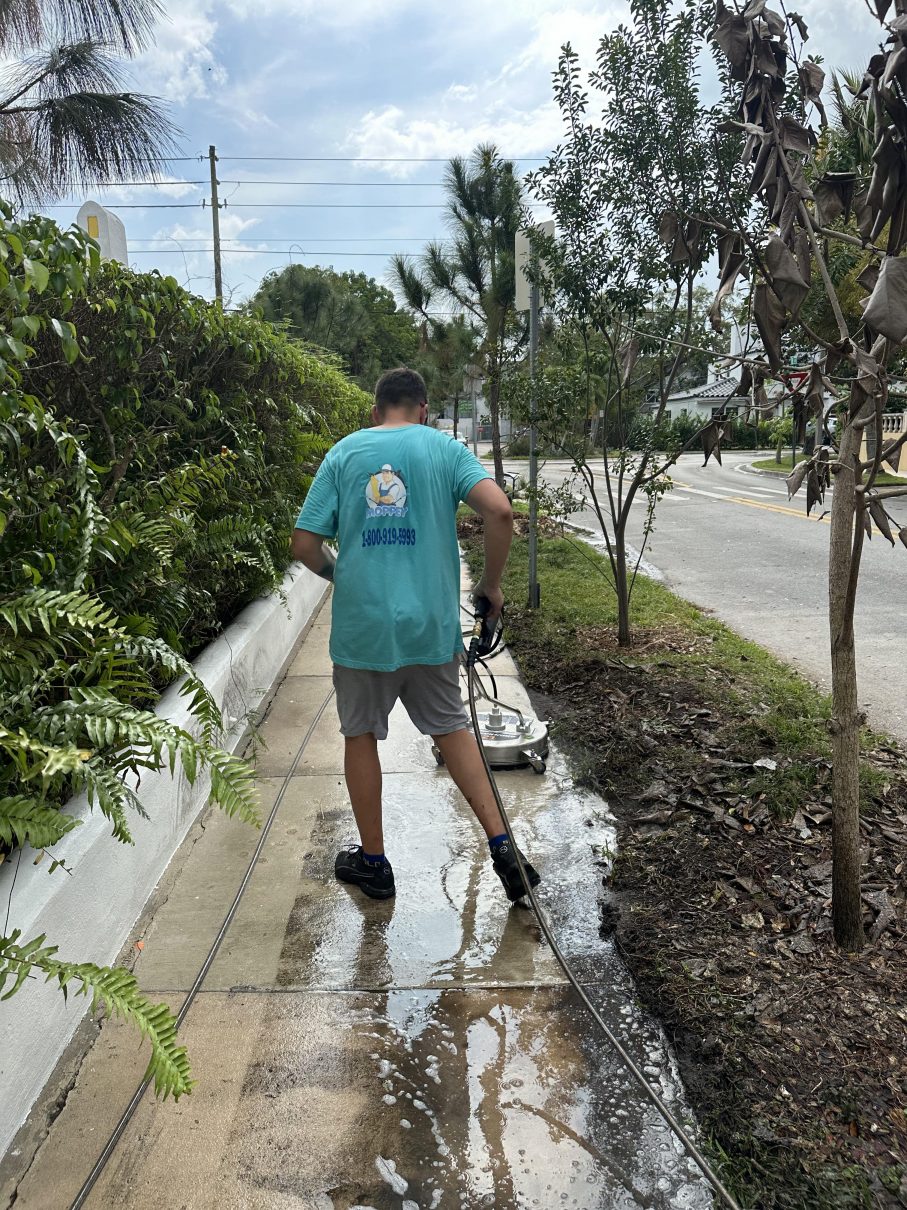
- Surface-cleaning the hard surfaces. Driveways, walkways, and flat concrete get a rotating surface cleaner that spins hot water evenly across the slab — no wand stripes, no zebra lines.
- Detail and edges. Steps, railings, entry areas, and transitions are hand-detailed so nothing is left half-done.
- Post-rinse and final walk-through. Every surface and the surrounding landscaping is rinsed, and you sign off side by side with the crew before they pack up.
How each surface is treated — and why the method changes
The core professional principle is simple to state and hard to execute: match the method to the material. Two techniques cover almost everything, and choosing wrong causes the damage homeowners fear.
- High pressure with a surface cleaner is for hard, flat, durable surfaces — poured concrete driveways, garage aprons, and concrete walkways. The rotating bar distributes force evenly so there are no wand marks.
- Soft washing is for everything vertical or delicate — stucco, painted walls, wood, aluminum screen frames, and trim. It relies on cleaning chemistry rather than force, running well under 500 PSI so it lifts biology without etching the surface.
- Brick pavers tolerate moderate pressure through a surface cleaner; travertine is soft and etches under an aggressive tip, so it gets calibrated low pressure or a soft-wash solution.
- Glass and metal in coastal zones may need a purified-water or mild-acid step to clear salt film and hard-water spots that ordinary rinsing leaves behind.
The unforgivable mistake is using a driveway setting on the side of a house. High pressure etches and pits stucco, strips paint, forces water behind siding, and shreds screens. A crew that reaches for the same tip on every surface is telling you exactly what kind of job you'll get.
What drives the cost
Moppey gives a free quote rather than a phone guess, because an honest number depends on what's actually in front of the crew. The main factors:
- Size and square footage of the home and the total surface area being cleaned.
- Number and type of surfaces — a driveway-and-walls job prices very differently from a full property with screens, pavers, and a pool deck.
- Condition and buildup. A house washed last year cleans fast; one with heavy, years-deep street-facing mold takes far longer and more solution.
- Surface material. Delicate travertine, soft washing, and salt or hard-water treatments take more time and care than plain concrete.
- Access and layout. Tight side yards, second-story walls, high-rise or gated-community logistics, and long hose runs all add labor.
You should be wary of any firm that quotes a flat per-home price sight unseen — it usually means a one-method, one-speed job regardless of what your surfaces need.
How often to schedule it in Miami
Most Miami homes benefit from a full exterior wash once a year, and often twice if the house is heavily shaded, backs up to dense landscaping, or sits close to the water where salt accelerates everything. Specific surfaces run on tighter cycles: coastal glass may want attention every six to eight weeks, and paver sealers typically need refreshing every one to two years. The practical rhythm for South Florida is a full wash in April or May ahead of hurricane season, plus spot maintenance on the surfaces that green up fastest. Recurring maintenance plans keep buildup from ever getting a foothold, which makes each visit faster and easier on your surfaces than letting a year of growth cement itself in place.
How it compares to DIY and single-surface services
A rented pressure washer is cheap to rent and expensive to regret. Consumer machines come with a narrow, high-pressure tip and no soft-wash capability, so the most common outcomes are etched stucco, stripped paint, "zebra stripes" on concrete, water forced behind siding, and torn screens — plus the biology grows right back because a rinse never kills the roots. A professional job differs in three ways that matter:
- The right chemistry, dwell time, and low-pressure delivery to actually kill mold and algae, not just wet them.
- Commercial equipment with adjustable pressure, hot water, surface cleaners, and the correct tip for each material.
- Judgment and accountability — plant protection, warranty-safe roof and wall methods, insurance with a certificate of insurance on request, before-and-after photos, and a re-wash guarantee if something isn't right.
Compared to booking single-surface services one at a time, the whole-home package wins on value simply because the crew is already on-site and staged. If only your driveway is dirty, book the driveway. If the street view of the whole house looks tired, doing it all at once costs less than assembling the same result from separate visits.
Signs it's time to book
- Green or black streaks climbing your stucco or running down the roof.
- A driveway or walkway noticeably darker than it used to be.
- Walkways or the pool deck going slick underfoot where shade sits all day.
- White haze on pavers, or hard-water spots on glass that won't rinse off.
- You're prepping to list or sell and need instant curb appeal for photos.
- Gutters visibly holding palm fronds and debris heading into hurricane season.
- It has simply been a year or more since the last full wash.
If any of these describe your home, a whole-home wash is the fastest reset there is. Moppey handles residential exteriors across Miami and South Florida with the right method for every surface — no damage, no streaks, no shortcuts. Call +1 877-754-5614 for a free quote, most answered the same day. Hablamos Español.