Moppey Spottless Clean Pros
Screen enclosure and pool cage cleaning in Miami

Rated 5★ · 43 reviews

Screen Enclosure & Pool Cage Cleaning Miami, FL

Soft washing that clears the mildew, algae, and pollen film off your pool cage and lanai screens — without denting a frame or blowing out the mesh.

Serving Miami & surrounding South Florida

Rated 5★ · 43 reviewsFully InsuredResidential & CommercialSoft Wash SafeHablamos Español

The Miami problem

Why screen enclosure & pool cage cleaning matters in Miami

You stop seeing it. The screen enclosure goes from bright to dull so gradually that one day you look up and the whole cage has gone gray-green — mildew spotting the mesh, black streaks running down the aluminum uprights, a film of pollen and dirt dimming the light that used to pour through. In Miami it happens fast, and it happens to every cage eventually.\n\nHere's the thing most homeowners get wrong: this is not a pressure-washing job. A screen enclosure is a fabric-and-aluminum structure, not a slab. The mesh is thin, the frames are hollow, and the whole thing is held together by hundreds of small screws and spline channels. Hit it with a high-PSI wand and you tear panels, dent uprights, and drive water into the screws where it starts corroding on the coast. The green comes off — and so does part of your enclosure.\n\nMoppey cleans pool cages and lanai enclosures the way the structure actually needs it: low-pressure soft washing that lifts the mildew, algae, and grime off the screen and frame at the root, then rinses clean. Your cage comes back bright, the light comes back through, and nothing on it is worse for the wash. No damage, no torn mesh, no shortcuts.

What’s included

What our screen enclosure & pool cage cleaning covers

  • Full soft wash of screen panels — walls and the sloped or peaked cage roof — to clear mildew, algae, and pollen film
  • Aluminum frame cleaning: uprights, cross-bars, and the top rail where black streaking and oxidation collect
  • Removal of the gray-green organic film that dims the mesh and blocks light
  • Spline channels and screw lines cleaned so trapped grime and corrosion-feeding growth are flushed out
  • Kick plates and the lower screen band that takes the most splash-out, dirt, and lawn-clipping staining
  • Door frames, latches, and closer hardware wiped down and rinsed
  • Attached lanai ceilings, fascia, and any screen-to-wall transitions where growth hides
  • Pre-wet and post-rinse of surrounding plants, pool coping, and deck so nothing dries with a chemical film
  • Honest flag on any screens that are already rotted, torn, or brittle so you know before we start

Our method

How we clean it safely

A screen enclosure is cleaned with chemistry and a soft, controlled rinse — never a pressure wand. We apply a cleaning solution matched to the mesh and aluminum, well under the pressure that would stress the fabric or push water into the screw channels, and let it dwell so it kills the mildew and algae at the root instead of just knocking the surface layer off the screen. Then we rinse the panels and frame with a broad, low-pressure flow that carries the loosened film out through the mesh rather than driving it in. We work the cage roof and the tall uprights with soft-wash reach gear so the whole structure gets cleaned evenly, top to bottom, without anyone dragging a ladder against panels that will dent or tear.\n\nProtection is built in because the enclosure sits right on top of everything you care about — the pool, the coping, the deck furniture, the planters. We pre-wet the surrounding plants and rinse them again when we finish, keep solution off the pool water, and control overspray so nothing beyond the cage gets coated. We treat brittle, sun-baked older screen with extra care and tell you straight when a panel is too far gone to clean safely, rather than blasting it and handing you a tear.

Soft wash vs pressure wash

A pool cage or lanai enclosure is always a soft-wash job — never pressure. Thin screen mesh and hollow aluminum frames tear, dent, and take on water at the screws under high PSI, and coastal salt turns that trapped water into corrosion. We clean the screen and frame at low pressure with a solution that kills the growth at the root, and we save high-pressure work for the hard concrete deck underneath, which is a separate surface with a separate method.

Best for

Who this service is for

  • Pool-cage owners whose screens have gone gray-green and dim, cutting the light over the pool
  • Lanai and patio enclosures with mildew spotting the mesh and black streaks down the aluminum
  • Homeowners who tried a pressure washer and ended up with torn panels or dented uprights
  • Screened enclosures under heavy tree cover where pollen, leaf tannin, and algae build up fast
  • Sellers and agents prepping a pool home for listing photos where the cage frames every shot
  • Snowbird and rental properties that sat unused through the rainy season and greened over
  • HOA and property managers maintaining shared screened pool enclosures and clubhouse cages
  • Anyone booking a pre-hurricane-season refresh before the summer storms roll in

Miami surface insight

Nothing grows a screen enclosure green faster than a Miami summer. Heat, humidity, and near-daily afternoon rain keep the mesh damp for hours, and pollen and organic dust give algae and mildew exactly what they need to root into the weave — which is why the shaded and north-facing panels always dim first. The aluminum has its own problem: we sit in a coastal salt-air zone that etches and oxidizes metal, so black streaking and white corrosion creep down the frames, and any high-pressure water forced into the screw channels only speeds the rusting along. Timing matters too. Enclosures screen out storm debris during hurricane season (June 1 to November 30), so most owners book a soft wash in the April-to-May pre-storm window — the cage is clean going in, and you can actually see through it to spot loose panels before the wind finds them.

Insured — COI on request
Plant-safe soft washing
Before & after photos
Satisfaction guarantee

In-depth guide

Screen Enclosure & Pool Cage Cleaning in Miami: the complete guide

What screen enclosure and pool cage cleaning actually involves

A pool cage or lanai enclosure is not one surface — it is three, and each one fouls differently and needs a different touch. There is the screen mesh (a woven fabric that stretches across every panel), the aluminum framing (hollow extrusions locked together with self-tapping screws), and the hardware and channels — the spline that holds the mesh in its groove, the door closers, the latches, and the fasteners. A proper cleaning has to read all three and treat them as the assembly they are, because what saves the screen can bleed rust from a screw if you skip a step, and what brightens the frame can burn brittle mesh if the dwell time runs long.

That is why this is a soft-wash job from top to bottom, never a pressure-washing job. The right method is chemistry plus a low-pressure rinse: a cleaning solution matched to the mesh and aluminum, applied under the pressure that would stress the fabric, given time to kill the mildew and algae at the root, then flushed out through the weave with a broad, gentle flow. The green comes off the screen. The black comes off the frame. Nothing on the cage is worse for the wash.

The Miami problems this service solves

South Florida is close to a worst-case climate for a screened enclosure, and each local force attacks a different part of the cage:

  • Heat, humidity, and near-daily rain keep the mesh damp for hours at a time. Mildew and algae root into the weave — worst on the shaded and north-facing panels that never fully dry — and pollen and organic dust give the growth exactly what it needs.
  • Coastal salt air (the marine corrosion zone rated ISO C5-M) etches and oxidizes the aluminum. Black streaking and white powdery corrosion creep down the uprights, and any water forced into the screw channels starts rusting the fasteners from the inside.
  • Rust bleed from steel screws. The most common permanent-looking stain on a Florida cage is not on the aluminum at all — it is orange rust weeping out of a corroding self-tapping screw and running down the mesh below it. A surface rinse never touches it.
  • Palm and tree litter. Fronds, leaves, and seed pods pile on the sloped screen roof, hold moisture, feed algae, and — left long enough — add real weight that sags and tears the panels.

The result is a cage that dims so gradually you stop seeing it, until one day the whole structure has gone gray-green and the light that used to pour over the pool is filtered and flat.

Step by step: what the process looks like

  • Walkthrough and honest flag. Before anything gets wet, we look at the screen for brittleness, existing tears, rotted spline, and rust-stained mesh, and we tell you what will clean up and what is already too far gone. Sun-baked screen near the end of its life gets flagged so there are no surprises.
  • Protect everything underneath. The enclosure sits directly over the pool, coping, deck, furniture, and planters. We pre-wet the surrounding plants, keep solution off the pool water, and control overspray so nothing beyond the cage gets coated.
  • Apply and dwell. A cleaning solution matched to the mesh and aluminum goes on at low pressure and is given time to work. Dwell is what kills the organism at the root instead of knocking the surface layer off — the difference between a cage that stays clean and one that greens back in weeks.
  • Rinse through the weave. A broad, low-pressure flow carries the loosened film out through the mesh rather than driving it in. We work the sloped or peaked screen roof and the tall uprights with soft-wash reach gear so the whole structure gets cleaned evenly, top to bottom, without dragging ladders against panels.
  • Detail the frame and hardware. Uprights, cross-bars, the top rail, door frames, latches, and closers get cleaned, and the spline channels and screw lines are flushed so trapped grime and corrosion-feeding growth come out.
  • Final rinse and re-wet. Plants, coping, and deck get rinsed again so nothing dries with a chemical film.

The surfaces and materials, and how each is treated

Screen mesh. Miami cages run a range of meshes and they do not all behave the same. Standard 18/14 fiberglass is the common pool-cage weave; tighter no-see-um mesh (20/20) blocks the tiny midges but clogs with film faster and dries slower; pet screen and heavier super-screen are thicker and tougher but still tear under pressure; and Florida Glass / privacy screen (a vinyl-laminated panel on the kick-plate row) has to be wiped and rinsed differently because solution sheets off it instead of passing through. All of it is cleaned with low-pressure solution and a gentle rinse the fabric can take.

Aluminum framing. Most cage frames are mill-finish or painted aluminum. The black streaking is a mix of organic mildew and surface oxidation — the mildew and much of the staining lift at low pressure. Deep oxidation etched into older unsealed aluminum can leave a faint shadow, and we will say so honestly rather than promise a like-new finish that cleaning alone cannot deliver.

Hardware and fasteners. Spline, door closers, latches, and the hundreds of screws holding the cage together are where trapped water and salt do their quiet damage. We flush the channels and rinse the hardware; where a screw has already rusted and bled onto the mesh, we treat the stain but tell you the source is a fastener that eventually wants replacing — a repair, not a wash.

What drives the cost

We never quote a flat number sight unseen, because the price of a cage cleaning is set by the structure, not a menu. The factors that move it:

  • Size and number of screen sides — a small attached lanai versus a full free-standing pool cage with a peaked roof are very different jobs.
  • Height and roof pitch — a two-story or high-mansard cage needs more reach equipment and time than a low single-slope.
  • Condition — a lightly dimmed cage cleans fast; heavy algae, thick roof litter, and rust bleed take longer and more care.
  • Access — furniture, landscaping, tight side yards, and screened rooms that open off the house all affect setup.
  • Add-ons — cleaning the concrete or paver deck inside the cage is a separate hard-surface service priced on top.

The honest way to get a real figure is a look at the actual cage. That is what a free quote is for.

How often to clean it in Miami, and how to keep it clean

For most Miami pool cages, once a year keeps mildew and algae from ever taking hold. Heavily shaded or tree-covered enclosures do better on a roughly eight-to-nine-month cadence because they stay damp longer and green up faster. Between cleanings, a few habits stretch the results: knock the leaves and fronds off the screen roof before they mat down, keep the surrounding trees trimmed so panels get sun and airflow, and rinse the kick-plate band when you hose the deck. Many owners also time a wash for the spring, ahead of the June 1 start of hurricane season, so the cage is clean and clear before the storms — clean enough that you can actually see through it to spot loose panels before the wind finds them.

Screen cleaning versus pressure washing versus DIY

The single most important comparison is soft wash versus pressure wash, and it is not close. A rental pressure washer will get the green off — and take part of your enclosure with it. High PSI tears thin mesh, dents hollow uprights, and drives water into the screw channels where coastal salt turns it into corrosion. It also does not fix the problem: it knocks off the surface pigment and leaves the living organism behind, so the streaks return, often within a season. Soft washing removes the same growth at the root without any of that risk.

Cleaning is also not the same as restoration or rescreening. If your mesh is brittle, ripped, or rust-stained through, or the spline has dried out and popped, that is a repair — new panels, new hardware — not a wash, and we will tell you when you have crossed that line instead of blasting a screen that is already failing. A careful professional beats a rental machine here for one plain reason: knowing the difference between a cage that needs cleaning and a cage that needs a screen company is worth more than any amount of pressure.

Signs your cage needs cleaning now

  • The screens have gone gray-green and the light over the pool looks dim or filtered
  • Black streaks and white powder are creeping down the aluminum uprights
  • Orange rust stains are running below screws on the mesh
  • Mildew is spotting the panels, worst on the shaded and north-facing sides
  • Leaves and palm fronds have matted on the screen roof and won't rinse off
  • You are prepping a pool home for listing photos, where the cage frames every shot

If any of these describe your enclosure, the right move is a low-pressure soft wash by people who understand what is actually growing up there and how to remove it without harming the mesh, the frame, or the pool underneath. Moppey Spottless Clean Pros cleans pool cages and lanai enclosures across Miami and South Florida, residential and commercial, and we will tell you honestly what your cage needs and what it does not. For a free quote, call +1 877-754-5614 — fast free quotes, most answered the same day, and yes, hablamos español.
Recent work

Real Moppey results

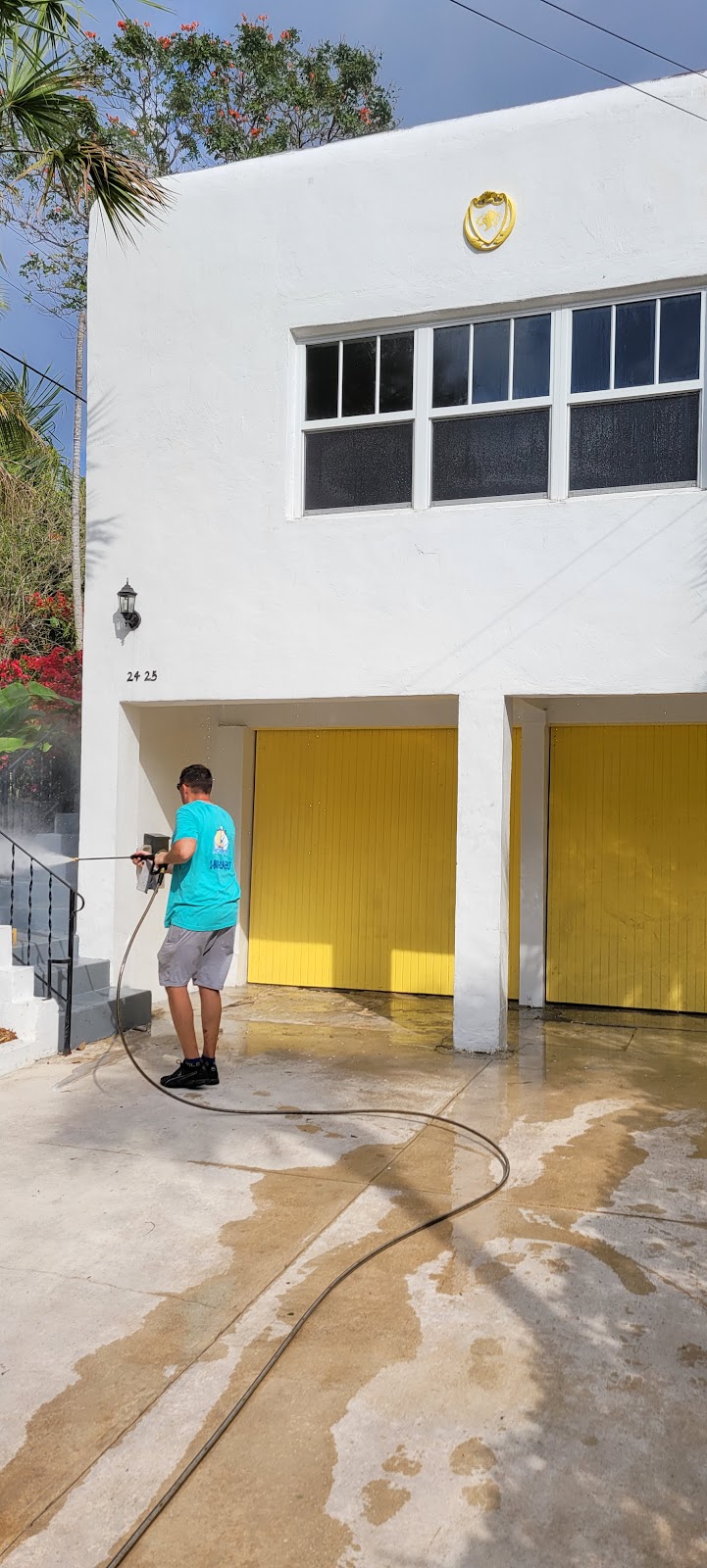
Screen enclosure and pool cage cleaning in Miami
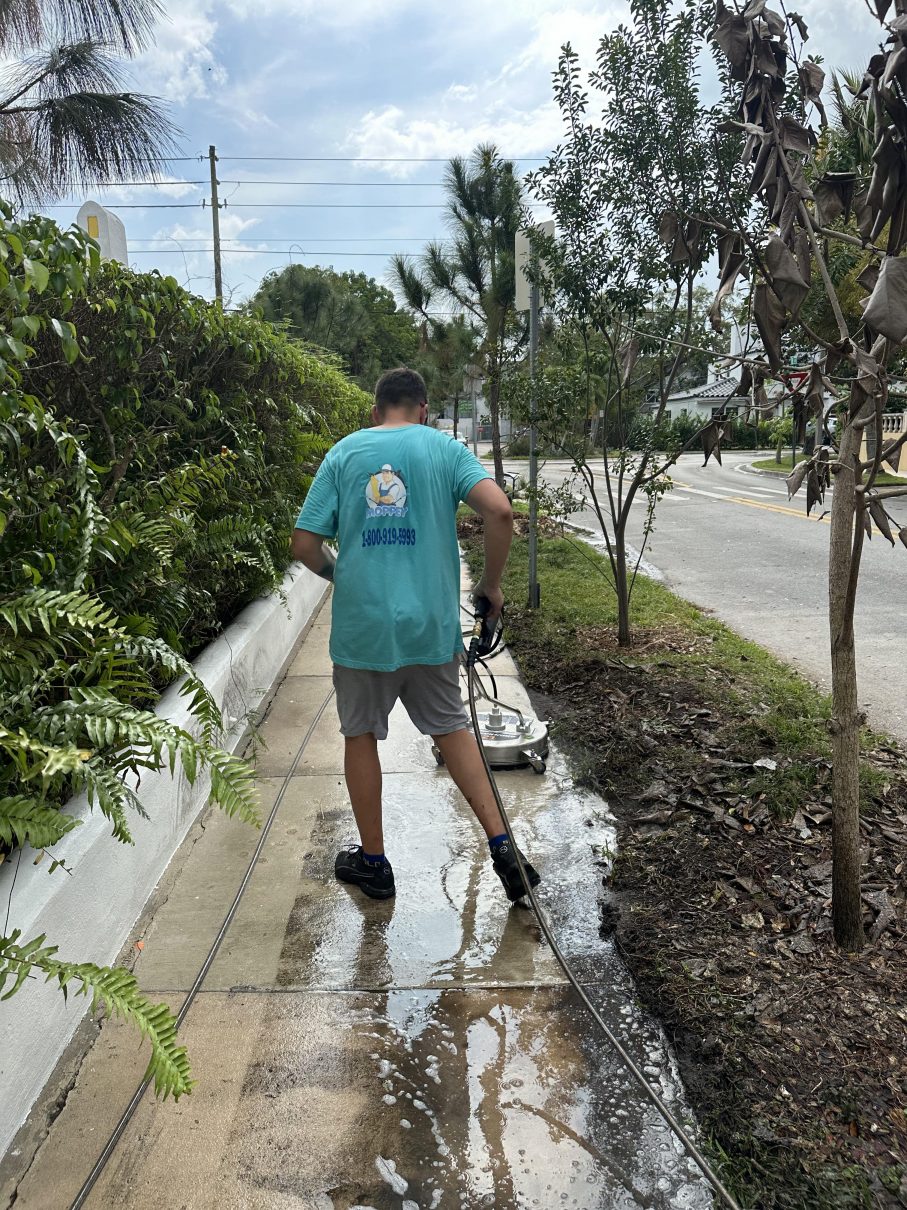
Moppey technician pressure washing a Miami walkway with a surface cleaner
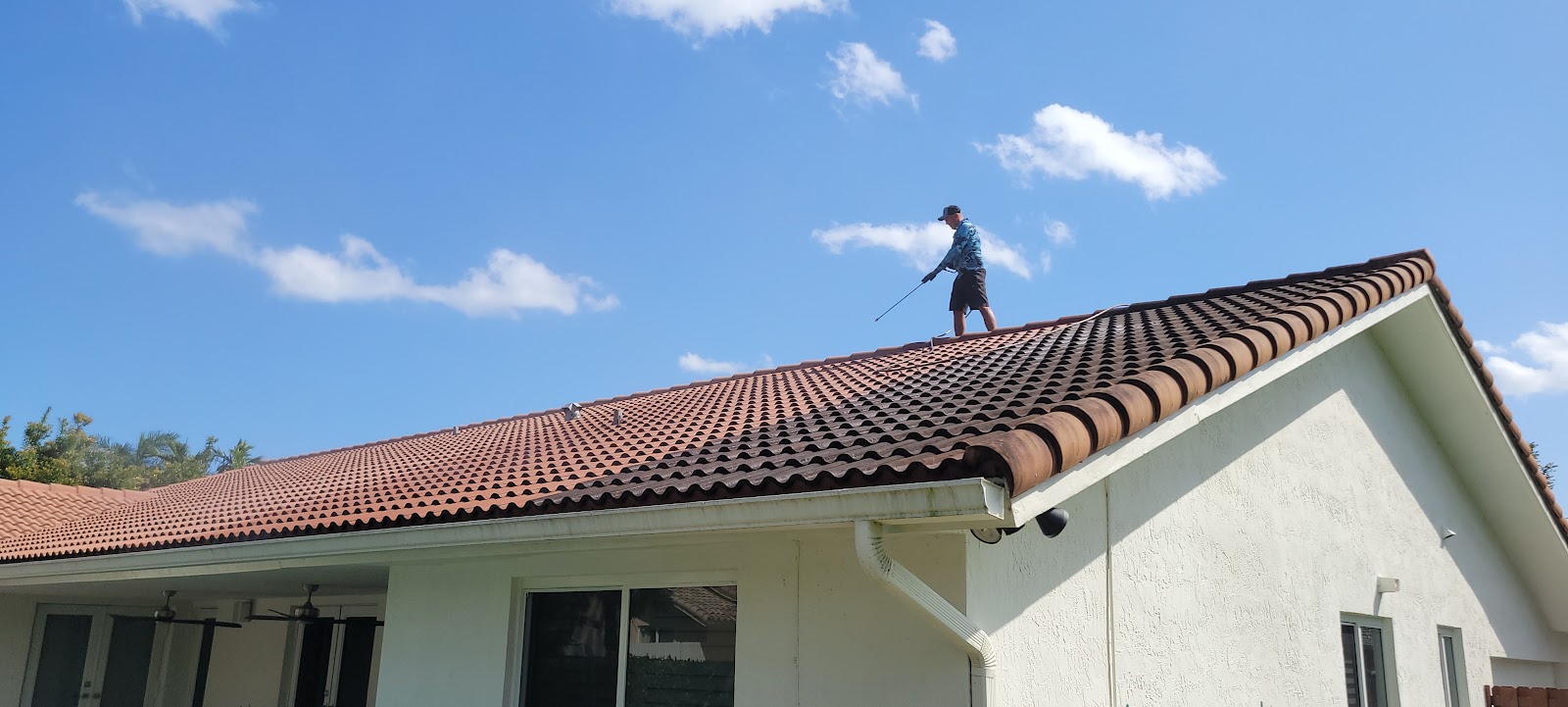
Soft washing a Miami barrel-tile roof
Freshly cleaned Miami driveway

Social proof

What customers say

They pressure-cleaned our pool deck and driveway and left everything spotless! Excellent service and team. Totally recommend them.
Gabriela RibeiroPool Deck • Driveway Verified Google review

Where we work

Screen Enclosure & Pool Cage Cleaning across Miami & South Florida

Good to know

Screen Enclosure & Pool Cage Cleaning FAQs

You can, and it's the most common way people damage their enclosure. High pressure tears the thin screen mesh, dents the hollow aluminum uprights, and drives water into the hundreds of screws that hold the cage together — which, on the Miami coast, is where salt-air corrosion starts. Soft washing gets the same green off without any of that. If your cage is worth keeping, it's worth not blasting.

In most cases, yes. The black streaking on cage frames is a mix of organic mildew and surface oxidation, and our cleaning solution lifts the organic film and much of the staining at low pressure. Deep oxidation that has etched into older, unsealed aluminum can leave a faint shadow — if that's the case with your frames, we'll tell you honestly what to expect before we start rather than promise a like-new finish.

That's exactly why we soft wash instead of pressure wash. Sun-baked screen that's already brittle can fail under high PSI, so we clean it with low-pressure solution and a gentle rinse that the fabric can take. During the walkthrough we flag any panel that's already rotted or torn so there are no surprises, and we'll never blast a screen we can see is on its way out.

The whole enclosure — walls and the sloped or peaked screen roof, which is usually the dirtiest part because leaves, pollen, and algae settle on top and never fully rinse off in the rain. We use soft-wash reach equipment to clean the roof panels and the tall uprights evenly, without dragging ladders against the mesh.

Not the way we work. We keep the solution off the pool water and control overspray so it stays on the cage, and we pre-wet the surrounding plants, coping, and deck before we start and rinse them again when we finish, so nothing dries with a chemical film. Protecting everything under and around the enclosure is part of the job, not an add-on.

For most Miami pool cages, once a year keeps the mildew and algae from taking hold, with heavily shaded or tree-covered enclosures closer to every eight or nine months since they stay damp longer and green up faster. A lot of owners also book a wash in the spring, ahead of hurricane season, so the cage is clean and clear before the storms arrive.

We can, but it's a separate service with a different method — the concrete or paver deck is a hard surface that takes proper pressure cleaning, while the cage is a soft-wash job. Plenty of customers book both together so the whole pool area gets done in one visit. Just mention the deck when you request your quote and we'll price it in.

Request a free quote by phone or through the form and tell us roughly the size of the cage, how many screen sides it has, and whether you want the pool deck done too. We'll give you a straight price with no hidden fees. Fast free quotes, most answered the same day — and yes, hablamos español.

We can treat and greatly reduce the rust staining on the mesh, but it's worth understanding where it comes from. Those orange streaks are almost always rust bleeding out of a corroding steel screw or fastener above them, not a stain on the screen itself. Cleaning lifts the discoloration, but if the source screw is far gone the bleed will slowly return, so we'll flag any fastener that really needs replacing — that's a small repair, not a re-wash.

Yes. Standard 18/14 fiberglass pool-cage mesh, tighter no-see-um screen, heavier pet or super-screen, and the vinyl-laminated Florida Glass privacy panels on the kick plate all behave differently — some pass solution through the weave, and Florida Glass sheets it off and has to be wiped and rinsed instead. We match the dwell time and rinse to whatever mesh your cage actually has, which is part of why a low-pressure soft wash beats a one-setting pressure washer here.

Cleaning fixes anything that's organic or oxidized — mildew, algae, pollen film, black streaking. Rescreening is for the structure itself: mesh that's brittle and tearing, ripped panels, dried-out spline that's popping loose, or rust bleed through the weave. We soft wash what will clean up and tell you honestly when a panel has crossed into repair territory rather than blasting a screen that's already failing. We're the cleaning step, and we'll point you to it when a screen company is what you actually need.

It can be, which is one reason not to let it sit. A screen enclosure that's greened over is holding live mildew and algae right in the space where your family and pets spend time by the pool, and heavy organic growth in a damp, enclosed area is something you'd rather clear than breathe past all season. Soft washing kills the growth at the root rather than just knocking the visible layer off, so it doesn't simply regrow in a few weeks.

Yes. Palm fronds, leaves, and seed pods pile up on the sloped or peaked screen roof, trap moisture that feeds algae, and — left long enough — add real weight that sags and eventually tears the panels or stresses the frame. Clearing the roof is part of a full cage cleaning, and knocking the debris off yourself between visits is one of the easiest ways to make your screens last longer in Miami.

We clean the aluminum super gutter that ties the cage to the house, along with the fascia and the screen-to-wall transitions where growth loves to hide, as part of the enclosure wash. A clogged or grimy super gutter overflows toward the foundation the same way a roof gutter does, so it's worth having flushed heading into the rainy season. If you want the home's separate roof gutters done as well, just mention it when you request your quote.

Yes. We handle shared screened pool enclosures, clubhouse cages, and balcony screens for HOAs and property managers across Miami. Multi-story and high-rise access needs the right reach equipment plus proper liability and workers-comp coverage, which we carry — a COI is available on request. Recurring maintenance plans work especially well for community properties where the cage needs to stay presentable year-round.

Get your free screen enclosure & pool cage cleaning quote

Tell us what needs cleaning and we’ll help you choose the right service — from roof stains and driveway grime to windows, patios, balconies and commercial walkways.

Fast free quotes — most answered same day · Hablamos Español

Call NowGet QuoteDirections