Miami is one of the toughest climates in the country to keep a home clean on the outside. High humidity, near-daily summer rain, and salt-laden coastal air all work against your walls, roof, driveway, and windows every single day. What looks spotless in April can grow a green film by July.
So how often should you actually pressure wash your home here? The honest answer: it depends on the surface. A stucco wall, a shingle roof, and a paver driveway all foul at different rates and need different methods. Below is a realistic schedule built around Miami conditions, not a generic national one.
The short answer
For most Miami homes, plan on a full exterior refresh once a year, with a few surfaces cleaned more often. That yearly cadence keeps organic growth from taking hold and protects the surfaces underneath.
Here's a starting point by surface:
- House exterior (stucco, siding, walls): once a year, sometimes twice near heavy tree cover or shade
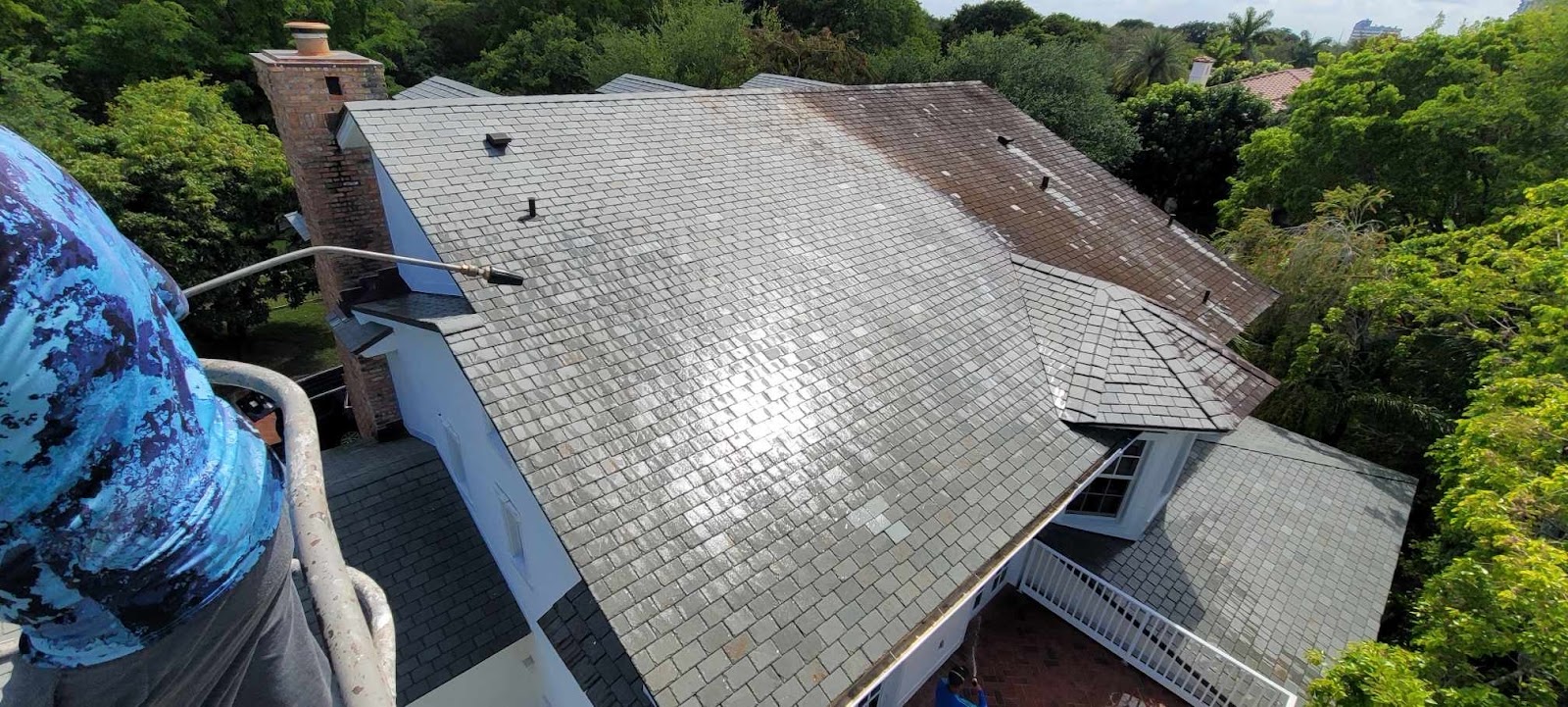
- Roof: roughly every 1 to 3 years, or as soon as black streaks appear
- Driveway, sidewalks, and pavers: once or twice a year
- Pool deck and patio: once or twice a year, more if it gets slippery
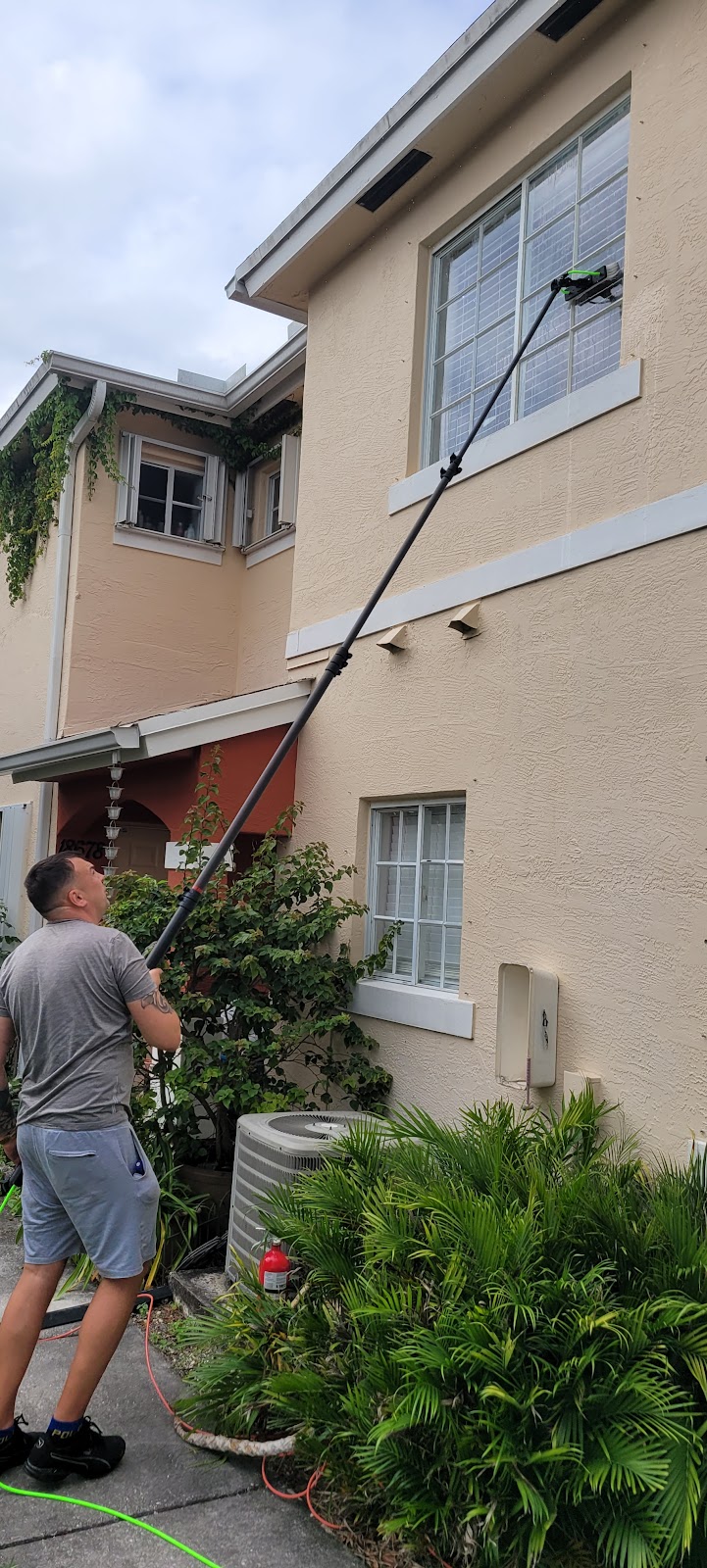
- Exterior windows: every 6 to 8 weeks near the coast; every few months inland
- Gutters and fascia: at least once a year, ideally before hurricane season
Think of these as ranges, not rules. Shade, tree litter, distance from the water, and how much foot traffic a surface sees all move the number.
Why Miami homes get dirty faster
The reason your neighbor up north can go two or three years between cleanings and you can't comes down to three local forces.
Humidity and rain grow living organisms. Mold, mildew, and algae need warmth and moisture, and Miami supplies both nearly year-round. That green or gray film on stucco isn't just dirt — it's alive, and it spreads. Left alone, it holds moisture against the surface and can work into the finish.
Salt air is corrosive. Coastal South Florida sits in one of the most aggressive corrosion zones there is (classified ISO C5-M for marine environments). Salt etches glass, rusts metal fixtures and railings, and leaves a haze on windows that ordinary rinsing won't remove.
The water here is hard. Miami has some of the hardest tap water of any major Florida city — around 11 grains per gallon, drawn from the limestone Biscayne Aquifer. When sprinklers or rain runoff dry on glass, the calcium and magnesium leave chalky spots that build up over time.
Put those together and you get a home that fouls on a faster clock than almost anywhere in the U.S.
Not everything should be pressure washed
This is the part most homeowners miss, and it's the difference between a clean home and an expensive repair. "Pressure washing" is the right tool for some surfaces and the wrong tool for others. The goal is the right method for the surface — not the most pressure.
Roofs should never be blasted with high pressure. Those black streaks are Gloeocapsa magma, a cyanobacteria that feeds on the limestone filler in asphalt shingles. High pressure blows the protective granules right off the shingle and can void your roof warranty. The correct approach is a soft wash — low pressure with the right cleaning solution that kills the organism and lets it rinse away.
Stucco needs a gentle touch, too. High pressure etches stucco and drives water behind the finish. Stucco and other delicate walls should be soft washed under about 500 PSI using a hypochlorite solution that clears the mold and algae without damaging the surface.
Travertine and natural stone are soft. Pool decks and patios in travertine need calibrated pressure, not a firehose. If you see a white haze forming, that's often efflorescence — mineral salts pushing to the surface — and it needs to be treated before any sealer goes back on, not just blasted off.
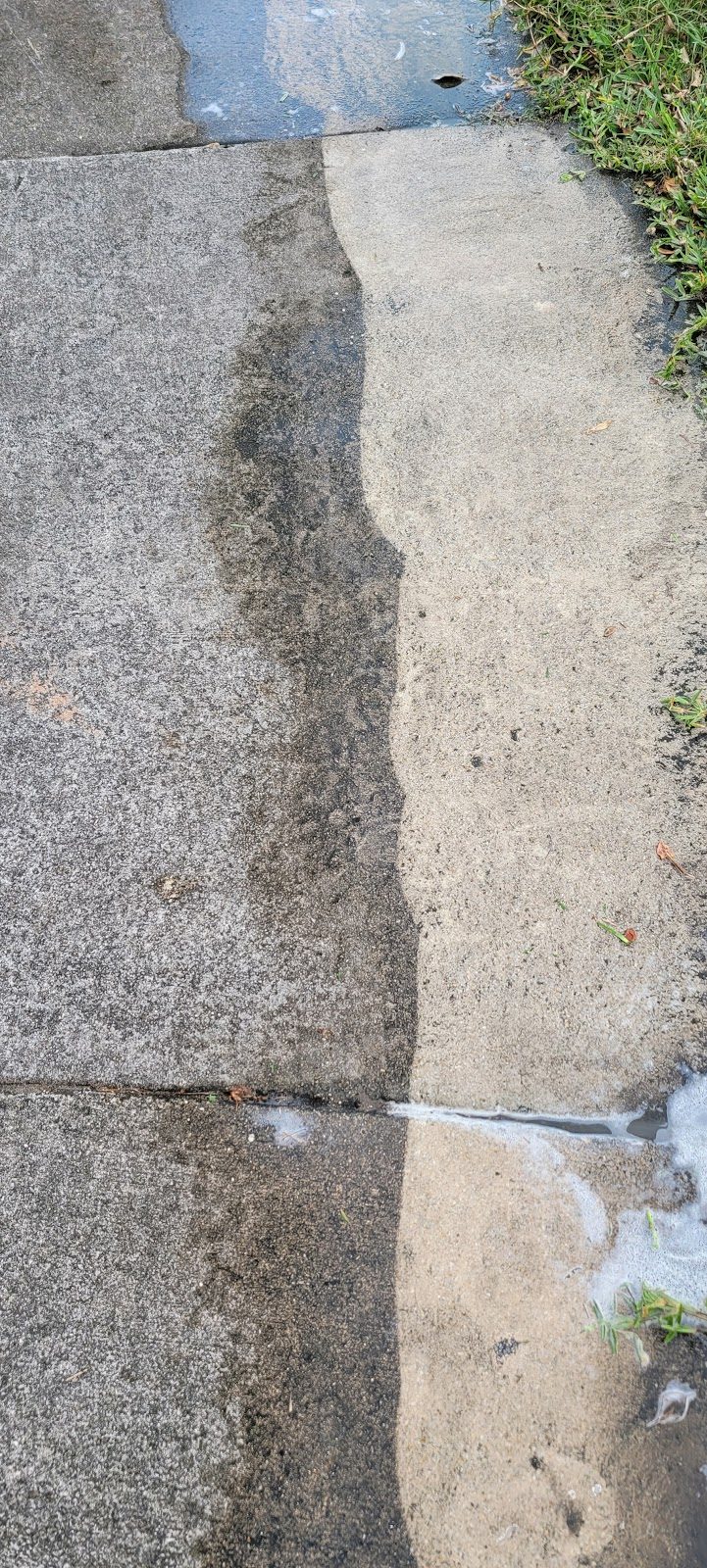
Hard surfaces like concrete driveways, sidewalks, and most pavers can take real pressure and genuinely benefit from it once or twice a year. The skill is knowing where the line is. No damage, no streaks, no shortcuts.
Signs it's time, regardless of the calendar
Your home will tell you when it needs attention. Don't wait for the anniversary date if you notice any of these:
- Green, gray, or black patches spreading on walls
- Dark streaks running down the roof
- A driveway or pool deck that's turned slippery
- Windows that stay cloudy or spotted after rain
- A visible line where a shaded area is noticeably dirtier than the sun-exposed part
Any one of these is a cue to book a cleaning sooner rather than later. Organic growth is far easier — and gentler on the surface — to remove early than after it's set in for a season.
Time it around hurricane season
There's a smart window for annual cleaning in Miami, and it's tied to the calendar. Hurricane season runs June 1 through November 30, so the ideal pre-storm cleaning window is April and May.
Here's why that timing matters. A clean roof sheds water efficiently; a grimy, streaked roof holds moisture and organic buildup that work against it. And clogged gutters — Miami's are notorious for filling with palm fronds — overflow toward the foundation instead of carrying water away. Clearing both before the first storm helps your home handle the rain it's about to get.
Getting your exterior handled in that April-to-May window means you head into the wet season with everything working the way it should.
The bottom line
For a typical Miami home: a full annual wash, windows on a tighter coastal schedule, and hard surfaces refreshed once or twice a year. Adjust up for shade, tree cover, and proximity to the water. And always match the method to the surface — soft washing where pressure would do harm, real pressure where the surface can take it.
If you're not sure what your home needs or how often, that's exactly the kind of question we're glad to answer. Moppey Spottless Clean Pros specializes in exterior cleaning across Miami and South Florida — residential and commercial — and we'll tell you honestly what should be cleaned, how, and how often.
Ready for a look? Get a free quote from Moppey today at +1 877-754-5614. Fast free quotes, most answered same day. Hablamos Español.