
Local guide
Exterior cleaning in Mid-Beach: the complete guide
Why Mid-Beach Exteriors Weather Differently Than the Rest of Miami
Mid-Beach sits on the exposed Atlantic side of the barrier island, running roughly from 23rd Street up to 44th Street. That geography defines everything about how your building ages. Unlike neighborhoods tucked inland behind Biscayne Bay, Mid-Beach properties catch the full brunt of onshore wind carrying salt spray straight off the ocean. Salt does not just sit on a surface and rinse off. It bonds to glass, eats into aluminum railings, and works into the pores of stucco and stone. The result is a neighborhood where exteriors need a smarter, more frequent cleaning cadence than almost anywhere else in South Florida.
Mid-Beach also has an unusually wide range of property types packed into a narrow strip. You have the historic MiMo (Miami Modern) hotels and the Collins Waterfront Architectural District, ultra-luxury oceanfront condo towers, mid-century apartment buildings, and quieter waterfront estates on the bay side. Each of these calls for a different method. Blasting a 1950s MiMo facade with the same pressure you would use on a concrete loading dock is exactly how irreplaceable architecture gets damaged. The right approach reads the surface first, then chooses the method.
The MiMo and Art Deco Problem: Old Stucco, Modern Mistakes
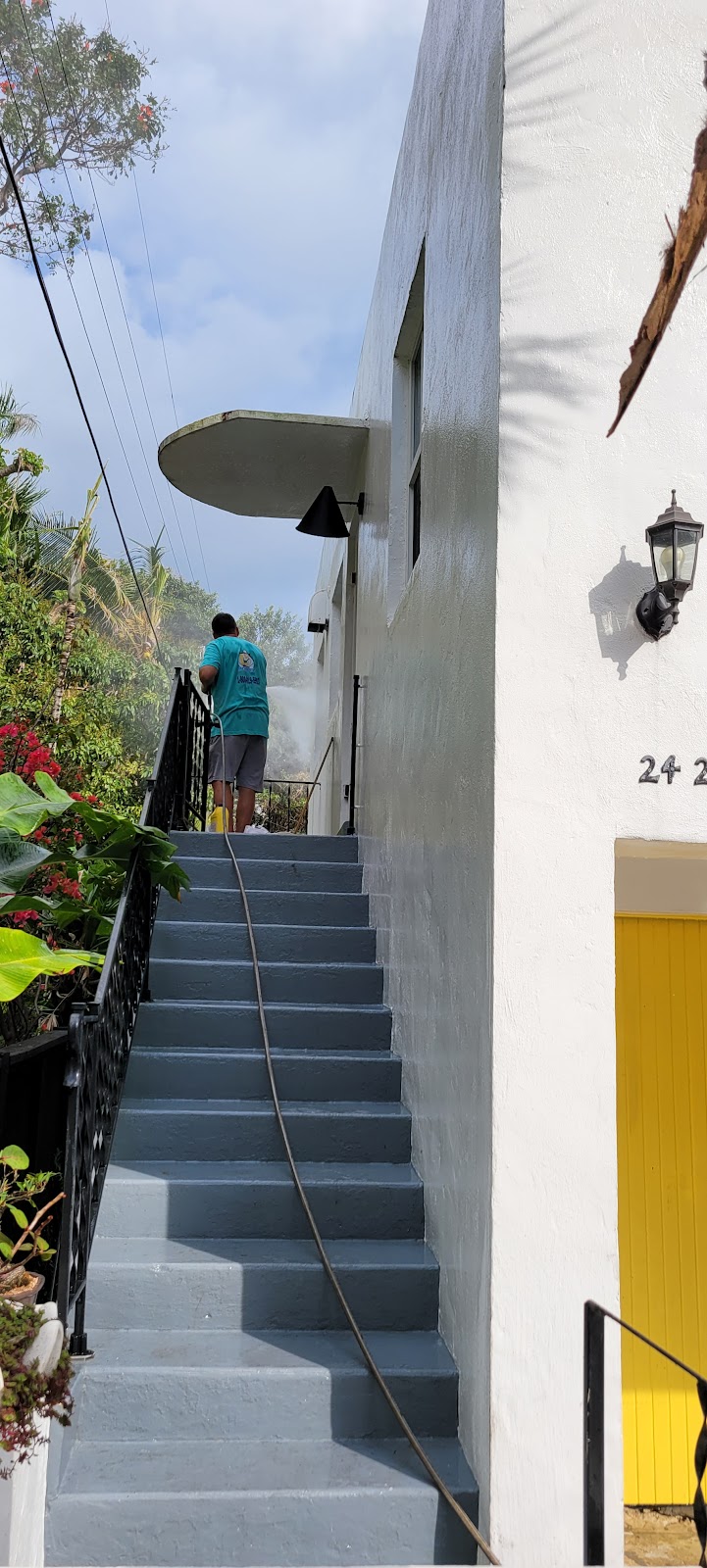
The Collins Waterfront district and the surrounding streets are full of mid-century MiMo and Art Deco buildings with painted stucco, decorative concrete detailing, and original architectural features that a lot of contractors treat like they are indestructible. They are not. Decades of Miami humidity, rain, and salt leave these facades streaked with mold, algae, and that grey-green film that dulls a once-bright building.
High pressure is the wrong tool here. It strips paint, gouges soft stucco, blows out mortar joints, and forces water behind the finish where it feeds more mold. The correct method is soft washing, generally kept under 500 PSI, using a plant-safe cleaning solution that kills the organic growth at the root rather than just blasting the surface layer off. That means the algae does not come racing back in six weeks. On older painted facades this is the difference between a clean building and a repaint bill. If you own or manage a MiMo or Deco-era property in Mid-Beach, the single most important question to ask any washer is whether they soft wash facades or default to a high-pressure wand. The answer tells you whether they understand the neighborhood.
High-Rise and Oceanfront Condo Towers
Mid-Beach is now defined by its oceanfront towers, from Faena House and 57 Ocean to the Carillon and the Ritz-Carlton Residences, alongside dozens of older glass-and-concrete condo buildings. Exterior cleaning at this scale is a different discipline entirely. It requires the right access equipment, proper liability and workers-comp coverage, and coordination with building management, valet, and residents so the work does not disrupt a full building.
Three surfaces dominate the maintenance list on these towers:
- Glass and balcony railings. Oceanfront glass in Mid-Beach fogs and spots fast. Salt film builds within weeks, and once it etches, no amount of cleaning fully restores clarity. Coastal-facing glass here often needs attention every six to eight weeks to stay ahead of permanent damage. This is a maintenance rhythm, not a one-time job.
- Balconies, lanais, and pool decks. Constant foot traffic, sunscreen, salt, and rain grow a slick biofilm on tile, travertine, and concrete. Pool decks in particular become a slip hazard when algae takes hold.
- The building envelope itself. Painted or coated concrete facades streak with Gloeocapsa magma and algae just like the low-rise buildings, only across many more stories.
For HOA boards and property managers, the value is not just appearance. It is documented, insured, repeatable maintenance with a certificate of insurance on request and photo records of each service. That is what protects the board and keeps the building looking like the address it is.
Roofs: The Black Streaks Are Alive
Whether it is a tile roof on a bay-side estate or a low-slope membrane on an apartment building, the black streaks running down Mid-Beach roofs are not dirt. They are Gloeocapsa magma, a hardy algae that feeds on the limestone filler in shingles and thrives in exactly this heat and humidity. Left alone it spreads, holds moisture against the roof, and shortens its life.
The critical detail: pressure washing a shingle or tile roof voids most manufacturer warranties and can crack tile or strip granules. Roofs must be soft washed with a low-pressure solution that kills the algae and lets rain rinse the roof clean over the following weeks. On barrel-tile and clay roofs common to the estates and Mediterranean-influenced properties around the bay side, this gentle approach is non-negotiable. A clean roof also matters functionally in Mid-Beach: it sheds water properly, which is exactly what you want heading into storm season.
Travertine, Pavers, and the White Haze You Should Not Ignore
Travertine and natural stone are everywhere in Mid-Beach, on pool decks, entries, and patios of the newer luxury builds and renovated estates. Travertine is soft and porous, so it cannot take aggressive pressure or the wrong chemistry without pitting and dulling. If you see a white, chalky haze coming up through stone or pavers, that is efflorescence, mineral salt migrating to the surface, and it has to be treated before any sealing. Seal over efflorescence and you lock the problem in permanently. Sealing on Mid-Beach pool decks and paver driveways is genuinely worthwhile because it slows salt and organic staining, but the sequence matters: clean, treat, then seal, in that order.
Miami's Hard Water Makes DIY Cleaning Backfire
Miami draws from the Biscayne Aquifer and has the hardest water of any major Florida city, around 11 grains per gallon. That is why a garden hose and a rented pressure washer often leave a property looking worse, with mineral spotting baked onto glass and stone by the sun before you can dry it. Professional exterior cleaning controls for this, using the right rinse technique and drawing the organic growth out rather than just wetting the surface and leaving hard-water minerals behind.
Timing It Around Hurricane Season
Hurricane season runs June 1 through November 30, and Mid-Beach, sitting directly on the coast, feels it. The smart maintenance window is April and May, before the season starts. That pre-storm window is when you want your roof cleaned so it sheds water, your gutters and scuppers cleared, and your facade and windows freshened up. Clogged gutters, especially where palm fronds and debris collect, overflow toward the foundation during heavy rain. Getting exterior cleaning done in spring means you head into storm season with the building working the way it should. After the season, a fall cleaning knocks off the salt and grime that accumulate through the wettest months.
What This Means for Your Property
The through-line across every Mid-Beach property type is method discipline. Match the pressure and chemistry to the surface, respect the salt, respect the age of the architecture, and stay on a cadence rather than waiting for the building to look bad. Whether you own a single MiMo apartment building, sit on a high-rise HOA board, or manage a waterfront estate, the goal is the same: no damage, no streaks, no shortcuts, on a schedule that fits the coast you live on.
Moppey Spottless Clean Pros works exteriors across Mid-Beach and South Florida, residential and commercial, with plant-safe soft washing, insured service with a certificate of insurance on request, before-and-after photos, and recurring maintenance plans that keep coastal properties ahead of the salt. For a free quote, call +1 877-754-5614.