
Local guide
Exterior cleaning in Silver Bluff: the complete guide
Cleaning a Neighborhood That Was Built by Hand
Silver Bluff is one square mile of Miami history you can read off the rooflines. The neighborhood went up in three quick waves — the 1920s Boom, a big federally-financed push in the late 1930s under the Federal Housing Act, and a final fill-in through the 1940s — and it was almost entirely built out by 1955. That timeline matters when you clean here. Most of the housing stock is small, well-built single-family homes from a single decade, which means whole blocks share the same aging materials: original stucco, barrel and clay tile, native coral-rock accents, and driveways that have been settling since before anyone owned a pressure washer.
What makes Silver Bluff different from the newer Miami we clean elsewhere is that it stays low. There are no high-rises and almost no commercial intrusion inside the residential grid — just tree-lined streets between Coral Way, Bird Road, and the Coconut Grove edge, shaded by old oaks and royal poincianas. That canopy is beautiful and it is exactly why the exteriors here get dirty the way they do. Below, the specifics that actually change how a job gets done in this neighborhood.
Mediterranean Revival vs. Mission and Moderne — Why the Style Changes the Method
Silver Bluff isn't one look. You'll find 1920s Mediterranean Revival — red barrel-tile roofs, arched doorways and windows, keystone surrounds, detailed stucco façades — sitting next to later-1930s homes in a plainer Mission or streamlined Moderne style, with smoother wall planes and less ornament. The style tells us where the risk is.
- Mediterranean Revival homes carry the most delicate detail: cast-stone or coral surrounds, arched recesses that trap grime and spider webbing, and decorative parapets. These get hand-detailed soft washing, not a wide-arc blast that would drive water into the arch reveals or flake the cast-stone edges.
- Mission and Moderne homes have broad, flat stucco expanses that green up fast under the canopy but clean predictably at low pressure with the right solution.
- Modern infill — the new construction slotted onto old lots in the last decade — brings smooth-troweled stucco, impact glass, and sometimes a metal or standing-seam roof. Different surfaces, different plan: the metal wants a gentle detergent wash, not the roof-tile chemistry.
We identify what we're standing in front of before a hose comes off the truck. On a block this varied, that read is the whole job.
The White Haze Problem: Efflorescence on Coral Rock and Stucco
Beyond the black roof streaks and green stucco that plague every older Silver Bluff home, there's a subtler one that trips people up: a chalky white bloom on coral-rock walls, keystone porch bases, and stucco near the ground. That's usually efflorescence — mineral salts wicking out of porous masonry as moisture moves through it — not dirt, and not mildew. It matters because it's the number-one mistake we see on renovation jobs here.
If a homeowner seals a coral-rock wall or a paver drive over efflorescence, the sealer locks the haze in and it can turn cloudy or flake. The salts have to be treated and cleared before any sealing. Silver Bluff's coral rock and keystone are native oolitic limestone — the exact stone the bluff is named for — so they're porous enough to keep pushing minerals out for years. On any older home headed for a seal-and-restore, we clear efflorescence first, let the masonry read true, then talk sealing.
The Canopy Is the Real Variable
The oaks, ficus, and royal poincianas that make these streets walkable also decide your cleaning schedule. Shade keeps north- and east-facing walls, porches, and driveways damp long after Miami rain, and damp masonry under warm humidity is a permanent algae culture. Two practical consequences here:
- North-side surfaces need cleaning more often than south-side ones on the same house. It's normal for a Silver Bluff home to have a bright, mostly-clean street face and a shaded side wall that greens up twice as fast. We plan for that instead of pretending one pass fixes both aspects equally.
- Leaf and frond litter is constant, which is why gutters and flat porch roofs clog and why paver joints grow weeds. Recurring maintenance beats one-off blitzes on canopy lots.
How Often Silver Bluff Surfaces Actually Need It
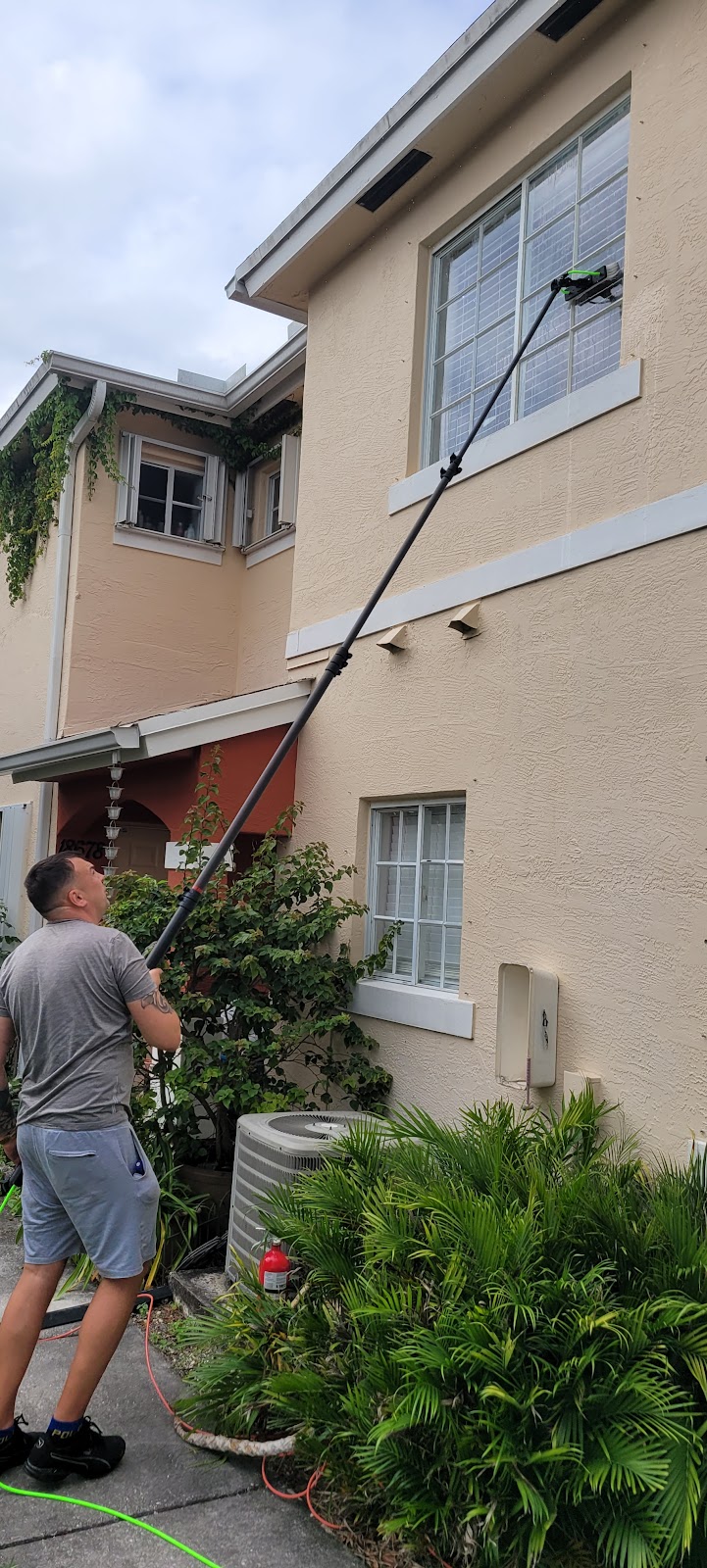
Because of the shade and humidity, a realistic cadence for an older home here looks like: a soft wash of tile roof and stucco roughly every 12–24 months (shaded elevations sooner), driveway and walkway cleaning once or twice a year, and exterior glass a few times a year — more often the closer you sit to Biscayne Bay, since the neighborhood is close enough to still catch salt film. Fences, screen enclosures, and pool-deck surfaces fall in between. We build recurring plans around your specific exposures rather than a generic calendar, and every wash is backed by our 48-hour re-wash guarantee if anything doesn't come clean the first time.
Pool Decks, Screen Enclosures, Fences, and the Renovated-Home Details
Silver Bluff's renovation wave has added surfaces that the original 1930s homes never had, and each has its own rule:
- Travertine pool decks on renovated homes are soft and porous — they clean at low pressure only, and like coral rock they show efflorescence that must be cleared before sealing. High pressure pits travertine permanently.
- Screen enclosures and pool cages collect a green film in the shade; they're washed with low-pressure soft-wash chemistry that won't tear the mesh or spline.
- Aluminum and wood fences, and the classic Silver Bluff garden walls get method-matched — soft wash for painted and coral-rock walls, careful detergent work for metal so salt-driven rust doesn't get worse.
- Balconies, awnings, and decks on the larger homes and infill builds round out the exterior; all get the surface-safe treatment, never a one-setting blast.
The Commercial Edge: Coral Way, Bird Road, and Douglas
The residential core stays quiet, but Silver Bluff is framed by working corridors — Coral Way (SW 22nd Street), Bird Road (SW 40th), and Douglas Road (SW 37th Avenue). The storefronts, small offices, restaurants, and mixed-use frontages along those edges have real exterior needs: sidewalk and entry degreasing, storefront glass on a schedule, awning and façade washing, and dumpster-pad and back-of-house cleanup. We handle these commercial exteriors alongside the homes, we're insured with a certificate of insurance available on request, and we work around business hours so a clean entrance is ready before you open.
Salt, Hard Water, and Why "Clean" Doesn't Stay Clean
Two chemistry facts shape every Silver Bluff job. First, the neighborhood is close enough to Biscayne Bay that glass and metal catch a coastal salt film — the film that hazes windows and, over time, feeds rust on railings and fixtures. Second, Miami has the hardest tap water of any major Florida city, roughly 11 grains per gallon drawn off the limestone Biscayne Aquifer. Sprinkler overspray and rain leave calcium and magnesium spots that a normal wash won't remove. We finish glass with a mineral treatment on stubborn spotting and use plant-safe soft-wash chemistry that protects the mature landscaping these lots are known for. You get before-and-after photos on every job, so the difference isn't something you have to take on faith.
Get a Free Quote
If you own an older home, a renovated one, or a storefront on the corridor edge in Silver Bluff, the right method is the whole difference — no damage, no streaks, no shortcuts. Send a few photos or call Moppey Spottless Clean Pros at +1 877-754-5614 for a free quote. Most requests are answered the same day, and we'll tell you honestly what your surfaces need and how often. Hablamos Español.