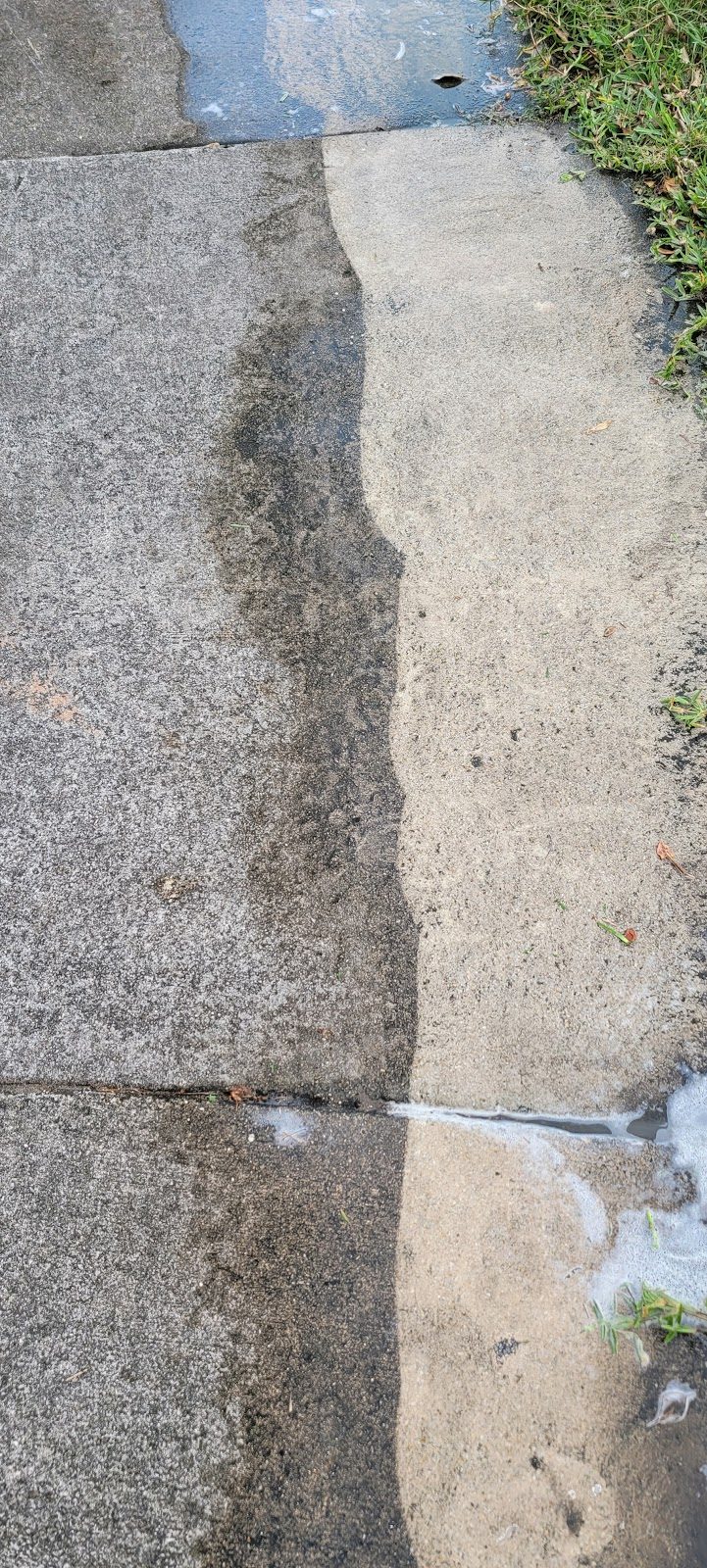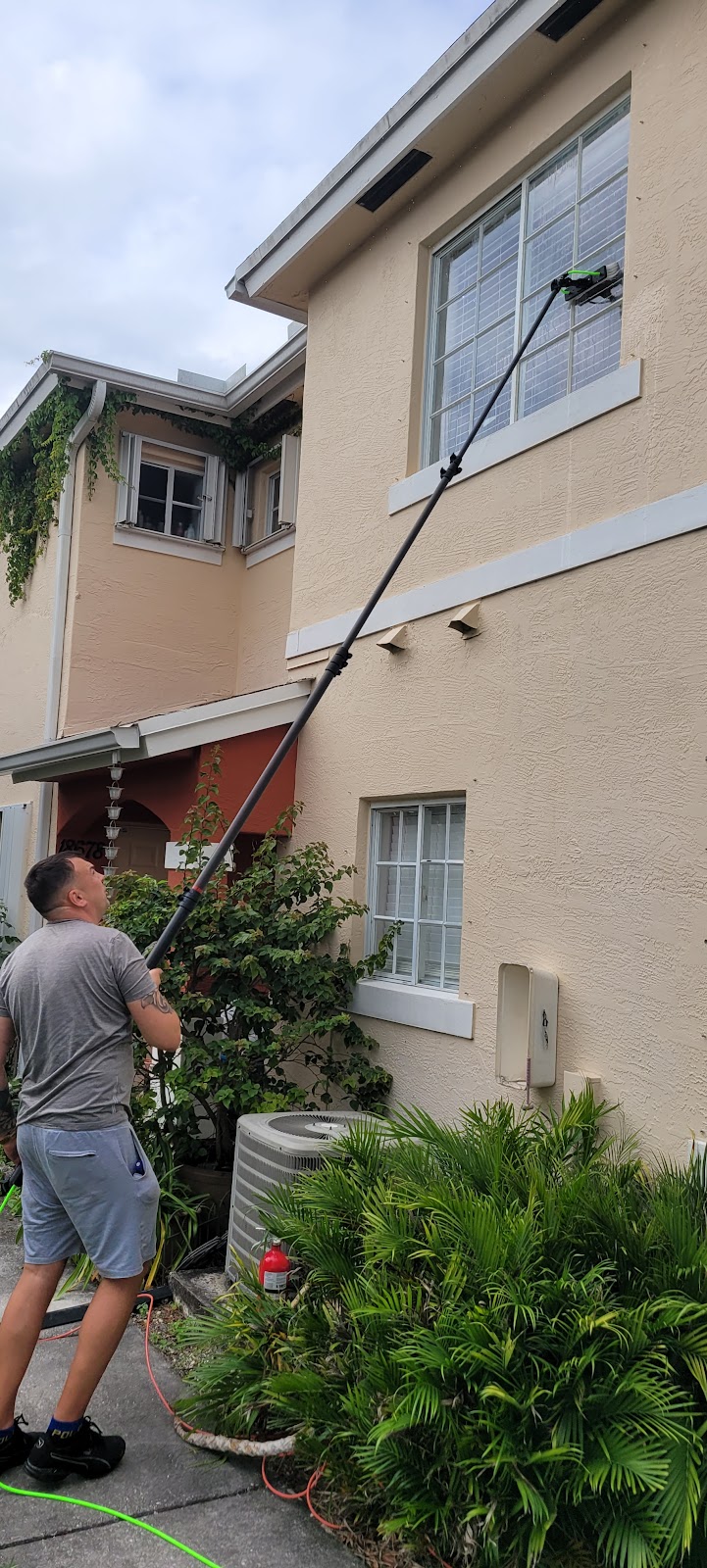
That slick feeling underfoot around your pool is not just water. It's biology.
A slippery Miami pool deck is almost always a thin, living film of algae, mildew, and mineral buildup that has taken hold in the exact conditions our climate hands out for free: heat, humidity, shade, and constant moisture. Left alone, it turns a beautiful deck into a fall risk, especially with wet feet and running kids.
The good news is that it's fixable. The better news is that with the right method for the surface, it stays clean far longer than most people expect. Here's how to do it right.
Why Miami Pool Decks Get Slippery
Your deck spends its whole life damp. Pool splash, afternoon downpours, sprinkler overspray, and heavy humidity keep the surface wet for hours at a time. Add shade from a screen enclosure, a wall, or landscaping, and you have created a greenhouse for microscopic organisms.
The culprits are usually:
- Algae and mildew — a green or gray-black film that thrives on damp, shaded stone and concrete. This is the main slip hazard.
- Mold — common on porous surfaces that never fully dry between rains.
- Efflorescence — a chalky white haze on pavers and travertine, caused by mineral salts rising to the surface.
- Organic debris — palm fronds, leaves, and pollen that break down and feed the whole cycle.
The film is thin, so a quick rinse never touches it. You need to actually kill and remove the growth, not just push water around.
Match the Method to the Surface
This is where most DIY jobs go wrong. Miami pool decks are built from soft, expensive materials, and blasting them with a pressure washer does real damage. The surface dictates the approach.
Travertine is soft and porous. It's popular around Miami pools for good reason, but high pressure pits and etches it, opening up more pores for algae to colonize later. Travertine needs a gentle, low-pressure approach with a cleaning solution that does the work chemically, not by force.
Pavers hold their color in the joints and surface texture. Aggressive pressure strips the sand from the joints and can fade the pavers, leaving you with a bigger problem than you started with. That white haze you sometimes see is efflorescence, and it needs to be treated before any sealing, not sealed over.
Stamped or coated concrete has a decorative surface layer that high pressure can peel or dull. It cleans up beautifully with the right technique and terribly with the wrong one.
Broom-finished concrete is the most forgiving, but even here, too much pressure carves lines into the surface and leaves permanent wand marks.
The safest all-around method for a pool deck is soft washing: a low-pressure application of a cleaning solution that kills algae, mold, and mildew at the root, followed by a gentle rinse. It cleans deeper than pressure alone because it treats the organism instead of just the stain, and it doesn't chew up the surface doing it.
A Safe Step-by-Step Approach
If you want to tackle a small deck yourself, work carefully:
- Clear and dry the area. Remove furniture, planters, and toys. Sweep off leaves and palm debris so you're cleaning the surface, not the mess on top of it.
- Wet surrounding plants first. Pre-soaking landscaping protects it from any cleaning solution runoff.
- Apply a proper cleaning solution. A diluted sodium hypochlorite mix is what kills the algae and mildew. Let it dwell so it actually works. Skip the vinegar-and-scrub tricks on stone; they rarely reach the root.
- Use low pressure only. If you rinse with a pressure washer, keep it well under the range that damages stone, use a wide fan tip, and never let the wand linger in one spot.
- Rinse thoroughly, toward the pool deck drains and away from the pool water itself.
- Let it dry fully before you decide whether the surface needs sealing.
Two honest cautions. First, chlorine-based solutions and pool decks near screen enclosures, aluminum, and metal railings need care, because our coastal air already sits in a punishing ISO C5-M corrosion zone that rusts metal fast. Overspray on the wrong surface makes it worse. Second, a wet stone deck is genuinely slick during the job. If any of this feels like more than you want to manage, it's worth handing off.
Keeping It Clean Longer
Cleaning is half the battle. Keeping the deck safe underfoot is about slowing the regrowth.
- Improve drainage and airflow. The faster the deck dries, the less algae can establish. Trim back landscaping that traps shade and moisture.
- Clear debris regularly. Palm fronds and leaves are algae fuel. A weekly sweep goes a long way.
- Reseal on schedule. Travertine and paver decks generally benefit from resealing every one to two years in our climate. A good sealer resists staining and makes the next cleaning easier. Just remember to treat any efflorescence before sealing, never after.
- Watch the shady corners. Slippery spots almost always start where the sun never reaches. Those are the areas to check first.
- Plan around the seasons. Growth accelerates through our long, wet summer. The stretch before hurricane season, roughly April into May, is an ideal window to get the deck cleaned and sealed while conditions are drier.
A deck that dries quickly, sheds debris, and carries a fresh coat of sealer simply doesn't get slippery the way a neglected one does.
When To Call a Pro
There's no shame in DIY on a small, forgiving concrete deck. But travertine, pavers, stamped concrete, and any deck wrapped in a screen enclosure or bordered by metal railings reward experience. The margin for error on soft stone is thin, and the cost of pitting or fading a deck is a lot higher than the cost of cleaning it correctly the first time.
The right pro reads the surface, chooses soft washing where pressure is too aggressive, protects your landscaping and screens, and leaves you with a deck that's clean, safe, and evenly finished. No damage, no streaks, no shortcuts.
If your Miami pool deck has gotten slick, hazy, or green in the corners, we'll take a look and tell you exactly what it needs. Call Moppey at +1 877-754-5614 for a fast, free quote, most answered the same day. Hablamos Espanol.